

Maddy summaryThis resolution (HRES 1063) is a symbolic measure designating February 2026 as "Career and Technical Education Month" to recognize the importance of career and technical education (CTE) programs. It does not create new policies or funding but formally supports CTE's role in preparing students for high-demand jobs by encouraging educators and parents to promote CTE as a valid educational pathway. The resolution references CTE's alignment with workforce needs and cites bipartisan support from past legislation like the 2018 Strengthening Career and Technical Education Act. It affects no specific individuals or programs, serving only as a non-binding statement of support.
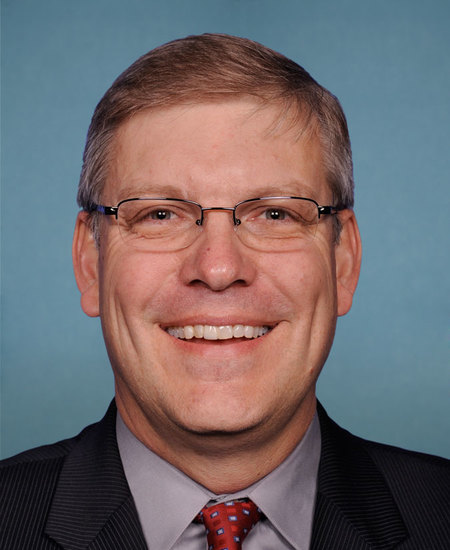
Rep. Barry Loudermilk
Sponsored bills
Maddy summaryThis bill modifies federal budget rules for unspent agency funds. It requires federal agencies to allocate 49% of unused funds to the next fiscal year, 49% toward paying the national debt, and 2% for retention bonuses (capped at 10% of an employee's base pay). Agencies must also limit future budget requests to the previous year's amount adjusted for inflation. The bill directly affects all executive branch agencies (excluding the Red Cross), altering how they manage leftover budget authority. It does not create new savings programs for individuals but changes government fiscal management procedures.
Maddy summaryThis bill prevents state or local governments from banning or restricting energy connections (like installation, modification, or access) based on the type or source of energy, such as electricity, natural gas, or renewable fuels. It directly affects consumers choosing energy providers and energy companies seeking to offer services. The key provision prohibits local laws, regulations, or policies that limit energy services sold in interstate commerce, covering all energy types listed in the bill’s definitions. It does not create new programs but limits regulatory authority at the state or local level. The law aims to ensure open access to diverse energy sources without source-based restrictions.
Maddy summaryThis bill would revoke the tax-exempt status of nonprofit organizations (like charities or health groups) that provide or fund abortions, except in specific cases. It directly affects organizations currently classified under Section 501(c)(3) of the tax code, such as some healthcare providers or advocacy groups. Key provisions define "abortion" as intentionally terminating a pregnancy (excluding cases where the mother’s life is at risk, or the pregnancy resulted from rape or incest), and deny tax exemption to groups meeting this definition. The change would take effect for tax years starting after the bill’s enactment date.
Maddy summaryThis bill creates a tax credit for businesses selling products made with U.S.-grown cotton. The credit equals 24% of the cotton's market value if processed only in the U.S. or in countries with U.S. trade deals, or 18% for other processing locations. To qualify, cotton must be digitally traced from U.S. farms to finished products and certified by the USDA as meeting origin requirements. It directly affects clothing and textile manufacturers selling qualifying products in the U.S. market.
Maddy summaryHR 7000, the Freedom to Fuel Act, amends the Clean Air Act to exclude portable fuel containers (like gas cans) from being classified as "consumer or commercial products" under the law. This change directly affects manufacturers and sellers of these containers, removing them from certain regulatory requirements. The key provision modifies the Clean Air Act's definition to specifically state that portable fuel containers are not subject to product standards for consumer or commercial products. This is a technical regulatory adjustment focused on clarifying which products fall under existing Clean Air Act provisions.
Maddy summaryHR 472, the Restore VA Accountability Act of 2025, creates new disciplinary procedures for VA supervisors and management officials. It requires the VA Secretary to consider specific factors like the seriousness of misconduct and the employee's role when deciding on removal, demotion, or suspension, and limits the entire disciplinary process to 15 business days. The bill prevents courts from reviewing penalty amounts but allows review of whether procedures were followed correctly. It also strengthens whistleblower protections by requiring Special Counsel approval before disciplining employees who report misconduct, affecting VA supervisors and management officials but excluding senior executives and political appointees.
Maddy summaryThis bill, the Protecting Ballot Measures From Foreign Influence Act of 2025, bans foreign nationals from contributing money to state and local ballot initiatives and referendums. It amends the Federal Election Campaign Act to explicitly include these state and local voting measures under the existing prohibition on foreign contributions for federal elections. The key provision requires that contributions to ballot measures - like state-level policy votes - must not come from foreign individuals or entities. The law would apply to all contributions made after its enactment date.
Miracle on Ice Congressional Gold Medal Act This act provides for the award of Congressional Gold Medals to the members of the 1980 U.S. Olympic men's ice hockey team in recognition of the team's achievement at the 1980 Winter Olympic Games.
Maddy summaryThis bill authorizes the placement of a memorial honoring women who supported the U.S. war effort during World War II (including those working as pilots, engineers, and in factories) on federal land in Washington, D.C. It specifies two locations: Area I on the National Mall map or the National Mall Reserve, as defined in existing law. The memorial was previously authorized by Section 702 of the 2023 Consolidated Appropriations Act (Public Law 117-328), and this bill clarifies its permitted locations.