

Renter Protection Act of 2021 This bill limits the use and availability of assistance provided under certain emergency rental assistance programs created in response to the COVID-19 pandemic. For example, rental assistance not yet used by grantees to assist eligible households as of July 1, 2021, must only be used for rental arrears after this date, and not for rent, utilities and home energy costs and arrears, or other expenses as allowed under current law. Further, the bill changes the deadline for distribution of these funds from September 30, 2022, to December 31, 2021.
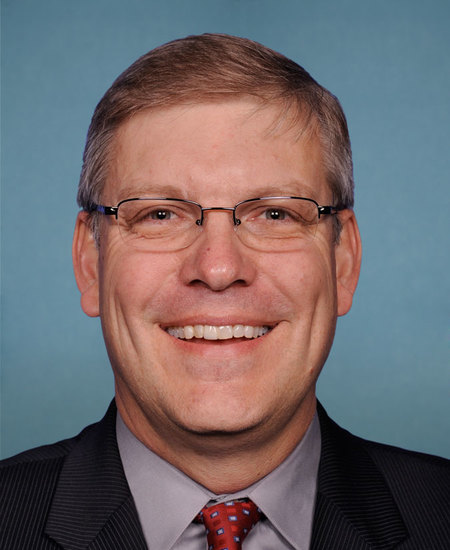
Rep. Barry Loudermilk
Sponsored bills
Puppies Assisting Wounded Servicemembers for Veterans Therapy Act or the PAWS for Veterans Therapy Act This bill implements a program and a policy related to service dog therapy for veterans. Specifically, the bill requires the Department of Veterans Affairs (VA) to implement a five-year pilot program to provide canine training to eligible veterans diagnosed with post-traumatic stress disorder as an element of a complementary and integrative health program. Eligible veterans are those who are enrolled in the VA health care system and have been recommended for participation by a qualified mental health care provider or clinical team. The VA must seek to enter agreements containing specified elements with accredited nongovernmental entities that have demonstrated ability to provide canine training. Veterans who participate in the program are authorized to adopt the dog they assisted in training if their health provider determines it is in the best interest of the veteran. The VA must establish processes to document and track the progress of participating veterans with respect to health benefits and improvements. The Government Accountability Office must brief Congress and submit a report on the program. The bill also authorizes the VA to provide service dogs to veterans with mental illnesses, regardless of whether they have a mobility impairment.
This resolution condemns the President's failure to heed military and intelligence advisors about the speed and nature of the Taliban offense in Afghanistan and urges the President to commit to maintaining the evacuation operation as long as necessary to evacuate any U.S. citizen, lawful permanent resident, or Afghan partner who requests evacuation assistance .
This resolution expresses that the House of Representatives opposes adverse punishment or discharge that is not honorable for service members whose discharge results from choosing not to receive the COVID-19 vaccine.
Border Security for America Act of 2021 This bill addresses border security and related issues. For example, the bill requires the Department of Homeland Security (DHS) to resume all activities to construct a border barrier system along the U.S.-Mexico border that were underway or planned prior to January 20, 2021; requires DHS to deploy, in addition to physical barriers, tactical infrastructure and technology to achieve situational awareness and operational control of the southwest border; authorizes U.S. Customs and Border Protection (CBP) to carry out a program to acquire innovative commercial items through a competitive selection of proposals; imposes certain requirements for DHS border security technology acquisition programs that have a total expenditure of at least $300 million; requires CBP to implement certain technologies, including a program to establish a biometric exit data system at ports of entry; requires CBP to increase or maintain certain staffing levels for agents, officers, processing coordinators, and other positions; requires CBP to implement a workload staffing model for the U.S. Border Patrol and for CBP's Air and Marine Operations; and provides statutory authority through FY2026 for Operation Stonegarden, a Federal Emergency Management Agency program that provides grants to states and territories involved in certain active CBP border security operations.
Office of Attending Physician Independence Act This bill addresses the appointment and oversight of the Attending Physician (a medical officer who is currently assigned by the the Navy to provide emergency medical assistance to Members of Congress, Justices of the Supreme Court, congressional staff, and visitors to the Capitol). The bill establishes a commission to recommend individuals to the President for appointment to the position of Attending Physician. The commission shall recommend at least three individuals who are medical officers of the Navy for appointment. The President shall appoint the Attending Physician from the individuals recommended by the commission with the advice and consent of the Senate for a term of 10 years. The Office of Attending Physician shall be subject to oversight by the Committee on House Administration and the Senate Committee on Rules and Administration.
Consumer Financial Protection Commission Act This bill removes the Consumer Financial Protection Bureau from the Federal Reserve System, converts the bureau into an independent commission, and modifies its leadership structure. Specifically, the bill eliminates the positions of director and deputy director and establishes a five-person commission appointed by the President and confirmed by the Senate.
National Statuary Hall Collection Progress Assurance Act This bill establishes a timeline for the Joint Committee on the Library to approve or disapprove requests for replacing statutes (or any related actions that are subject to Joint Committee approval) in the National Statutory Hall of the U.S. Capitol. The Joint Committee oversees operations of the Library of Congress, as well as management of the National Statuary Hall, the U.S. Botanic Garden, and works of fine art in the Capitol. Generally, the bill requires the Joint Committee to approve or disapprove a request to replace a statue not later than 30 days after the Architect of the Capitol forwards the request to the Joint Committee. If the Architect forwards the request before the Joint Committee's first organizational meeting of a Congress, the Joint Committee must approve or disapprove the request not later than 30 days after the Architect forwards the request to the Joint Committee or the date of the meeting, whichever is later.
Securing Our Border States Act This bill requires the Department of the Treasury to provide grants to states for building barriers and related infrastructure along the U.S.-Mexico border. Within 30 days of receiving a certification from a border state that it intends to use such grant funding for constructing a border barrier, Treasury must disburse funds to the state, with the amount based on the number of miles of border in that state that currently does not have a border barrier. The bill provides $22 billion of funding for this grant program and permanently rescinds $22 billion from funds made available for various assistance programs related to COVID-19.
This resolution denounces socialism and opposes the implementation of socialist policies in the United States.