Ensuring Lasting Smiles Act This bill requires private health insurance plans to cover diagnosis and treatment of congenital anomalies and birth defects, such as reconstructive services and items. Coverage must include services and items that functionally improve, repair, or restore any body part that is medically necessary for normal bodily functions or appearance, as determined by the treating physician. Coverage limits and cost-sharing requirements for such services and items may not be more restrictive than those applicable to all medical and surgical benefits under the plan.
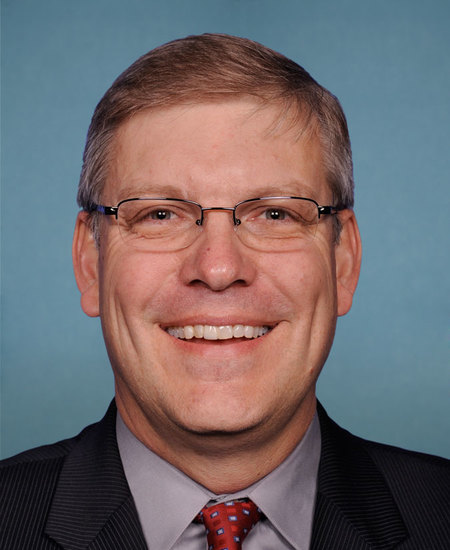
Rep. Barry Loudermilk
Sponsored bills
Reversing Every Vaccine Emergency Requirement and Stopping Employee OSHA Mandates Act or the REVERSE OSHA Mandates Act This bill limits the authority of the Occupational Safety and Health Administration (OSHA) to regulate workplace safety and health matters. Specifically, the bill repeals OSHA's authority to issue emergency temporary standards related to workplace safety and health. The bill further specifies that OSHA may not, under its authority to regulate workplace safety and health, require the administration of any drug, vaccine, or other biological product to an employee.
This resolution honors the life and legacy of the late Representative Don Young and directs the Sergeant at Arms to designate a Don Young Reserved Seat on the floor of the chamber of the House of Representatives.
This joint resolution nullifies the rule titled Patient Protection and Affordable Care Act; Updating Payment Parameters, Section 1332 Waiver Implementing Regulations, and Improving Health Insurance Markets for 2022 and Beyond , which was issued by the Centers for Medicare & Medicaid Services and the Department of the Treasury on September 27, 2021. The rule expands the open enrollment period for individual health coverage and rescinds the previous interpretation of certain requirements relating to Section 1332 waivers (also known as State Innovation Waivers or State Relief and Empowerment Waivers).
COI Elimination Act This bill limits U.S. contributions to the United Nations pertaining to the U.N. Independent International Commission of Inquiry on the Occupied Palestinian Territory, including East Jerusalem, and Israel. Current law imposes a cap on the annual U.S. contribution to the U.N. budget. The bill lowers that cap by 25% of the amount budgeted for the commission. The bill also states that it shall be U.S. policy to seek the abolition of the commission and combat systemic anti-Israel bias in international bodies.
This bill revises oversight and disclosure requirements related to foreign sources and institutions of higher education (IHEs). For example, the bill establishes the Office for Foreign Gifts and Contracts Oversight within the Department of Education. Additionally, the bill requires an IHE to disclose to the office any gift or contract from a foreign source that (1) is valued at $50,000 or more, considered alone or in combination with all other gifts or contracts within a calendar year (current disclosure threshold is $250,000 or more); or (2) has an undetermined monetary value.
This resolution rejects and opposes engaging Russia as a main intermediary for reviving any nuclear agreement with Iran. The resolution rejects and opposes giving Russia any sanctions exemption or waiver as a condition to any nuclear agreement with Iran. The resolution rejects and opposes any agreement that lifts sanctions on Iran and legitimizes the regime's illicit nuclear program amidst an International Atomic Energy Agency investigation into undeclared sites, facilities, and material in Iran. The resolution also reaffirms that any nuclear deal with Iran reached by the Biden administration without congressional approval or Senate ratification as a treaty is illegitimate; to take every legislative opportunity to overturn such an agreement; to restore every single sanction, restrictive measure, designation, waiver, or general license the Biden administration removes; and to limit the Biden administration's or any future administration's ability to issue waivers and licenses for Iran sanctions, designations, or restrictive measures.
This resolution condemns the terrorist attack on Congregation Beth Israel in Colleyville, Texas, on January 15, 2022. It also expresses support for the affected community, commends the actions of law enforcement and emergency responders, and reaffirms a commitment to combat hate, bigotry, anti-Semitism, and violence against Jewish Americans.
American Energy Independence from Russia Act This bill addresses U.S. energy security, the production of oil and gas, and the importation and exportation of oil and gas. Specifically, the President must submit an energy security plan that (1) evaluates U.S. crude oil, petroleum products, and natural gas imports and exports; (2) assesses the energy security risks of such imports; and (3) includes strategies to encourage increased domestic production of crude oil, petroleum products, and natural gas to offset Russian imports. The bill also approves the TransCanada Keystone Pipeline in Phillips County, Montana for the import of oil from Canada to the United States. In addition, the bill grants the Federal Energy Regulatory Commission the authority to approve or deny applications for facilities to export natural gas from the United States to foreign countries or import natural gas from foreign countries. The President and federal agencies must obtain congressional approval before (1) prohibiting or substantially delaying certain new energy mineral leases or permits on federal lands, or (2) withdrawing certain federal lands from mineral and geothermal leasing activities. The Department of the Interior must resume issuing oil and gas leases on federal lands and offshore submerged lands in the Outer Continental Shelf as specified under the bill. Finally, the bill limits the drawdown of petroleum in the Strategic Petroleum Reserve until the Department of Energy develops a plan to increase the percentage of federal lands leased for oil and gas production.

This resolution strongly condemns the ongoing violence, war crimes, crimes against humanity, and systematic human rights abuses being carried out by Russia's military and its proxies at the direction of Russian President Vladimir Putin. It also encourages the U.S. government and partner nations to use their influence and vote in international organizations to hold those responsible for such crimes and abuses accountable.