

Restoring America's Leadership in Innovation Act of 2021 This bill revises several aspects of patent law. The bill changes the U.S. patent system back to a first-to-invent system, in which the first inventor to conceive of an invention is entitled to a patent. Currently, the first person to file an application that meets all the necessary requirements is entitled to the patent. Several types of administrative patent challenge proceedings are abolished, as well as the Patent and Trademark Office (PTO) body that decides those proceedings. The bill relaxes the standard for what constitutes patent-eligible subject matter. The only ineligible inventions shall be those that exist in nature independent or prior to human activity or that exist solely in the human mind. The bill also makes it easier for a patent owner that has won an infringement case in court to secure a permanent injunction against the infringing defendant. Specifically, there shall be a presumption that further infringement would cause irreparable harm to the prevailing patent owner, and the burden shall be on the infringer to prove otherwise. (Currently, a prevailing patent owner seeking a permanent injunction must prove, among other things, that further infringement would cause irreparable harm.) The bill limits what types of publications shall be treated as prior art that could be used to make an invention be considered to be anticipated or obvious (and therefore not patentable). The bill authorizes the PTO to keep and spend all the fees that it collects.
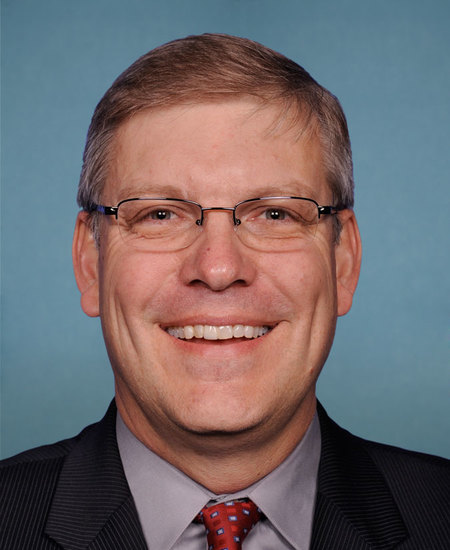
Rep. Barry Loudermilk
Sponsored bills
Illegal Immigrant Payoff Prohibition Act This bill prohibits the payment of a settlement to an alien for a civil action brought against the United States in connection with the alien's inadmissibility to, or unlawful presence in, the United States.
Foreign Merger Subsidy Disclosure Act of 2021 This bill requires entities to disclose in their premerger notification filings to federal antitrust regulators a detailed accounting of any economic support they received from a foreign state.
Teleabortion Prevention Act of 2021 This bill restricts the use of telehealth for chemical abortions (also known as medication abortions). Specifically, it requires a provider who dispenses or prescribes medication for a chemical abortion to physically examine the patient, be physically present at the location of the chemical abortion, and schedule a follow-up visit. The bill provides an exception for a chemical abortion that is necessary to save the life of a mother whose life is endangered by a physical disorder, illness, injury, or condition. The bill establishes criminal penalties—a fine, a prison term of up to two years, or both—for a provider who does not comply with the requirements. A patient who undergoes a chemical abortion may not be prosecuted.
Credit Union Board Modernization Act This bill revises the frequency of meetings required to be held by a credit union's board of directors. Specifically, the bill requires monthly meetings for new credit unions during their first five years and for credit unions with a low soundness rating. All other credit unions must hold at least six meetings annually, with at least one meeting held during each fiscal quarter. Currently, all credit union boards must meet at least once a month.
This bill designates the facility of the United States Postal Service located at 3900 Crown Road Southwest in Atlanta, Georgia, as the John R. Lewis Post Office Building.
Respect State Housing Laws Act This bill eliminates a provision that requires a 30-day notice period before a landlord may begin eviction proceedings against a tenant in federally assisted or federally backed housing.
Protect the UNBORN (Undo the Negligent Biden Orders Right Now) Act or the Protect the UNBORN Act This bill prohibits federal implementation of and funding for specified executive orders that address access to reproductive health care services, including services related to pregnancy or the termination of a pregnancy.
Improving Seniors' Timely Access to Care Act of 2022 This bill establishes several requirements and standards relating to prior authorization processes under Medicare Advantage (MA) plans. Specifically, MA plans must (1) establish an electronic prior authorization program that meets specified standards, including the ability to provide real-time decisions in response to requests for items and services that are routinely approved; (2) annually publish specified prior authorization information, including the percentage of requests approved and the average response time; and (3) meet other standards, as set by the Centers for Medicare & Medicaid Services, relating to the quality and timeliness of prior authorization determinations.
Taxpayers Support Life Act This bill prohibits the Department of Health and Human Services (HHS) from finalizing, implementing, administering, or enforcing a proposed rule (published on August 4, 2022) that implements the statutory ban on discrimination in federally funded health programs and activities. Further, HHS may not use federal funds to contravene the administration or enforcement of the existing nondiscrimination rule, which became effective on June 19, 2020.