

Maddy summaryHR 4648 requires large investment firms, including asset managers and pension funds, to report annually to the Securities and Exchange Commission (SEC) on their voting for shareholder proposals. These firms must explain each vote, detail how often they followed proxy advisory firm recommendations, and show how they balanced those recommendations with their duty to act in shareholders' best economic interest. Firms managing over $100 billion in assets must also conduct an economic analysis before voting on most proposals (excluding votes aligned with board recommendations) to confirm alignment with shareholder financial interests and include this analysis in their report. The bill aims to increase transparency in how investment firms exercise voting power on corporate matters.
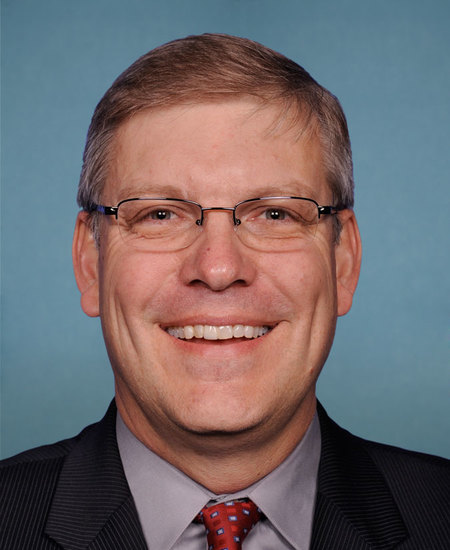
Rep. Barry Loudermilk
Sponsored bills
Maddy summaryThis bill amends federal election law to establish specific rules for provisional ballots in Washington, D.C. elections. It allows voters to cast provisional ballots if their name isn't on the polling place list or if they lack ID (but requires submitting ID to D.C. election officials by 5 p.m. two days after the election for the ballot to count). It also clarifies that voters who appear on the voter list for a different polling place can cast a provisional ballot there, but must prove eligibility for that location to have the vote counted. The changes directly affect D.C. voters and election officials handling provisional ballots in all D.C. elections, including federal races and ballot initiatives.
Maddy summaryThis bill requires the Treasury Secretary to issue a report to key congressional committees and financial oversight bodies when extraordinary measures are used to avoid exceeding the U.S. debt limit. The report must detail available measures (with dollar amounts), project critical dates (like when cash reserves hit $50 billion or the debt nears the limit), and include an assessment of whether the debt limit threatens financial stability. It aims to provide Congress with timely, data-driven information about U.S. debt management challenges without altering the debt limit itself.
Maddy summaryThis bill prohibits U.S. federal agencies from entering new contracts with companies that boycott Israel after January 1, 2024. Companies must certify they are not boycotting Israel at contract signing, and contracts must include this prohibition. It applies to federal contracts over $100,000 for services or IT with companies employing more than 10 people. If a company violates the boycott prohibition, the agency must terminate the contract after 30 days unless the company ends the boycott. The bill explicitly states it does not infringe on First Amendment rights or take sides on the Israeli-Palestinian conflict.
Maddy summaryThis bill requires the Federal Housing Finance Agency (FHFA) to revert mortgage guarantee fees for single-family homes to the rates in effect before May 1, 2023, effectively undoing a 2023 fee increase. It prohibits fees based on a borrower’s debt-to-income ratio and restricts future fee adjustments without following standard federal rulemaking procedures. The bill directly affects mortgage borrowers (particularly middle-class homeowners) and lenders who pay these fees, as it changes how mortgage finance agencies charge for loan guarantees. A GAO study will also examine the FHFA’s previous fee changes and their economic impact, with a report due within 14 months.
Maddy summaryHR 4323 delays any changes to the National Oceanic and Atmospheric Administration's (NOAA) current rule limiting ship speeds to protect North Atlantic right whales. The bill requires NOAA to wait until two conditions are met: (1) new whale protection protocols from the 2022 Coast Guard Act are fully developed and deployed, and (2) the Secretary submits a report to four congressional committees detailing how those protocols will shape future rule updates. This directly affects NOAA's regulatory authority and vessel operators who must follow the existing speed rules. The law does not change the current rule but pauses any amendments until these specific steps are completed.
Maddy summaryHRES 549 is a non-binding resolution expressing the House of Representatives' support for nominating the Okefenokee National Wildlife Refuge in Georgia to the UNESCO World Heritage List. It highlights the refuge's ecological importance (protecting 400,000 acres, hundreds of species including endangered ones), its economic value ($64.7 million annual revenue for local economies), and its existing placement on the U.S. tentative list since 2007. The resolution does not create new laws or funding but formally urges the U.S. government to advance the nomination process. It affects no specific individuals or entities directly, as UNESCO decisions are made internationally through a separate process.
Maddy summaryHJRES 44 is a congressional resolution seeking to block a 2021 rule by the Bureau of Alcohol, Tobacco, Firearms, and Explosives (ATF). The rule classified firearms with stabilizing braces as "short-barreled rifles," which would have required additional licensing and regulation. This resolution uses a specific legal process (under Title 5, U.S. Code) to formally disapprove the ATF rule, meaning the rule would no longer be in effect. It directly affects firearm owners, manufacturers, and dealers who would have been subject to the rule’s requirements.
Maddy summaryHR 4245, the "Enforce the Caps Act," sets specific annual spending limits for discretionary federal programs from fiscal years 2026 through 2029. It establishes new budget authority caps at $1.622 trillion for 2026, increasing to $1.671 trillion for 2029. The bill directly affects how Congress allocates funds for non-mandatory programs like education, transportation, and defense by legally binding these spending levels. This is a procedural adjustment to existing budget control law, not a new policy affecting specific groups or creating new programs.
Maddy summaryHR 277 would require Congress to approve major federal regulations before they take effect. Major rules are defined as those with significant economic impact ($100 million+ annually), major cost increases for consumers or industries, or significant adverse effects on competition, employment, or innovation. Agencies must submit detailed information about these rules to Congress, including cost-benefit analyses, before they can take effect. Congress would have 70 session days to approve the rule with a joint resolution; if they don't act within that timeframe, the rule would not take effect. This would increase congressional oversight of federal regulations and require more detailed information about proposed rules before they become law.