

Maddy summaryHR 2331 requires the Consumer Financial Protection Bureau (CFPB) to publish full proposed rules in the Federal Register with detailed justifications and analyses. Specifically, it mandates the CFPB to explain why a rule is needed (instead of relying on private markets or state/local solutions), assess all costs and benefits - including impacts on small businesses and state/local governments - and identify reasonable alternatives. The bill also requires the CFPB to consult the Small Business Administration if a rule would increase costs for small businesses and to justify rules where benefits don’t outweigh costs or alternatives. This directly affects the CFPB’s rulemaking process and regulated entities, particularly small businesses, by demanding greater transparency in cost-benefit evaluations.
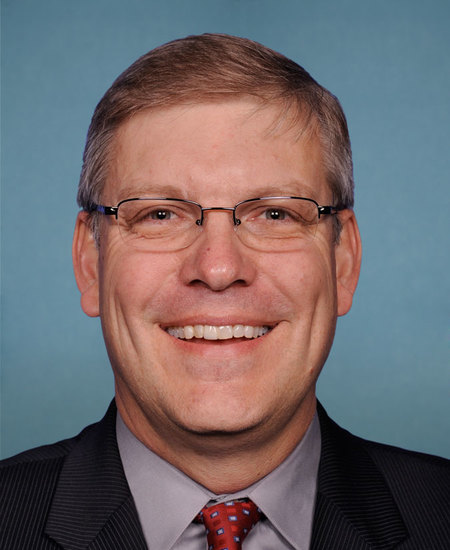
Rep. Barry Loudermilk
Sponsored bills
Maddy summaryThis bill redesignates the existing Ocmulgee Mounds National Historical Park as Ocmulgee Mounds National Park and establishes a separate Ocmulgee Mounds National Preserve in Georgia. It allows voluntary land acquisition (via purchase, donation, or exchange) for both areas without eminent domain, and requires the Secretary of the Interior to develop a management plan prioritizing cultural resource preservation for the Muscogee (Creek) Nation. The bill mandates tribal consultation, provides hiring preferences for tribal members, and ensures protection of sacred sites. It also places 126 acres of tribal land into federal trust for the Muscogee (Creek) Nation.
This joint resolution nullifies the final rule issued by the Consumer Financial Protection Bureau titled Overdraft Lending: Very Large Financial Institutions and published on December 30, 2024. The rule revises provisions regarding charges for insufficient funds in a customer’s bank account (i.e., overdrafts) at very large financial institutions. Under the rule, these institutions must (1) cap overdraft charges at $5; (2) with justification, cap charges at a higher amount; or (3) handle overdrafts as credit and comply with applicable Truth in Lending Act disclosure requirements.
Maddy summaryHR 1596 renames the U.S. National Poultry Research Center in Athens, Georgia, as the "Abit Massey Poultry Research Center" for all official government references. This naming bill updates the facility's official designation without changing its operations, funding, or policies. It directly affects the center's administrative and legal documentation but does not alter its research activities or impact any individuals or groups.
Maddy summaryThe Air America Act of 2025 authorizes one-time payments of $40,000 to individuals who worked for Air America or its affiliated companies for at least five years during 1950-1976, or to their surviving spouses, children, or dependents. Additional payments of $8,000 per full year beyond five years are allowed. The program is capped at $60 million total funding, with claims required within two years of final regulations. Payments are a single lump sum with no ongoing benefits, and the bill explicitly states it does not create new entitlements beyond this one-time award.
Maddy summaryHRES 226 is a ceremonial resolution commemorating Delta Air Lines' 100th anniversary, marking the centennial of its founding on March 2, 1925. It recognizes Delta's history as the first U.S. airline to reach 100 years (originally as Huff Daland Dusters, an aerial crop-dusting company) and highlights its current scale, including 100,000 employees, 5,000 daily flights, and global connectivity. The resolution contains no policy changes or binding provisions - it simply expresses the House's recognition of Delta's milestone and its role in connecting people and supporting communities. As a commemorative resolution, it does not affect any individuals, businesses, or regulations.
Safe Routes Act of 2025 This bill directs the Department of Transportation to waive vehicle weight limits for covered logging vehicles, thus allowing logging vehicles to travel on interstate highways in certain circumstances. The term covered logging vehicle means a vehicle that (1) is transporting raw or unfinished forest products, including logs, pulpwood, biomass, or wood chips; (2) is traveling a distance not greater than 150 air miles on interstate highways from origin to a storage or processing facility; and (3) meets state legal weight tolerances and vehicle configurations for transporting raw or unfinished forest products within the state boundaries in which the vehicle is operating.
Maddy summaryHR 2033, the Military Spouse Hiring Act, expands the Work Opportunity Tax Credit to include spouses of active-duty military personnel. It adds "qualified military spouse" as an eligible category for the tax credit, meaning employers who hire such spouses can claim the credit. A "qualified military spouse" is defined as someone certified by a local agency as married to an active-duty service member at the time of hire. The credit applies to hires occurring after the bill's enactment date. This directly affects military spouses seeking employment and employers hiring them, providing a tax incentive to encourage their hiring.
Maddy summaryH.J.Res. 74 disapproves a rule by the Bureau of Consumer Financial Protection (BCFP) that would have prohibited creditors and consumer reporting agencies from using medical information - such as unpaid medical bills - in credit reports and credit scoring. The rule, published in the Federal Register on January 14, 2025, aimed to prevent medical debt from affecting credit scores. If enacted, this resolution would block the rule from taking effect, maintaining the current practice where medical debt can influence credit decisions. This disapproval follows standard Congressional Review Act procedures for overturning agency rules.
Maddy summaryThis bill ensures military personnel, civilian Defense workers, and supporting contractors continue receiving pay during government funding gaps in fiscal year 2025. It provides temporary funding from existing Treasury reserves to cover salaries for active-duty troops, reservists, Defense civilians, and contractors supporting military operations until Congress passes a full budget or by January 1, 2026. The measure directly affects all active-duty service members, reserve components, and their civilian/contractor support staff across the military. It does not create new policies but guarantees uninterrupted pay during budget implementation delays.