

Maddy summaryThe Conscience Protection Act of 2025 would protect health care providers, facilities, and insurers that choose not to provide, refer for, or cover abortion services. It prohibits discrimination against such entities by the federal government, states, or any recipient of federal funds. The bill creates a private right of action allowing affected individuals or entities to sue for violations of conscience protections. It also establishes administrative enforcement mechanisms through the Department of Health and Human Services' Office for Civil Rights. This would strengthen existing conscience protections like the Weldon Amendment by ensuring entities can maintain religious or moral objections without facing penalties.
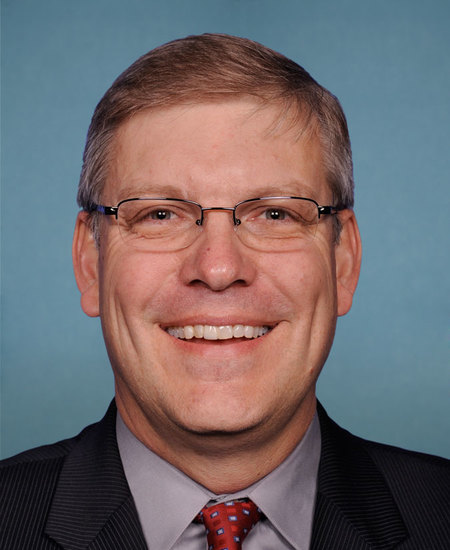
Rep. Barry Loudermilk
Sponsored bills
Maddy summaryHR 3402 requires large institutional investment managers (like major asset managers and pension funds with over $100 billion in assets) to disclose how they vote on shareholder proposals and how they use advice from proxy advisory firms. These firms must file annual reports explaining their voting decisions, how often they followed proxy firm recommendations, and how they balanced those recommendations with their duty to act in shareholders' best economic interests. For managers with over $100 billion in assets, the bill also mandates conducting economic analyses before voting on most proposals (excluding board-recommended votes) to confirm votes align with shareholder financial interests. The law aims to increase transparency around proxy voting practices without dictating specific voting outcomes.
Maddy summaryThis bill makes State insurance commissioners voting members of the Financial Stability Oversight Council (FSOC), replacing their previous nonvoting status. It requires the President to appoint a commissioner recommended by the National Association of Insurance Commissioners (NAIC), with a 15-day deadline for the NAIC to provide a list. The bill also establishes a temporary transition period until the new appointee is confirmed, during which current rules apply. This directly affects state insurance commissioners and changes how the FSOC makes decisions on financial stability matters. The key change is granting state-level insurance regulators a formal voting role in federal financial oversight.
Maddy summaryHR 3355 requires U.S. banking regulators (including the Federal Reserve, FDIC, OCC, NCUA, and FHFA) to notify Congress 120 days before proposing or finalizing major rules that align with recommendations from non-governmental international financial organizations like the Basel Committee. A "major covered rule" is defined as one projected to impact the U.S. economy by $10 billion or more over 10 years. Regulators must submit detailed economic analyses covering costs, credit availability, GDP, and employment for such rules. The bill also mandates annual reports to Congress on climate-related engagements with covered international organizations, including funding sources and activities. This directly affects federal banking regulators' rulemaking processes but does not change banking requirements for financial institutions.
Maddy summaryH.J.Res. 24, enacted May 9, 2025, disapproves a Department of Energy (DOE) rule establishing energy efficiency standards for walk-in coolers and freezers. This resolution, passed under the Congressional Review Act, blocks the rule (published December 23, 2024) from taking effect, meaning the DOE’s proposed standards will have no legal force. The action directly affects commercial food equipment manufacturers and businesses using such cooling systems by preventing the implementation of new energy conservation requirements.
Maddy summaryThis resolution blocks a Department of Energy rule that would have set new energy efficiency standards for gas-fired instant water heaters. It prevents the rule from taking effect, meaning appliance manufacturers would not have to meet the proposed efficiency requirements. The rule, submitted in December 2024, directly affected manufacturers of these water heaters and consumers purchasing them. Congress approved this disapproval through a joint resolution passed on May 9, 2025.
Maddy summaryHR 3247, the SAFE Home Act, requires federally funded adoption and foster care agencies to stop delaying or denying placements for children based on a parent's choices related to a child's biological sex. It directly affects these agencies and prospective adoptive/foster parents who: (1) raise children consistent with their biological sex, (2) refuse medical treatments to alter a child's sex appearance or perception, or (3) decline to change official documents to reflect gender identity. The bill prohibits such actions by defining "sex" biologically (male/female based on reproductive systems) and banning discrimination in placement decisions for those reasons. It applies to all entities receiving federal foster care/adoptions assistance and takes effect for payments starting after its enactment.
Maddy summaryHR 976, the "1071 Repeal to Protect Small Business Lending Act," would repeal data collection and reporting requirements for small business loans under Section 704B of the Equal Credit Opportunity Act. This specifically removes the mandate for financial institutions - especially community banks and credit unions - to track and submit loan data by business characteristics like race or gender. The bill aims to reduce compliance costs for lenders, which its findings argue limit small business access to credit. The repeal would eliminate these reporting obligations and remove references to the requirement from related federal laws.
Maddy summaryThis bill provides a 3-year transition period for newly insured banks to meet federal capital requirements, easing compliance for institutions that recently became federally insured. It allows these banks to request temporary deviations from approved business plans, with regulators required to respond within 30 days (or the request is automatically approved). Small rural banks with less than $10 billion in assets located in rural areas receive a lower 8% leverage ratio requirement during this transition. Additionally, the bill expands lending authority for certain banks to include agricultural loans and requires a federal study on increasing new bank formations in underserved areas.
Maddy summaryHRES 337 is a symbolic House resolution honoring linemen for their critical role in maintaining power infrastructure and responding to emergencies. It recognizes them as first responders who work in dangerous conditions 24/7 to keep electricity flowing, supporting schools and businesses during storms. The resolution formally supports designating April 18, 2025, as "National Lineman Appreciation Day" to publicly acknowledge their contributions. As a non-binding resolution, it has no direct policy impact or effect on affected individuals.