

Maddy summaryHCONRES 114 is a non-binding congressional resolution expressing that the International Olympic Committee (IOC) should allow Taiwan to compete at the 2024 Summer Olympics using its own national name, flag, and anthem instead of the current "Chinese Taipei" designation. It argues that requiring Taiwan to use this term contradicts the Olympic Charter’s principles of non-discrimination and the right of athletes to represent their country. The resolution cites the IOC’s own charter stating that sport access must be free from discrimination based on "national or social origin," and notes that Taiwan athletes have won 36 Olympic medals under the current system. This resolution directly addresses the IOC’s policy toward Taiwan, not U.S. law or Taiwan’s status.
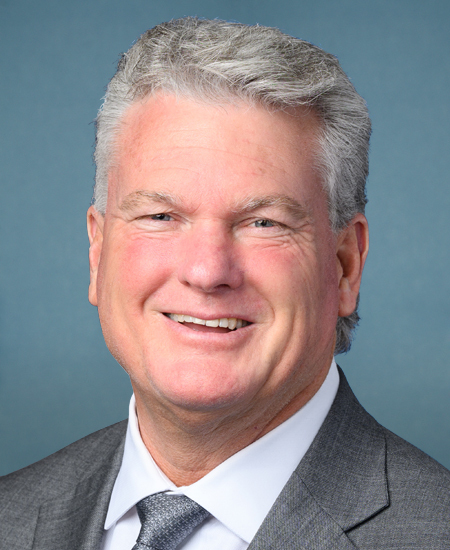
Rep. Mike Collins
Sponsored bills
Maddy summaryHRES 1305 is a procedural resolution that formally rescinds subpoenas issued by the January 6th Select Committee to four individuals (Stephen Bannon, Mark Meadows, Daniel Scavino Jr., and Peter Navarro) and withdraws the committee’s recommendations finding them in contempt of Congress. The bill specifically cancels subpoenas from September 2021, October 2021, and February 2022, along with related contempt resolutions adopted in 2021-2022. It does not alter legal proceedings but withdraws the committee’s authority to enforce these actions. The resolution is supported by House members who argue the committee was partisan and illegitimate, though the bill itself only addresses the committee’s procedural actions.
Maddy summaryHR 8785, the Tax Free Tips Act of 2024, reclassifies tips as gifts rather than taxable income for workers in service industries like restaurants and hospitality. It removes tips from income tax calculations, Social Security taxes, unemployment taxes, and wage withholding requirements. The bill repeals existing rules requiring employers to report tips (Section 6053) and eliminates related tax credits (Section 45B). Tips will no longer be counted as income for tax purposes, effective for tips received after the bill's enactment date. This directly affects tipped employees by eliminating tax obligations on their gratuities.
Maddy summaryThis bill rescinds unspent funds from specific federal programs. It targets leftover money from pandemic relief (like the CARES Act and American Rescue Plan) and certain infrastructure initiatives (including education stabilization funds and transportation programs like the Congestion Mitigation Program). The rescission is limited to amounts already allocated for Israel, Ukraine, and Indo-Pacific security supplements under recent appropriations. Unspent funds must be returned to the Treasury, with no new spending created.
Maddy summaryHR 8693, the "No American Land for Communist China Act," prohibits U.S. citizens or entities from purchasing real estate adjacent to specific federal lands if owned by the Chinese government or businesses with 25%+ Chinese government ownership. It directly affects Chinese government entities and Chinese-owned businesses operating in the U.S., restricting their ability to buy land near protected federal areas. The bill requires the President to take necessary actions to block such purchases, covering lands managed by Interior, Defense, Agriculture (Forest Service), or designated Indian country. This is a policy restriction, not a funding measure, targeting land transactions near sensitive federal properties.
Maddy summaryHR 5403, the CBDC Anti-Surveillance State Act, prohibits the Federal Reserve from issuing or facilitating central bank digital currency (CBDC) directly or indirectly to individuals through financial institutions. It specifically bans Federal Reserve banks from offering digital products to individuals, maintaining individual accounts, or using CBDC for monetary policy implementation. The bill also clarifies that its restrictions do not apply to existing physical cash or private, permissionless digital payment systems. This bill directly affects the Federal Reserve's ability to develop or deploy a government-run digital dollar. The law aims to prevent the Federal Reserve from creating a digital currency that could enable transaction tracking or government oversight of personal financial activity.
Maddy summaryHJRES 146 is a congressional disapproval resolution targeting a Centers for Medicare & Medicaid Services (CMS) rule published on May 8, 2024, that would have clarified eligibility for health insurance subsidies under the Affordable Care Act for Deferred Action for Childhood Arrivals (DACA) recipients and certain other noncitizens. The rule aimed to allow these individuals to access premium tax credits, cost-sharing reductions, and basic health programs through health insurance marketplaces. If enacted, this resolution would block the CMS rule from taking effect, maintaining current restrictions that prevent DACA recipients from qualifying for these subsidies.
Maddy summaryHJRES 151 is a congressional disapproval resolution targeting an Environmental Protection Agency (EPA) rule that would have set new water pollution standards for steam electric power plants, including coal and nuclear facilities. The rule, published in the Federal Register on May 9, 2024, aimed to limit pollutants discharged into waterways from these power plants. If passed, this resolution would block the rule from taking effect under the Congressional Review Act. It directly affects steam electric power plants by preventing the implementation of these new environmental requirements.
Maddy summaryHR 7109, the Equal Representation Act, requires the U.S. Census Bureau to add a citizenship status checkbox to the 2030 and future decennial censuses, asking respondents to identify if they are U.S. citizens, U.S. nationals, lawful residents, or unlawful residents. It then mandates excluding noncitizens (both lawful and unlawful residents) from the population count used to determine each state's number of congressional seats and electoral votes starting with the 2030 census. This bill directly affects how states are apportioned representation in Congress and presidential electoral votes, based solely on the citizen population. The key change is shifting the apportionment base from total population to citizen population alone, using the new census data.
Maddy summaryThis bill renames the Department of Veterans Affairs community-based outpatient clinic in Hinesville, Georgia, to the "John Gibson, Dan James, William Sapp, and Frankie Smiley VA Clinic." The change updates the clinic's official name in all federal references, including documents, maps, and records. It directly affects the clinic's identification and veterans who use its services, though the bill does not alter healthcare services or funding. The renaming is procedural and commemorative, with no new policy or funding mechanisms.