

Maddy summaryHR 1029 would end the United States Agency for International Development (USAID) by prohibiting all federal funding for its operations starting upon the bill's enactment. It requires the rescission of all unobligated funds held by USAID as of the day before enactment and transfers the agency's remaining assets and liabilities to the Secretary of State. This bill directly affects USAID, eliminating its legal authority and funding under the Foreign Assistance Act of 1961 and other laws. The measure would effectively dissolve USAID as a functioning federal agency.
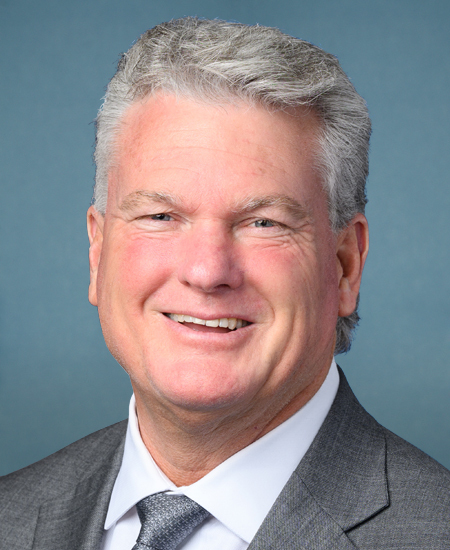
Rep. Mike Collins
Sponsored bills
Fair Access to Banking Act This bill places restrictions on certain banks, credit unions, and payment card networks if they refuse to do business with a person who complies with the law. Restrictions include prohibiting the use of electronic funds transfer systems and lending programs, termination of an institution's depository insurance, and specified civil penalties. Banks and other specified financial institutions are allowed to deny financial services to a person only if the denial is justified by a documented failure of that person to meet quantitative, impartial, risk-based standards established in advance by the institution. This justification may not be based upon reputational risks to the institution. The bill establishes the right for a person to bring a civil action for a violation of this bill.
Maddy summaryHR 908, the "Stop the Censorship Act," would amend Section 230 of the Communications Act to change how online platforms can moderate user content without losing legal immunity. It specifically revises the definition from removing "objectionable" material to only removing "unlawful" material, and adds a new provision stating platforms cannot be shielded for allowing users to restrict access to other content. This bill directly affects online platforms hosting user-generated content, such as social media sites and forums. The key change shifts the standard for immunity from subjective "objectionable" content to legally prohibited "unlawful" content.
Maddy summaryHR 943, the "No User Fees for Gun Owners Act," bans states and local governments from requiring insurance, taxes, or user fees as conditions for owning, buying, or selling firearms. It specifically prohibits these fees for firearm manufacture, importation, acquisition, transfer, or continued ownership, except for general sales taxes applied equally to all goods. The bill amends federal law to prevent states from imposing such conditions on gun ownership or commerce, while allowing standard sales taxes to apply uniformly. This directly affects gun owners, dealers, and manufacturers by removing mandatory fees tied to firearm transactions. The law does not restrict general sales taxes but eliminates state-specific fees as a prerequisite for firearm-related activities.
Maddy summaryHR 925, the "Dismantle DEI Act of 2025," would eliminate diversity, equity, and inclusion (DEI) programs across federal government operations. The bill requires federal agencies to close DEI offices, rescind related executive orders, and prohibit the use of federal funds for DEI training, offices, or initiatives. It defines "prohibited diversity, equity, or inclusion practice" as any activity that discriminates based on race, ethnicity, religion, biological sex, or national origin, or requires employees to complete training asserting that certain groups are inherently superior or inferior. The legislation also prohibits requiring employees to sign statements about race, ethnicity, or gender, and establishes private lawsuits for violations with potential damages of $1,000 per violation per day. This bill would directly affect federal agencies, contractors, grantees, and advisory committees receiving federal funding.
Silencers Help Us Save Hearing Act or the SHUSH Act This bill removes silencers from regulation under certain federal statutes governing the sale, transfer, and possession of firearms. Specifically, it removes silencers from the list of firearms subject to regulation (i.e., registration and licensing requirements) under the National Firearms Act (NFA). Additionally, it excludes a muffler or silencer from the list of firearms subject to regulation (e.g., background check requirements) under the Gun Control Act of 1968 (GCA). Finally, the bill does the following: preempts state or local laws that tax or regulate firearm silencers, specifies that a person who lawfully acquires or possesses a silencer under provisions of the GCA meets the registration and licensing requirements of the NFA, eliminates mandatory minimum prison terms for a crime of violence or drug trafficking offense in which a defendant uses or carries a firearm equipped with a silencer or muffler, and permits active and retired law enforcement officers to carry a concealed silencer.
Maddy summaryHR 833 creates a federal tax credit for individuals and corporations that contribute to scholarship granting organizations (SGOs) providing scholarships for elementary and secondary education. The credit allows taxpayers to deduct up to 10% of their adjusted gross income or $5,000 (whichever is less) for contributions to SGOs serving students from households with income up to 300% of the area median income. The bill establishes a $10 billion annual cap on the tax credit program, requires SGOs to verify student eligibility and maintain separate accounts, and prohibits government control over SGOs or private schools. It ensures scholarships can be used at public, private, or religious schools without discrimination based on religious character. The tax credit would be available for contributions made after December 31, 2025, with annual volume cap increases based on usage.
Maddy summaryHR 899 would end the U.S. Department of Education by December 31, 2026, terminating its federal agency status. This bill directly affects all federal education programs and operations currently managed by the Department, such as student aid and school funding. The key mechanism is a fixed termination date, requiring the transfer of the Department's responsibilities to other federal agencies without specifying new administrative structures. The bill focuses solely on ending the agency's existence, not altering education policy or funding mechanisms.
Maddy summaryThis bill prohibits federal funds from being used to cover gender transition procedures for individuals under 18, including puberty blockers, hormone therapies (at higher-than-normal doses), and surgeries like hysterectomies or mastectomies. It defines "sex" biologically as male or female and exempts certain medical treatments, such as puberty suppression for precocious puberty or care for genetic disorders of sex development. The policy directly affects minors receiving federally funded healthcare (e.g., Medicaid), restricting coverage for most gender-affirming care. Key mechanisms include funding restrictions and specific medical exceptions, though it does not ban private insurance or out-of-pocket payments.
Maddy summaryHR 735, the United States Reciprocal Trade Act, would give the President authority to impose tariffs on imports from countries that maintain higher tariffs on U.S. goods than the U.S. imposes on their goods, or that apply significant nontariff barriers. The bill requires the President to consider multiple factors before taking action, including tariff classifications, trade impacts, and competitive relationships, and mandates consultation with Congress before imposing new tariffs. It establishes a 3-year timeframe for these tariff actions with a potential 3-year extension, while providing Congress with a process to disapprove tariffs through a joint resolution requiring a two-thirds vote. The law aims to address perceived trade imbalances by promoting reciprocal trade practices between the U.S. and its trading partners.