

Maddy summaryHR 2457, the Mining Schools Act of 2025, establishes a competitive grant program to fund education and training programs for the U.S. mining industry. It directs the Secretary of Energy to award up to 10 annual grants to eligible "mining schools" - defined as accredited engineering programs (including Tribal Colleges) or specific geology/engineering departments at public universities in states with significant mining GDP - to recruit students and enhance curriculum. Grants must support education in critical areas like critical mineral extraction, environmental reclamation, rare earth element processing, and reducing reliance on foreign mineral supplies. The program requires geographic diversity in grant selection and mandates an advisory board (with industry and academic members) to review applications and ensure funds are used for specified educational purposes, with no new federal funds authorized.
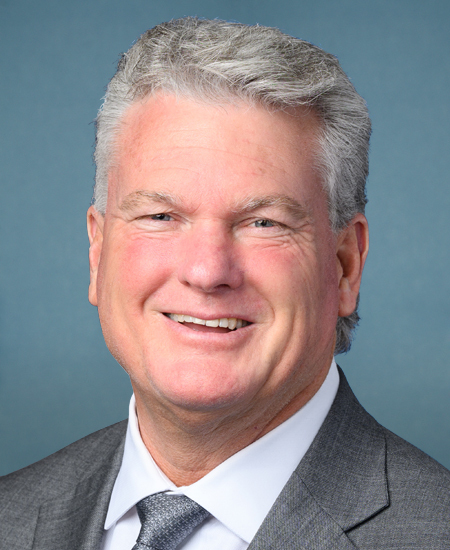
Rep. Mike Collins
Sponsored bills
Maddy summaryThe Cellphone Jamming Reform Act of 2025 allows state and federal correctional facilities to operate jamming systems that block cell signals from entering or leaving the facility, specifically targeting contraband devices used by inmates. It directly affects prisons and jails by enabling them to disrupt unauthorized wireless communications without FCC approval, provided the jamming is limited to housing areas within the facility. Key requirements include state facilities covering all costs themselves, consulting with local law enforcement before implementation, and notifying the Bureau of Prisons. The law aims to address security risks from smuggled phones while restricting jamming to only necessary areas and requiring transparency.
Fairness for High-Skilled Americans Act of 2025 This bill eliminates the Optional Practical Training Program or any successor program, unless Congress expressly authorizes such a program. (The program provides an F-1 student visa holder temporary employment authorization before or after completion of the student's studies, or both.)
Maddy summaryThis bill redesignates the existing Ocmulgee Mounds National Historical Park as Ocmulgee Mounds National Park and establishes a separate Ocmulgee Mounds National Preserve in Georgia. It allows voluntary land acquisition (via purchase, donation, or exchange) for both areas without eminent domain, and requires the Secretary of the Interior to develop a management plan prioritizing cultural resource preservation for the Muscogee (Creek) Nation. The bill mandates tribal consultation, provides hiring preferences for tribal members, and ensures protection of sacred sites. It also places 126 acres of tribal land into federal trust for the Muscogee (Creek) Nation.
Maddy summaryHR 1596 renames the U.S. National Poultry Research Center in Athens, Georgia, as the "Abit Massey Poultry Research Center" for all official government references. This naming bill updates the facility's official designation without changing its operations, funding, or policies. It directly affects the center's administrative and legal documentation but does not alter its research activities or impact any individuals or groups.
Maddy summaryHRES 229 is a formal House resolution impeaching Chief Judge James E. Boasberg of the U.S. District Court for the District of Columbia. It accuses him of abusing judicial power by interfering with President Trump's enforcement of immigration policies under the Alien Enemies Act, specifically blocking efforts to remove aliens linked to the Tren de Aragua terrorist group and ordering planes to turn around midair. The resolution claims these actions violated separation of powers by second-guessing the President's constitutional authority without judicial authority. This is a procedural impeachment resolution pending Senate action, not a law affecting the public.
Maddy summaryHRES 226 is a ceremonial resolution commemorating Delta Air Lines' 100th anniversary, marking the centennial of its founding on March 2, 1925. It recognizes Delta's history as the first U.S. airline to reach 100 years (originally as Huff Daland Dusters, an aerial crop-dusting company) and highlights its current scale, including 100,000 employees, 5,000 daily flights, and global connectivity. The resolution contains no policy changes or binding provisions - it simply expresses the House's recognition of Delta's milestone and its role in connecting people and supporting communities. As a commemorative resolution, it does not affect any individuals, businesses, or regulations.
Maddy summaryThe FOCA Act of 2025 prohibits federal agencies from requiring or banning contractors from using union agreements in construction project bids or contracts. It directly affects federal agencies, contractors, and subcontractors working on federally funded or assisted construction projects (like buildings or infrastructure). The law requires bid documents to not favor or penalize contractors based on whether they have union agreements, aiming to promote open competition and prevent discrimination. This changes how agencies structure bids but does not affect union agreements themselves. The bill applies to all new contracts and subcontracts after enactment, with limited exemptions only for public health/safety emergencies or national security.
Maddy summaryHR 2113, the America Supports Taiwan Act, requires all U.S. federal agencies to replace the term "Chinese Taipei" with "Taiwan" in official communications and agency websites, effective within 14 days of enactment. This change applies broadly to all agency materials, except when explaining historical context of China's pressure on Taiwan or when coordinating with international organizations that use a different name for Taiwan. The bill aims to avoid the connotation that Taiwan is part of China, as the "Chinese Taipei" term may imply PRC sovereignty. It does not alter U.S. military or economic support for Taiwan but focuses solely on official U.S. government terminology. The legislation is driven by findings of increased Chinese military activity near Taiwan and a preference for terminology that aligns with U.S. policy supporting Taiwan's self-defense capability.
Safe Routes Act of 2025 This bill directs the Department of Transportation to waive vehicle weight limits for covered logging vehicles, thus allowing logging vehicles to travel on interstate highways in certain circumstances. The term covered logging vehicle means a vehicle that (1) is transporting raw or unfinished forest products, including logs, pulpwood, biomass, or wood chips; (2) is traveling a distance not greater than 150 air miles on interstate highways from origin to a storage or processing facility; and (3) meets state legal weight tolerances and vehicle configurations for transporting raw or unfinished forest products within the state boundaries in which the vehicle is operating.