

Maddy summaryThe PASTEUR Act establishes a new subscription payment model to incentivize development of new antimicrobial drugs for resistant infections. It creates a Committee on Critical Need Antimicrobials and a Subscription Contract Office to manage payments based on specific drug characteristics like treating multi-drug resistant infections, novel mechanisms of action, and oral administration. Under this model, the government would pay drug developers up to $3 billion over 10 years for qualifying drugs, with payments tied to requirements like ensuring drug availability, reporting resistance data, and developing appropriate use plans. The bill aims to address the lack of new antimicrobial drugs by changing the funding model to reward drugs that meet specific clinical and public health needs.
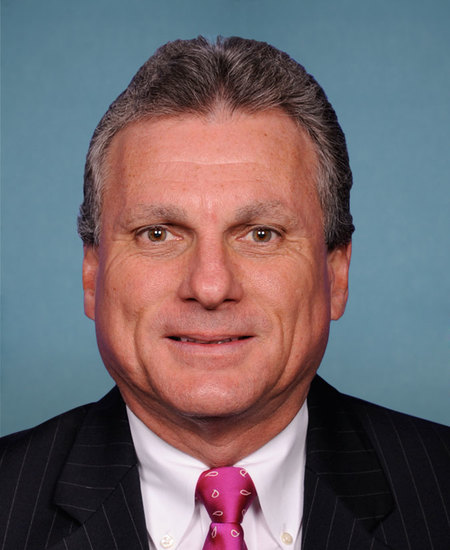
Rep. Earl L. "Buddy" Carter
Sponsored bills
Maddy summaryThis bill regulates pharmacy benefit managers (PBMs) working with Medicare Part D prescription drug plans. It prohibits PBMs from earning income based on drug prices or rebates (requiring flat fees instead), mandates equal reimbursement for all network pharmacies, and requires PBMs to report how much of drug rebates they pass through to Medicare plans. The law also mandates annual compliance certifications and requires the government to publish aggregated transparency data (without revealing specific plan details) starting in 2024. These changes directly affect Medicare Part D plans and the seniors who rely on them for prescription drug coverage.
Maddy summaryHR 2707, the MADE in America Act, creates a 25-30% federal tax credit for manufacturers producing specific health products (including drugs, medical devices, personal protective equipment, and diagnostic tools) in designated "distressed zones." These zones are census tracts with over 30% poverty rates that are also designated as qualified opportunity zones. The credit applies to wages paid to employees working in these zones and qualified production costs (like equipment and materials), increasing to 30% if most employees reside locally. It directly affects pharmaceutical and medical device manufacturers operating in eligible low-income areas, aiming to incentivize domestic production of critical health products.
Maddy summaryThe Pharmacy Benefits Manager Accountability Act requires pharmacy benefits managers (PBMs) and health insurance issuers to provide detailed annual reports to plan sponsors (like employers) about drug spending, rebates, and formulary decisions. These reports must include specific data on drugs dispensed, costs, patient out-of-pocket spending, rebates received from manufacturers, and net spending after rebates, all in machine-readable format. The bill establishes penalties of up to $10,000 per day for failure to provide required information and $100,000 per item for false information. It also directs a GAO study on pharmacy networks and common ownership structures to assess potential anti-competitive practices.
Maddy summaryHR 2474, the "Strengthening Medicare for Patients and Providers Act," changes how Medicare pays physicians for services. It replaces the previous two-part payment system (used through 2025) with a single annual payment rate update starting in 2024. This update will be based on the Medicare Economic Index (MEI), which tracks costs for medical providers. The change directly affects Medicare-certified doctors and clinics who receive payments under the physician fee schedule.
Maddy summaryThis bill would require Medicare to cover FDA-approved blood tests that screen for multiple cancers simultaneously (like breast, lung, or colorectal cancer) for beneficiaries. It directly affects Medicare recipients aged 65+ who could access these new screenings once per year, without prior authorization. The key provision adds "multi-cancer early detection screening tests" to Medicare's covered services under Part B, defining them as blood tests analyzing cell-free DNA, while maintaining existing coverage for standard screenings like mammograms. The bill does not change current coverage for individual cancer screenings but ensures Medicare keeps pace with new medical technology.
Maddy summaryThis bill modifies Medicare's rules for clinical laboratory testing to reduce administrative burdens. It requires the use of statistically valid sampling (instead of full reporting) for "widely available" tests - defined as tests costing under $1,000 per test with over 100 labs performing them - to determine payment rates starting in 2026. The bill also delays reporting deadlines until 2027, updates how labs are defined for payment purposes, and adds annual payment increase caps (2.5% for common tests in 2024-2025, rising to 5% by 2028). These changes directly affect Medicare-participating labs, particularly independent and hospital-based labs conducting common tests.
Maddy summaryThis bill expands Medicare Part B coverage to include specific pharmacist services, directly affecting Medicare beneficiaries and pharmacists who provide these services. It adds new coverage for pharmacist evaluations and treatments related to certain illnesses (like COVID-19, flu, or strep throat) and public health emergencies, requiring payment at 80% of the lesser of actual charge or 85% of physician payment rates (100% during emergencies). The bill also prohibits balance billing for these services, ensuring beneficiaries pay only the standard Medicare copayment. These changes aim to improve access to pharmacist care during health crises while aligning payment with existing physician service frameworks.
Maddy summaryHR 1666 extends deadlines for ambulance service reimbursement rules under Medicare. It amends Section 1834(l) of the Social Security Act by changing dates from 2025 to 2028 in two specific provisions: paragraph (12)(A) and paragraph (13)(A). This delay gives ambulance providers additional time to adjust to existing Medicare payment rules. The bill directly affects Medicare-certified ambulance services and the patients relying on ground ambulance care covered by Medicare.
Maddy summaryThe Prevent Interruptions in Physical Therapy Act of 2023 amends Medicare rules to allow physical therapists to use temporary replacement providers (locum tenens) for outpatient physical therapy services, aligning with existing provisions for physicians. This directly affects Medicare beneficiaries receiving physical therapy and physical therapy practices needing temporary staffing solutions during provider shortages. The bill updates the Social Security Act to extend the current physician locum tenens rule to physical therapists, ensuring continuity of care without requiring separate approval for temporary coverage. It applies to services furnished after the bill's enactment date.