

Maddy summaryHR 1990, the American Innovation and R&D Competitiveness Act of 2025, amends tax rules for businesses to make research and development (R&D) costs more flexible. It allows companies to deduct R&D expenses immediately as business costs (instead of capitalizing them) or to spread these costs over a minimum 60-month period. The bill clarifies which R&D expenses qualify, excludes land improvements and mineral exploration costs, and ensures companies can claim R&D tax credits without conflict with expense treatment. This directly affects businesses that conduct R&D, changing how they account for these costs on tax returns starting for 2022 taxable years.
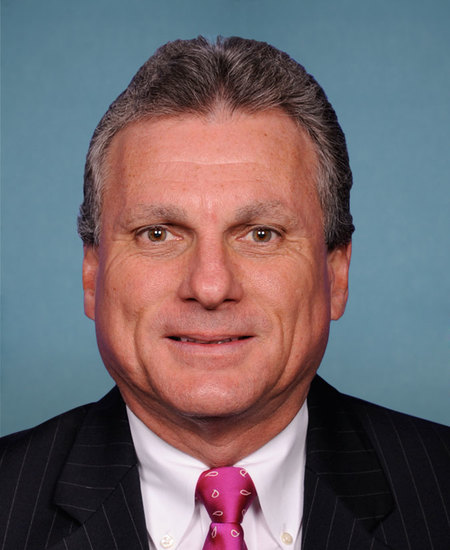
Rep. Earl L. "Buddy" Carter
Sponsored bills
Maddy summaryThe State Strategic Stockpile Act of 2025 reauthorizes a federal program that provides funding to states for maintaining emergency medical supply stockpiles. It extends the funding period through fiscal year 2030 and adds requirements for states to coordinate with health officials and share best practices through state consortia. The bill mandates that states receiving funds must collaborate with healthcare and emergency management entities within their jurisdiction. This directly affects state health departments and emergency management agencies that administer medical stockpiles under the program.
Maddy summaryThis bill extends current Medicare payment rates for durable medical equipment (like wheelchairs and oxygen) in non-rural areas through December 2025. It delays implementing a new payment rule for all areas until January 2026. The law directly affects Medicare beneficiaries needing equipment and the suppliers who provide it by maintaining existing reimbursement rates for an additional year. This avoids immediate payment reductions for non-rural areas while postponing the full transition to new rates.
Maddy summaryHRES 189 is a procedural resolution censuring Representative Al Green (D-TX) for disrupting a joint session of Congress on March 4, 2025, when he interrupted the President's address. The resolution states his conduct breached proper decorum, leading to his removal by the Sergeant at Arms. It mandates Green to appear in the House chamber for the public pronouncement of censure, with the resolution to be read aloud by the Speaker. This is a formal disciplinary action by the House, not a policy change affecting constituents or legislation.
Maddy summaryHR 1940, the Tanning Tax Repeal Act of 2025, removes a federal excise tax on indoor tanning services. It directly affects tanning salons and businesses providing these services by eliminating the tax they previously paid. The bill repeals Chapter 49 of the Internal Revenue Code, which imposed the tax, and the change takes effect for services provided after the bill becomes law. This is a straightforward tax repeal with no new requirements or funding mechanisms.
Maddy summaryThis bill authorizes a posthumous Congressional Gold Medal for actor James Earl Jones to recognize his career achievements in theater and film. It directs the Treasury Secretary to strike a gold medal bearing his name, which will be presented to his son, Flynn Earl Jones, following Jones' passing. The bill also permits the sale of bronze duplicates to cover costs. As a ceremonial honor with no policy changes, it does not affect legislation or government operations.
Maddy summaryHR 1909 reauthorizes federal funding and updates programs to reduce maternal deaths. It requires maternal mortality review committees to include obstetricians/gynecologists and improves death certificate reporting by coordinating with death certifiers. The bill mandates the CDC to share annual best practices for preventing maternal mortality with hospitals, state health groups, and perinatal programs. It also increases annual funding from $58 million to $100 million for these initiatives, covering fiscal years 2025 through 2029. The law directly affects hospitals, state health agencies, and maternal health programs receiving these federal funds.
Maddy summaryHR 1921, the Hearing Device Coverage Clarification Act, requires Medicare to clarify that fully implanted active middle ear hearing devices are prosthetics - not excluded hearing aids - ensuring they qualify for coverage under Medicare's prosthetic benefit. This change directly affects Medicare beneficiaries, particularly seniors and individuals with hearing impairments who rely on these implanted devices. The bill mandates the Centers for Medicare & Medicaid Services (CMS) to issue this clarification within 60 days of enactment, using the existing federal definition of "prosthetic" from the Code of Federal Regulations. This policy adjustment removes an administrative barrier, allowing Medicare to cover these devices without requiring separate policy changes.
Maddy summaryHR 471, the Fix Our Forests Act, establishes a new system for identifying and managing high-risk wildfire areas called "firesheds" and creates a centralized Fireshed Center to coordinate wildfire risk management across federal agencies. The bill streamlines environmental reviews for wildfire risk reduction projects, allowing for faster implementation of hazardous fuels management activities in designated areas. It includes provisions for community wildfire risk reduction programs, water source protection, and specific initiatives for restoring white oak forests. The legislation also includes litigation reforms to expedite forest management projects and reduce delays from legal challenges. These provisions aim to reduce wildfire risk and improve forest health through more coordinated, data-driven management approaches.
Maddy summaryThe SPEED for BEAD Act (HR 1870) amends the federal broadband deployment program (BEAD) to accelerate network expansion. It defines "gigabit-level broadband" as 1,000 Mbps download speeds, requires unused funds to be returned to the Treasury instead of reallocated, and allows states to remove high-cost locations from project areas. The bill prohibits grant conditions related to labor practices (e.g., union requirements), diversity initiatives, climate policies, or network management rules, while ensuring all broadband technologies meeting speed standards are eligible. It also explicitly bans government regulation of broadband pricing, directly affecting states administering BEAD funds and the internet providers they fund.