

Foreign Gain-of-Function Research Prevention Act of 2021 This bill prohibits the use of federal funds to conduct or support gain-of-function research involving potential pandemic pathogens by China, Russia, Iran, North Korea, or other foreign adversaries. Gain-of-function research is any research that is anticipated to confer an attribute on a pathogen to enhance its pathogenicity or transmissibility in mammals. If the Department of State finds that an entity has used funds for prohibited research, the entity may not receive any federal funding for a period of five years.
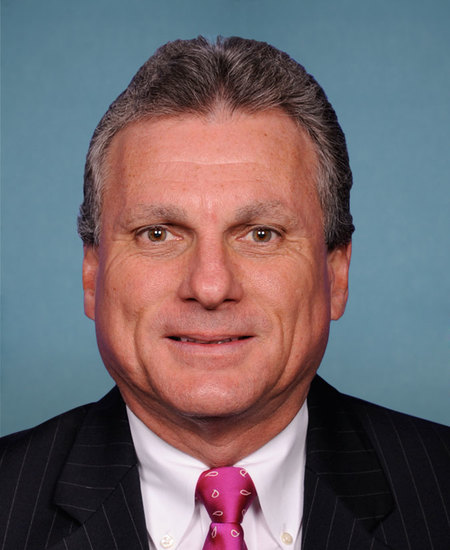
Rep. Earl L. "Buddy" Carter
Sponsored bills
Advancing Facial Recognition Technology Act This bill requires the Department of Commerce to study and report on the impact of facial recognition technology on U.S. businesses conducting interstate commerce. Such study shall involve, among other things, (1) listing industry sectors that develop, promote, and use facial recognition technology and public-private partnerships focused on promoting the development, adoption, and use of such technology; (2) establishing a list of federal agencies asserting jurisdiction over such industry sectors and entities; (3) assessing risks and trends in the marketplace and supply chain of facial recognition technology; and (4) identifying potential harms to individuals related to the use of such technology. Commerce must report to Congress the results of such study and any recommendations to promote the adoption of facial recognition technology.
Campus Free Speech Restoration Act This bill addresses expressive activities (e.g., peacefully assembling, distributing literature, or carrying signs) on college campuses. First, the bill generally prohibits a public institution of higher education (IHE) that participates in federal student-aid programs from restricting noncommercial expressive activities on campus. Further, the bill prohibits a public IHE from receiving federal funds if the Department of Education determines that the public IHE (1) maintains a policy that infringes upon the expressive rights of students; or (2) maintains or enforces time, place, or manner restrictions on expressive activities, except in limited circumstances. In addition, the bill prohibits retaliation against an individual because the individual reported or complained about restrictions on expressive activities or participated in an investigation or hearing. The bill also requires a private IHE that receives federal funds to provide students with its policies related to expressive rights. The bill also establishes a framework for investigating complaints and for IHEs to regain eligibility for federal funds.
Metropolitan Statistical Area Preservation Act This bill prohibits the Office of Management and Budget (OMB) from establishing, for purposes of designating areas as metropolitan statistical areas (MSAs), a minimum population for the urban area of such MSA that is more than 50,000. The OMB may, for statistical purposes only, establish other statistical area designations with higher minimum population requirements for such urban areas.
Manufacturing API, Drugs, and Excipients in America Act or the MADE in America Act This bill establishes a tax credit for taxpayers engaged in medical production activities in certain areas and contains other provisions related to pharmaceuticals. An eligible taxpayer may claim a tax credit equal to 25% of qualified expenditures related to the production of pharmaceuticals, medical devices, or other related items in a designated qualified opportunity zone with a poverty rate higher than 30%. The bill provides for increases to this tax credit in certain situations, such as if a substantial portion of the employees reside in areas with certain poverty levels. In addition, the Food and Drug Administration (FDA) must continue programs to facilitate the development and review of new drug or biological products that are manufactured using certain advanced manufacturing technologies. The bill imposes various requirements on these programs, including deadlines for evaluating such a technology. Furthermore, the Department of Health and Human Services must ensure timely and effective internal coordination and alignment between FDA field investigators and the staff of the Center for Drug Evaluation and Research's Office of Compliance and Drug Shortage Program regarding reports and feedback related to facility inspections.
Defending Domestic Produce Protection Act This bill establishes a process by which a core seasonal industry may petition for countervailing and antidumping duties. A core seasonal industry means the producers (1) of a domestic like product that is a raw agricultural product, (2) whose collective output constitutes a majority of the total production in any state or group of states that accounts for a major portion of the total production during a discrete season or cyclical period of time, and (3) that make substantially all of their sales during that season or time period. The bill also provides that this process shall apply with respect to goods from Canada and Mexico.
Shark Fin Sales Elimination Act of 20 21 This bill addresses the sale of shark fins and the inclusion of rays and skates in the Seafood Traceability Program. The Seafood Traceability Program has data reporting and recordkeeping requirements at the time of entry for imported fish or fish products entered into U.S. commerce. The bill makes it illegal to possess, buy, or sell shark fins or any product containing shark fins, except for certain dogfish fins. A person may possess a shark fin that was lawfully taken consistent with a license or permit under certain circumstances. Penalties are imposed for violations under the Magnuson-Stevens Fishery Conservation and Management Act. The Department of Commerce must revise its regulations to include rays and skates as species that are subject to the Seafood Traceability Program.
This bill expands eligibility for Post-9/11 GI Bill benefits to members of the National Guard who perform certain full-time service at the request of the President or the Secretary of Defense (i.e., full-time National Guard duty). Specifically, the bill eliminates the existing requirement that eligible full-time service must be in response to a declared national emergency. The bill also specifies that training is not included as full-time service for purposes of eligibility for these members.
Critical Mineral Access Act This bill authorizes the U.S. International Development Finance Corporation to provide support to high-income economy countries for developing and processing specified critical materials if such support furthers U.S. national security interests. Critical materials include, for example, rare earth elements, aluminum, and uranium. A high-income economy country is one with a per capita gross national income (GNI) that exceeds $12,695 for 2021. Current law limits the corporation's activities to facilitating the economic development of countries with a per capita GNI below that amount.