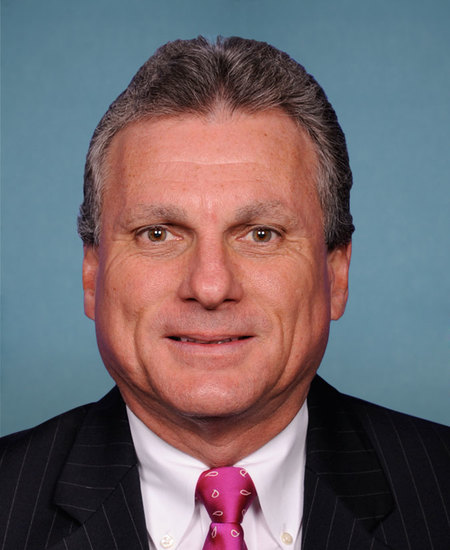
Photo of Earl L. "Buddy" Carter
R United States House · District 1 · Georgia

Rep. Earl L. "Buddy" Carter

Compare
Total votes
2,837
all sessions
Attendance
96%
104 missed
Lower than 83% of chamber peers
With party
96%
of cast votes
Higher than 92% of chamber peers
Bipartisan score
2%
crosses aisle rarely
Lower than 93% of chamber peers
Sponsored
1,348
bills & resolutions
Higher than 79% of chamber peers
Committees
5
assignments
1,348 bills and resolutions

Sponsored bills

Total
1,348
Primary
159
Co-sponsor
1,189
This page
1,348
matching current filters
Co-sponsor HR 5801
In committee · Indiana House · Co-sponsor
HELP Copays Act

Help Ensure Lower Patient Copays Act or the HELP Copays Act This bill requires health insurance plans to apply certain payments made by, or on behalf of, a plan enrollee toward a plan's cost-sharing requirements. Specifically, plans must apply third-party payments, financial assistance, discounts, product vouchers, and other reductions in out-of-pocket expenses toward the requirements.

In committee Nov 2, 2021 1 co-sponsor
Co-sponsor HR 5793
In committee · Indiana House · Co-sponsor
NFIP Risk Rating 2.0 Delay Act of 2021

NFIP Risk Rating 2.0 Delay Act of 2021 This bill freezes premium rates for flood insurance provided through the National Flood Insurance Program through September 30, 2022.

In committee Nov 1, 2021 1 co-sponsor
Co-sponsor HR 5735
In committee · Indiana House · Co-sponsor
State, Local, Tribal, and Territorial Fiscal Recovery, Infrastructure, and Disaster Relief Flexibility Act

State, Local, Tribal, and Territorial Fiscal Recovery, Infrastructure, and Disaster Relief Flexibility Act This bill allows states, tribes, territories, and localities to use certain COVID-19 relief funds for new categories of spending, including for natural disasters and infrastructure projects. It also makes changes to expenditure deadlines and other aspects of this funding. Specifically, recipients may use funds for emergency relief from natural disasters and associated negative economic impacts of natural disasters. In addition, recipients may use a portion of their COVID-19 relief funds for designated infrastructure projects, such as nationally significant freight and highway projects. Furthermore, the bill allows recipients to expend COVID-19 relief funds on these types of infrastructure projects until September 30, 2026. Under current law, recipients must expend the funds by December 31, 2024. Other changes in the bill include (1) modifying eligibility and allocation requirements for funding set aside for counties and Indian tribes that are near public lands, (2) allowing Indian tribes an additional year to expend their COVID-19 relief funds, and (3) establishing a process for government entities to decline COVID-19 relief funds and requiring any declined funds to be used to reduce the federal deficit.

In committee Oct 26, 2021 1 co-sponsor
Co-sponsor HRES 692
In committee · Indiana House · Co-sponsor
Recognizing the dedication and courage of United States veterans, veterans' organizations, and private citizens who have worked and continue to work to evacuate United States persons and vulnerable Afghans from Afghanistan.

This resolution recognizes the dedication and courage of veterans, veterans' organizations, and private citizens who have worked and continue to work to evacuate U.S. persons and vulnerable Afghans from Afghanistan. The resolution also encourages the Department of State and Department of Defense to work with veterans' service organizations and their networks to evacuate those who remain in Afghanistan.

In committee Oct 25, 2021 1 co-sponsor
Co-sponsor HR 2316
In committee · Indiana House · Co-sponsor
Fire Fauci Act

Fire Fauci Act This bill reduces the annual rate of pay of the Director of the National Institute of Allergy and Infectious Diseases (NIAID) to $0. This reduction applies until there is a new director who is not Anthony Fauci, MD. In addition, the Government Accountability Office must audit digital correspondence, policy memoranda, and financial transactions of the Office of the Director of NIAID from October 1, 2019, through December 31, 2021.

In committee Oct 25, 2021 1 co-sponsor
Co-sponsor HR 5656
In committee · Indiana House · Co-sponsor
Simon Crosier Act

Simon Crosier Act This bill requires hospitals and other health care providers, as a condition of Medicare and Medicaid participation, to have certain written policies and procedures in place that limit the implementation of do-not-resuscitate (DNR) orders for unemancipated minors in accordance with specified criteria. Among other provisions, such policies and procedures must (1) require the informed consent of at least one parent and a reasonable attempt to contact the other parent before instituting a DNR order, (2) allow either parent to refuse to consent to a DNR order, and (3) allow a parent to transfer a minor to another facility after being informed of an intent to institute a DNR order.

In committee Oct 22, 2021 1 co-sponsor
Co-sponsor HRES 731
In committee · Indiana House · Co-sponsor
To recognize the centennial of the Tomb of the Unknown Soldier.

This resolution recognizes the ultimate sacrifice of the unknown soldiers interred at Arlington National Cemetery and expresses gratitude and appreciation of all the members of the Armed Forces who have served during wars and peacetime. Additionally, the resolution commends all members of the 3d Infantry Regiment, specifically those who guard the Tomb of the Unknown Solider.

In committee Oct 21, 2021 1 co-sponsor
Co-sponsor HR 4028
Passed · Indiana House · Co-sponsor
Information and Communication Technology Strategy Act

Information and Communication Technology Strategy Act This bill requires the National Telecommunications and Information Administration to report on the information and communication technology supply chain and to develop a strategy to ensure the economic competitiveness of trusted information and communication technology vendors. The report must include (1) an identification of technology that is critical to U.S. economic competitiveness and the industrial capacity of U.S. vendors and other trusted vendors that produce such technology, (2) an assessment of whether and to what extent there is a dependence by providers of advanced telecommunications capability in the United States on technology that is not trusted, and (3) an identification of federal government actions and resources needed to support the economic competitiveness of trusted vendors and reduce dependence on companies that are not trusted.

Passed Oct 21, 2021 1 co-sponsor
Co-sponsor HR 3635
Passed · Indiana House · Co-sponsor
Strengthening America's Strategic National Stockpile Act of 2021

Strengthening America's Strategic National Stockpile Act of 2021 This bill makes changes to the administration and management of the Strategic National Stockpile. Among these changes, the bill authorizes through September 30, 2024, the Department of Health and Human Services (HHS) to transfer supplies from the stockpile to any federal departments or agencies under certain conditions. HHS must also ensure the contents of the stockpile remain in working order and may enter into maintenance service contracts to carry out this requirement. Furthermore, as part of its management of the stockpile, HHS must establish and maintain domestic reserves of certain supplies, including by entering into cooperative agreements or partnerships to access facilities and equipment to produce these supplies. The authority for such agreements and partnerships terminates on September 30, 2024. Additionally, the bill temporarily authorizes HHS to award grants to states for maintaining stockpiles of certain equipment and supplies for use during public health emergencies. HHS must also develop transparent processes for the use and distribution of supplies from the stockpile that address, for example, the prioritization of requests. Additionally, during the COVID-19 emergency, the Office of the Assistant Secretary for Preparedness and Response must report monthly on requests for supplies from states, tribes, and other jurisdictions. These reports must include the rationale for any partially fulfilled or denied requests. Lastly, the Government Accountability Office must study the feasibility of establishing user fees to offset costs for procuring single-source materials for, and distributing such materials from, the stockpile.


Passed Oct 21, 2021 1 co-sponsor
Showing 1,141 to 1,150 of 1,348 bills