

Tech to Save Moms Act This bill supports the use of technology to improve, and address disparities in, maternal health outcomes. Specifically, the Center for Medicare and Medicaid Innovation may test telehealth models to screen and treat common pregnancy-related complications for Medicaid enrollees. In addition, the Department of Health and Human Services must award grants to evaluate and expand the use of technology-enabled collaborative learning models by entities that provide services to pregnant and postpartum individuals in medically underserved areas or from certain populations, and reduce racial and ethnic disparities in maternal health outcomes by increasing access to digital tools. The National Academies of Sciences, Engineering, and Medicine must also study the use of technology in maternal health care.
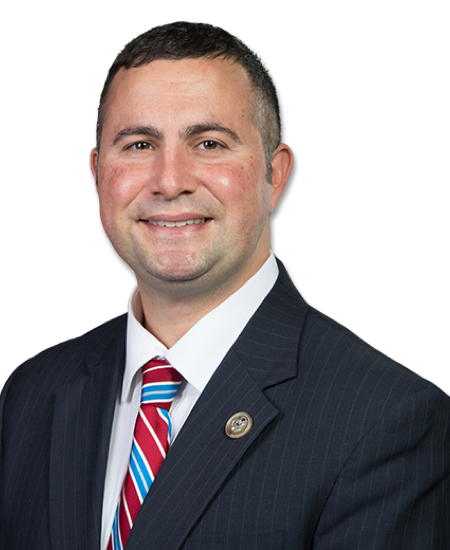
Rep. Darren Soto
Sponsored bills
Innovative Maternal Payment And Coverage To Save Moms Act or the IMPACT to Save Moms Act This bill requires the Centers for Medicare & Medicaid Services to establish the Perinatal Care Alternative Payment Model Demonstration Project to allow states to test payment models for maternity care, including postpartum care, under Medicaid and the Children's Health Insurance Program (CHIP). Additionally, the Medicaid and CHIP Payment and Access Commission must report on specified information relating to the continuity of coverage for pregnant and postpartum women under Medicaid and CHIP.
Saracini Enhanced Aviation Safety Act of 20 21 This bill requires the Federal Aviation Administration to issue an order requiring installation of a secondary cockpit barrier on commercial passenger aircraft.
Stronger Medicaid Response to the COVID-19 Pandemic Act This bill allows COVID-19 (i.e., coronavirus disease 2019) vaccines, prevention, and treatment, as well as prevention and treatment for conditions that may complicate COVID-19 treatment, for uninsured individuals to be covered under Medicaid during the public health emergency. (Currently, state Medicaid programs have the option to cover COVID-19 testing for uninsured individuals.) The bill also (1) specifically allows COVID-19 testing, vaccines, prevention, and treatment, as well as prevention and treatment for complicating conditions, for certain unlawful aliens to be covered under Medicaid during the public health emergency; and (2) specifies how the value and provision of COVID-19 assistance should be considered with respect to certain governmental programs and requirements.
American Family Act of 2021 This bill modifies the child tax credit to (1) make the credit fully refundable, (2) increase the amount of the credit and allow an additional credit for children who are under six years of age, (3) require the amount of the credit to be adjusted annually for inflation, and (4) require the Department of the Treasury to establish a program for making advance payments of the credit on a monthly basis.
Climate Action Planning for Ports Act of 2021 This bill authorizes the Environmental Protection Agency to award grants for developing climate action plans to reduce greenhouse gas emissions or other air pollutants at ports or port facilities or implementing plans to reduce greenhouse gas emissions at one or more ports or port facilities. Climate action plans must demonstrate that the measures proposed to be implemented through the grants will do at least two of the following: improve energy efficiency at ports or port facilities, deploy technology or processes that reduce idling of vehicles at ports or port facilities, or reduce the direct emissions of greenhouse gases and other air pollutants with a goal of achieving zero emissions.
Alerting Localities of Environmental Risks and Threats Act of 2021 This bill requires the owner or operator of a facility where hazardous chemicals are produced, used, or stored to hold a public meeting within 72 hours of the release of an extremely hazardous substance. The owner or operator must publish a notice in a local newspaper, giving at least 24 hours of notice before the public meeting. Such notice must be posted at a local library, other local government buildings, and on the facility's public website. The bill also requires the owner or operator of a facility to hold an annual public meeting, where specified information regarding the extremely hazardous substances at the facility must be disclosed. Notice for such meeting must be published in a local newspaper at least a week in advance of the meeting. The bill provides for a civil penalty if such public meeting and notice requirements are not met.
Small Business PPE Tax Credit Act This bill allows certain small businesses a tax credit for qualified personal protective equipment expenses, up to $25,000 in a taxable year. The entities eligible for such credit include farms, veterans organizations, and tribal business concerns. The bill defines qualified personal protective equipment expenses to include the cost of equipment for reducing the risk of coronavirus (i.e., the virus that causes COVID-19) transmission, including gloves, medical masks and protective gear, and cleaning supplies.
Future Advancement of Academic Nursing Act or the FAAN Act This bill authorizes the Health Resources and Services Administration (HRSA) to award grants to nursing schools to increase capacity to respond to public health emergencies and pandemics and otherwise enhance nursing education programs. In awarding these grants, HRSA shall prioritize historically Black colleges and universities and other minority-serving institutions, schools that are located in medically underserved communities, and schools in areas with shortages of health professionals.
Barriers to Suicide Act of 20 21 This bill requires the Department of Transportation (DOT) to establish a program to facilitate the installation of evidence-based suicide deterrents on bridges, including suicide prevention nets and barriers. DOT may award competitive grants to states and local governments to carry out the program. The Government Accountability Office must conduct a study to identify the types of structures, other than bridges, that attract a high number of individuals attempting suicide-by-jumping and the types of nets or barriers that are effective at reducing such suicides.