

This resolution acknowledges racial disparities in the impact of colorectal cancer, particularly in the Black community, and encourages actions to address those disparities.
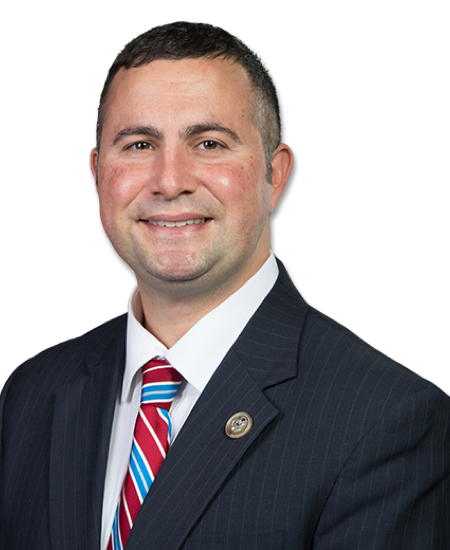
Rep. Darren Soto
Sponsored bills
Help Independent Tracks Succeed Act or the HITS Act This bill permits taxpayers to treat as currently deductible expenses the cost of qualified sound recording productions not exceeding $150,000 in a taxable year. The bill defines qualified sound recording production as certain sound recordings produced and recorded in the United States.
Student Loan Refinancing and Recalculation Act This bill provides for the refinancing or deferral of certain federal student loans. Specifically, the bill directs the Department of Education to establish a program to refinance the outstanding principal, interest, and late charges on federal student loans in order to give borrowers fixed interest rates equal to the 10-year Treasury note rate plus one percentage point. Further, the bill eliminates origination fees on the loans. In addition, the bill allows borrowers in medical, veterinary, or dental internship or residency programs to defer student loan payments until the completion of their programs.
Improving Access to Indian Health Services Act This bill permanently extends certain Medicaid flexibilities relating to Indian health care providers. Specifically, the bill permanently expands coverage to include clinical services that are furnished outside of a clinic by an Indian Health Service (IHS) facility, a tribe or tribal organization, or an Urban Indian Organization (UIO). Current guidance from the Centers for Medicare & Medicaid Services allows IHS and tribal facilities to receive payment for clinical services provided outside of clinics through October 31, 2021; facilities are expected to work with their state Medicaid programs to transition to other, more permanent payment options for these services. The bill also permanently establishes a 100% federal matching rate, also known as the Federal Medical Assistance Percentage (FMAP), for UIO services. Current law provides a 100% FMAP for UIO services during the eight fiscal quarters after March 11, 2021.
Funding for Aviation Screeners and Threat Elimination Restoration Act or the FASTER Act This bill repeals the requirement that a portion of aviation security service fees collected from passengers be credited as offsetting receipts and deposited in the general fund of the Treasury. It requires such fees to be deposited into a separate account in the Treasury for expenditure to pay only the costs of activities and services for which the fee is imposed (i.e., aviation security screening).
RTP Full Funding Act of 202 1 This bill revises provisions regarding the recreational trails program of the Department of Transportation (DOT). Specifically, the bill requires DOT to estimate the total amount of nonhighway recreational fuel taxes received by the Department of the Treasury and transferred to the Highway Trust Fund; the Federal Highway Administration to establish financial management information system codes for certain motorized and non-motorized use projects, including single and diverse use projects; DOT to reserve amounts of the state-apportioned funds for administrative, research, technical assistance, and training expenses to carry out the recreational trails program; and states to obligate a specific amount of reserved funds each fiscal year for the recreational trails program.
Fairness in Medicare Part B Enrollment Act of 2021 This bill exempts an individual from late-enrollment penalties for Medicare medical services if the individual resided in Puerto Rico as of the date of eligibility and the individual enrolls within five years of such date. Currently, the late enrollment penalty is 10% of monthly premiums for each 12-month period during which the individual was not enrolled, and the penalty continues to apply for as long as the individual is enrolled in Medicare medical services.
This bill establishes a Federal Medical Assistance Percentage (i.e., federal matching rate) of 100% with respect to a U.S. territory's use of specified federal funds to provide covered drugs to low-income individuals who are eligible for the Medicare prescription drug benefit.
Territories Medicare Prescription Drug Assistance Equality Act of 2021 This bill makes certain income-based subsidies under the Medicare prescription drug benefit available to individuals who reside in Puerto Rico or another U.S. territory and are otherwise eligible. Current law makes such individuals ineligible for premium and cost-sharing subsidies, but establishes a process for U.S. territories to apply for financial assistance with respect to the provision of Medicare prescription drugs. The bill retains a process for U.S. territories to apply for such assistance, but alters the formula by which the amount of assistance is calculated. Specifically, the bill phases in modifications to the formula that more closely align how assistance is calculated for U.S. territories with how it is calculated for the 50 states and the District of Columbia.
No Tax Breaks for Outsourcing Act This bill modifies the tax treatment of the foreign source income of domestic corporations. The bill includes provisions that modify calculations of the gross income of U.S. shareholders to include net CFC tested income in the current taxable year, apply limitations on the foreign tax credit on a country-by-country basis, limit the tax deduction for the interest expense of a U.S. corporation that is a member of a financial reporting group (i.e., a group that prepares consolidated financial statements according to generally accepted accounting principles or international financial reporting standards), modify the rules for the taxation of inverted corporations (i.e., U.S. corporations that acquire foreign companies to reincorporate in a foreign jurisdiction with income tax rates lower than the United States), and treat certain foreign corporations managed and controlled primarily in the United States as domestic corporations for tax purposes.