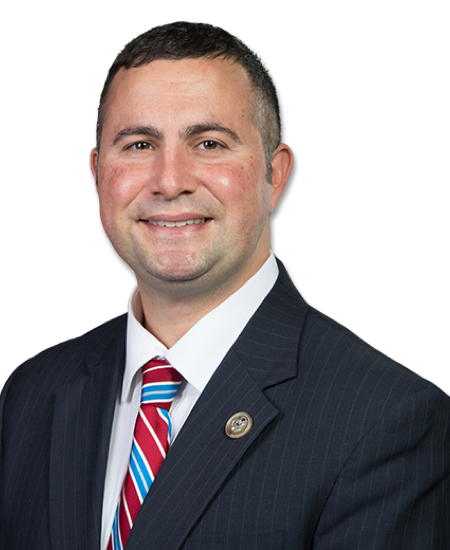
Photo of Darren Soto
D United States House · District 9 · Florida On the 2026 ballot

Rep. Darren Soto

Compare
Total votes
2,837
all sessions
Attendance
100%
10 missed
Higher than 96% of chamber peers
With party
96%
of cast votes
Lower than 84% of chamber peers
Bipartisan score
2%
crosses aisle rarely
Higher than 83% of chamber peers
Sponsored
1,950
bills & resolutions
Higher than 85% of chamber peers
Committees
6
assignments
1,950 bills and resolutions

Sponsored bills

Total
1,950
Primary
75
Co-sponsor
1,875
This page
1,950
matching current filters
Co-sponsor HR 1347
In committee · Indiana House · Co-sponsor
Eric Garner Excessive Use of Force Prevention Act of 2021

Eric Garner Excessive Use of Force Prevention Act of 2021 This bill modifies the criminal civil rights statute that prohibits the deprivation of rights under color of law. Currently, the second prong of the prohibition bars the application of different punishments, pains, or penalties based on an individual's alien status, color, or race. This bill specifies that the application of any pressure to a person's throat or windpipe, the use of maneuvers that restrict blood or oxygen flow to the brain, or carotid artery restraints that prevent or hinder breathing or reduce intake of air (e.g., a chokehold) constitute a punishment, pain, or penalty.

In committee Apr 28, 2021 1 co-sponsor
Co-sponsor HR 1384
In committee · Indiana House · Co-sponsor
Mainstreaming Addiction Treatment Act of 2021

Mainstreaming Addiction Treatment Act of 2021 This bill removes the requirement that a health care practitioner apply for a separate waiver through the Drug Enforcement Administration (DEA) to dispense certain narcotic drugs (e.g., buprenorphine) for maintenance or detoxification treatment (i.e., substance use disorder treatment). Further, a community health aide or community health practitioner may dispense certain narcotic drugs for maintenance or detoxification treatment without registering with the DEA if the drug is prescribed by a health care practitioner through telemedicine. It preempts state laws related to licensure for this activity. The bill also directs the Substance Abuse and Mental Health Services Administration to conduct a national campaign to educate health care practitioners and encourage them to integrate substance use disorder treatment into their practices.

In committee Apr 28, 2021 1 co-sponsor
Co-sponsor HR 1229
In committee · Indiana House · Co-sponsor
EAGLES Act of 2021

EAGLES Act of 2021 This bill reauthorizes the National Threat Assessment Center (NTAC) within the U.S. Secret Service. It reauthorizes the functions of NTAC through FY2025 and expands them to include the establishment of a national program on targeted school violence prevention.

In committee Apr 28, 2021 1 co-sponsor
Co-sponsor HR 1140
In committee · Indiana House · Co-sponsor
Juror Non-Discrimination Act of 2021

Juror Non-Discrimination Act of 2021 This bill prohibits the exclusion of individuals from jury service on the basis of their sexual orientation or gender identity.

In committee Apr 28, 2021 1 co-sponsor
Co-sponsor HR 1177
In committee · Indiana House · Co-sponsor
U.S. Citizenship Act

U.S. Citizenship Act This bill establishes a path to citizenship for certain undocumented individuals. The bill also replaces the term alien with noncitizen in the immigration statutes and addresses other related issues. Specifically, the bill establishes a new status of lawful prospective immigrant . This status shall be available to an applying noncitizen who meets certain requirements, including being continually present in the United States from January 1, 2021, and passing background checks. After at least five years with this status, an eligible noncitizen may apply for and receive permanent resident status. The bill also provides permanent resident status to certain applying noncitizens, specifically for eligible noncitizens who (1) entered the United States as a minor, (2) were eligible for temporary protected status or deferred enforced departure on January 1, 2017, or (3) worked a certain amount of agricultural labor in the five years prior to applying. Among other things, the bill also redefines for immigration purposes the term conviction to exclude convictions that have been expunged or vacated, requires the Department of State to implement a strategy to advance reforms in Central America and address key factors contributing to migration from the region to the United States, requires the State Department to establish refugee processing centers in Central America, requires Customs and Border Patrol sectors and stations to have a certain number of employees with certain qualifications such as paramedic training, generally prohibits religious discrimination in granting or denying immigration benefits, and establishes grant programs for providing training and services to immigrants.

In committee Apr 28, 2021 1 co-sponsor
Co-sponsor HR 2846
In committee · Indiana House · Co-sponsor
Ensuring Access to Lower-Cost Medicines for Seniors Act of 2021

Ensuring Access to Lower-Cost Medicines for Seniors Act of 2021 This bill establishes additional requirements for prescription drug plan (PDP) sponsors that use formularies under the Medicare prescription drug benefit. Specifically, the bill requires PDP formularies to include covered generic drugs and biosimilars for which the wholesale acquisition cost is less than that of the reference (i.e., brand-name) product. PDP sponsors must also establish specific cost-sharing tiers that apply lower cost-sharing requirements for such covered generic drugs and biosimilars as compared to those for brand-name products. The bill also prohibits PDP sponsors from instituting certain requirements relating to access to such covered generic drugs and biosimilars that are more restrictive than those for brand-name products (e.g., prior authorization requirements).

In committee Apr 27, 2021 1 co-sponsor
Co-sponsor HR 3
In committee · Indiana House · Co-sponsor
Elijah E. Cummings Lower Drug Costs Now Act

Elijah E. Cummings Lower Drug Costs Now Act This bill establishes several programs and requirements relating to the prices of prescription drugs. In particular, the bill requires the Department of Health and Human Services (HHS) to negotiate prices for certain drugs (current law prohibits HHS from doing so). Specifically, HHS must negotiate maximum prices for single-source, brand-name drugs that lack certain generics and that are among either the 125 drugs that account for the greatest national spending or the 125 drugs that account for the greatest Medicare spending. HHS must negotiate the prices of at least 25 such drugs for 2024 and of at least 50 such drugs thereafter and must also negotiate prices for certain newly approved drugs and for insulin products. The negotiated prices must be offered under Medicare and may also be offered under private health insurance unless the insurer opts out. The negotiated maximum price may not exceed (1) 120% of the average price in Australia, Canada, France, Germany, Japan, and the United Kingdom; or (2) if such information is not available, 85% of the U.S. average manufacturer price. Drug manufacturers that fail to comply with the bill's negotiation requirements are subject to civil and tax penalties. The bill also makes a series of additional changes to Medicare prescription drug coverage and pricing, including by (1) requiring drug manufacturers to issue rebates to the Centers for Medicare & Medicaid Services for covered drugs that cost $100 or more and for which the average manufacturer price increases faster than inflation, and (2) capping annual out-of-pocket spending under the Medicare prescription drug benefit. The bill also requires drug manufacturers to report specified information for certain high-cost drugs, and it provides funds for opioid epidemic initiatives and biomedical research.

In committee Apr 27, 2021 1 co-sponsor
Co-sponsor HR 2759
In committee · Indiana House · Co-sponsor
Pharmacy and Medically Underserved Areas Enhancement Act

Pharmacy and Medically Underserved Areas Enhancement Act This bill provides for Medicare coverage and payment with respect to certain pharmacist services that (1) are furnished by a pharmacist in a health-professional shortage area, and (2) would otherwise be covered under Medicare if furnished by a physician.

In committee Apr 23, 2021 1 co-sponsor
Co-sponsor HR 996
In committee · Indiana House · Co-sponsor
Congress Commission Act

Congress Commission Act This bill establishes the Congressional Commission to Strengthen Representative Democracy, which must examine and make recommendations relating to changing the membership size of the House of Representatives and the method of electing Representatives.

In committee Apr 23, 2021 1 co-sponsor
Co-sponsor HR 959
In committee · Indiana House · Co-sponsor
Black Maternal Health Momnibus Act of 2021

Black Maternal Health Momnibus Act of 2021 This bill directs multi-agency efforts to improve maternal health, particularly among racial and ethnic minority groups, veterans, and other vulnerable populations. It also addresses maternal health issues related to COVID-19 (i.e., coronavirus disease 2019). The Department of Health and Human Services (HHS) and other specified departments must address the social determinants of maternal health, which include child care, housing, food security, transportation, and environmental conditions. The bill also extends to 24 months postpartum eligibility for the Special Supplemental Nutrition Program for Woman, Infants, and Children. Additionally, HHS and other agencies must take actions to grow and diversify the maternal health workforce. To increase access to maternity care, HHS and other agencies must (1) award specified grants; (2) test an alternative payment model for perinatal care under Medicaid and the Children's Health Insurance Program (CHIP); and (3) support training, technology, and telehealth initiatives. The bill also increases research and data collection on maternal morbidity and mortality, particularly among tribal populations and minority groups. The Bureau of Prisons and the Department of Justice must establish programs to improve maternity care for incarcerated populations. The Medicaid and CHIP Payment and Access Commission must also report on the impact of Medicaid ineligibility for pregnant and postpartum prisoners. Additionally, as a condition for certain grants, states and territories must have laws limiting the use of restraints on pregnant individuals in prisons. The bill also directs activities to mitigate adverse maternal health outcomes associated with climate change and to improve maternal vaccination rates.


In committee Apr 23, 2021 1 co-sponsor
Showing 1,741 to 1,750 of 1,950 bills