Maddy summaryThe FAIC Act requires Medicare to pay separately for certain high-cost cancer treatments starting in 2026, rather than bundling them into general outpatient service payments. This change applies to FDA-approved cancer drugs and biologics that do not receive special transitional payments and cost at least $350 per day. The separate payment amount will be based on the drug's average sales price or, if unavailable, its wholesale acquisition cost or mean unit cost. The law includes a budget neutrality provision to ensure total Medicare spending remains unchanged by adjusting other payments as needed.
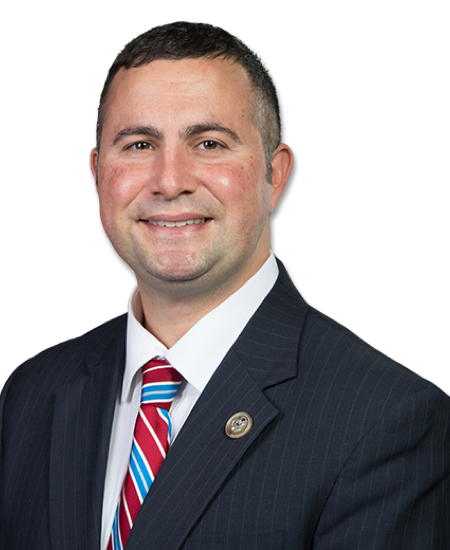
Rep. Darren Soto
Sponsored bills
Maddy summaryHR 7464, the TEMP Act, requires the Federal Crop Insurance Corporation to research and develop index-based insurance for specific crops (like tomatoes, citrus, and strawberries) against frost or cold weather damage. This research must evaluate risk management tools and aim to create policies covering either production or revenue loss from such events. The Corporation must report its findings and recommendations to Congress within one year of the bill's enactment. The bill directly affects farmers growing these frost-vulnerable crops by initiating a process to potentially expand their insurance options.
Maddy summaryThis bill establishes a federal task force to address maternal health disparities by coordinating efforts across multiple government agencies and community stakeholders to reduce preventable maternal deaths and serious health complications. The task force will include representatives from various departments such as Health and Human Services, Housing and Urban Development, and Transportation, along with community leaders, patients, and healthcare providers focused on maternal health. Additionally, the bill authorizes $100 million over five years to provide grants to community organizations for addressing social determinants of maternal health including housing, transportation, nutrition, employment, and environmental conditions. These grants prioritize areas with high rates of maternal mortality and poverty, and recipients must submit annual reports on their activities and outcomes. The legislation defines key terms such as maternal mortality and social determinants of maternal health to guide implementation and reporting requirements.
Maddy summaryH.Res. 1046 is a procedural resolution that sets the rules for the House to immediately consider H.R. 3310, which would allow Venezuelan nationals to apply for temporary protected status under U.S. immigration law. The resolution waives all objections to the bill and limits debate to one hour, equally divided between the majority and minority leaders. It does not change the substance of H.R. 3310 but streamlines its consideration process in the House.
Maddy summaryHR 1799, the Financial Reporting Threshold Modernization Act, raises reporting thresholds for financial institutions handling large cash transactions. It increases the threshold for currency transaction reports from $10,000 to $30,000 and adjusts suspicious activity report thresholds from $5,000/$2,000 to $10,000/$3,000. The bill requires automatic updates to these thresholds every five years using the Consumer Price Index to account for inflation. This directly affects banks, money services businesses, and other entities that must file these reports under U.S. financial regulations.
Maddy summaryThis bill prohibits AI chatbots from misleading users into believing they are licensed professionals in fields like law, healthcare, finance, accounting, or insurance. It requires companies deploying AI chatbots to avoid generating content that falsely implies the AI has professional credentials or human verification from a licensed practitioner. The Federal Trade Commission would enforce these rules as unfair or deceptive practices, while state attorneys general could also sue for violations and seek damages. Individuals harmed by such violations could file lawsuits to recover actual losses or up to $5,000 per violation, with higher penalties for willful misconduct.
Maddy summaryThis bill designates the Chí'chil Biłdagoteel Historic District, a traditional cultural place significant to Western Apache and other Native American tribes, as protected land within the Tonto National Forest. It prohibits mining, toxic waste disposal, pipeline construction, and other development activities on the area to preserve its cultural and natural integrity. The legislation requires the Secretary of Agriculture to maintain the land in its natural condition, consult with affected tribes, and ensure continued access for traditional religious and cultural practices. By withdrawing the land from public land laws and mining rights, the bill prevents future extraction projects that could damage sacred sites, water sources, and ecosystems.
Enhanced Iran Sanctions Act of 2025 This bill imposes sanctions on certain foreign persons (individuals and entities) that are involved in Iran's petroleum sector as well as certain associated persons. The bill also requires or authorizes actions to facilitate the enforcement of sanctions on Iran. Specifically, the bill requires the President to impose visa- and property-blocking sanctions on any foreign person that, after the bill's enactment, knowingly engages in any transaction related to the processing, export, or sale of oil, condensates, gas, liquefied natural gas, or other petrochemical products in whole or in part from Iran. The President must also impose sanctions on certain foreign persons associated with a sanctioned individual or entity. For example, the President must sanction the subsidiaries and corporate officers of a sanctioned business. The bill provides certain exceptions to these sanctions, including specifying that sanctions do not apply to the importation of goods or to conducting or facilitating transactions for humanitarian assistance. The Department of State must establish an interagency working group that shall seek to establish a multilateral contact group to coordinate international efforts to enforce sanctions on Iran. The bill expands the State Department rewards program to authorize a reward payment to any individual who furnishes information leading to the identification of a person (1) subject to sanctions under this bill, or (2) that has attempted or is attempting to evade sanctions under this bill.

Maddy summaryThis bill, known as the Diabetes Foot Health Access and Modernization Act of 2026, makes two main changes to federal healthcare programs. First, it allows Medicaid to cover foot and ankle care services provided by podiatric physicians, ensuring patients have access to this specialized care. Second, it updates Medicare rules to clarify documentation requirements for diabetic shoes, specifying conditions under which patients can receive extra-depth or custom-molded footwear. The changes take effect on January 1, 2026, for Medicaid services and January 1, 2028, for Medicare shoe coverage.
Maddy summaryThis bill, titled the Disaster Aid Without Delay Act of 2026, would prevent the Secretary of Homeland Security from using policies that set fixed dollar limits on how quickly disaster relief money can be spent. It directly affects the Federal Emergency Management Agency by stopping it from requiring additional approvals or delaying payments when spending reaches certain arbitrary amounts. The law defines monetary thresholds as any fixed dollar requirement that conditions or delays fund disbursement, ensuring disaster assistance can be released without artificial spending caps.