

Maddy summaryThis bill proposes to add 7-hydroxymitragynine to Schedule I of the Controlled Substances Act, classifying it as a controlled substance. The legislation specifically excludes naturally occurring 7-hydroxymitragynine found in kratom plants from this classification while including synthetic versions. This change would require federal regulation of synthetic forms of the compound but would not affect kratom products containing the substance in its natural state. The bill directly impacts pharmaceutical manufacturers and synthetic drug producers who would need to comply with new federal scheduling requirements.
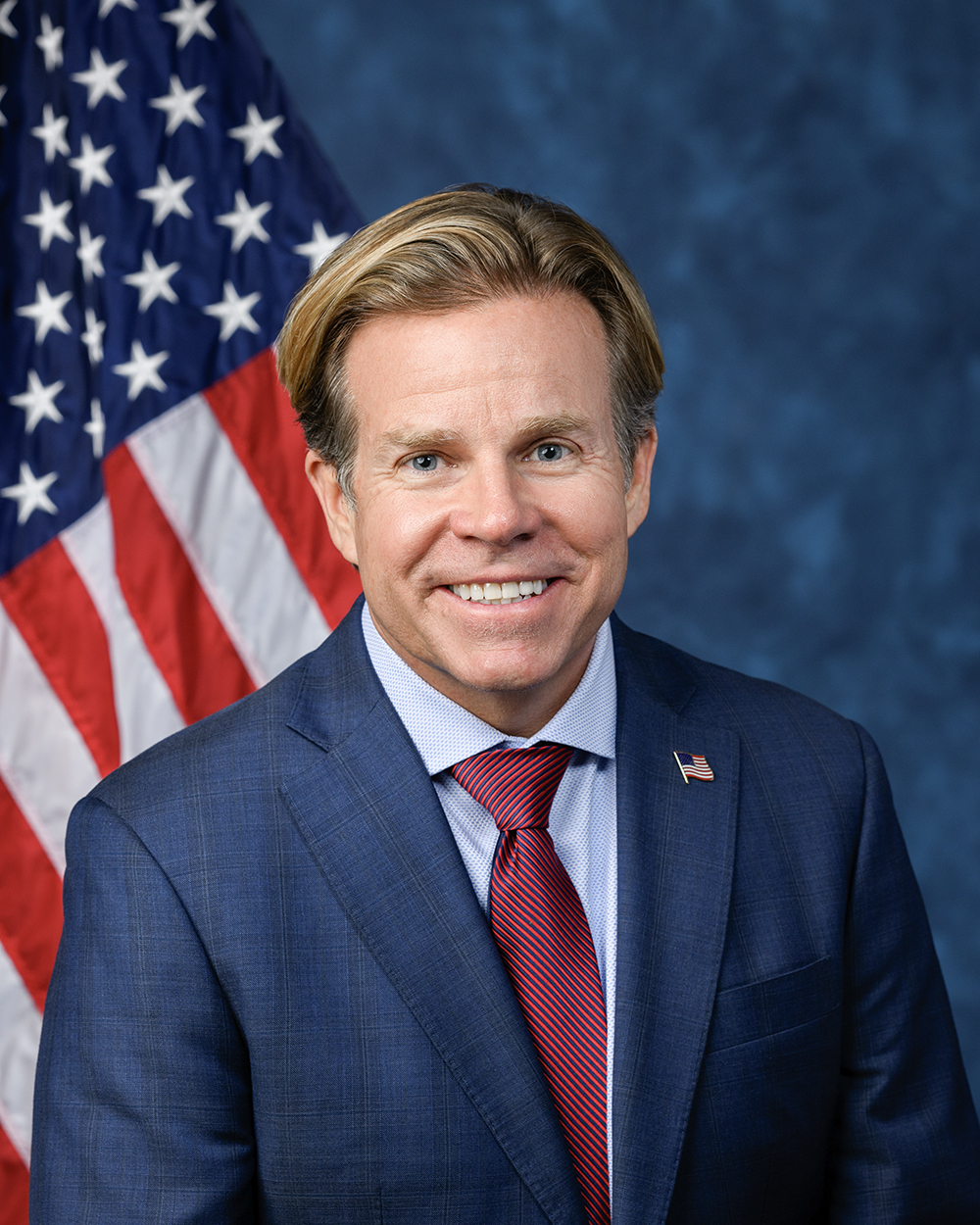
Rep. Mike Haridopolos
Sponsored bills
Deporting Fraudsters Act of 2026 This bill makes certain acts related to public benefits fraud grounds for (1) barring a non-U.S. national ( alien under federal law) from admission into the United States, or (2) deporting the individual. The bill also makes such an individual ineligible for immigration enforcement relief, including relief for an individual in danger of subjection to torture. Specifically, this bill applies to individuals who have been convicted of, admit to having committed, or admit to acts which constitute certain offenses. Offenses covered by this bill include (1) fraud involving Supplemental Nutrition Assistance Program (SNAP) benefits, (2) fraud involving Social Security benefits, (3) fraud involving programs that receive federal funds, and (4) the production of fraudulent identification documents.
Maddy summaryHR 2294 reauthorizes the Integrated Coastal and Ocean Observation System Act of 2009, extending funding and updating governance for the nation's ocean and coastal observation network. It changes references from "Council" to "Committee" throughout the law and adds requirements for federal agencies to collaborate with regional coastal observing systems on data sharing. The bill specifically directs agencies to conduct operational oceanography measurements and establishes $56 million annually for fiscal years 2026 through 2030 to support this system. This bill directly affects federal agencies managing ocean observation programs and regional coastal data networks.
Enhanced Iran Sanctions Act of 2025 This bill imposes sanctions on certain foreign persons (individuals and entities) that are involved in Iran's petroleum sector as well as certain associated persons. The bill also requires or authorizes actions to facilitate the enforcement of sanctions on Iran. Specifically, the bill requires the President to impose visa- and property-blocking sanctions on any foreign person that, after the bill's enactment, knowingly engages in any transaction related to the processing, export, or sale of oil, condensates, gas, liquefied natural gas, or other petrochemical products in whole or in part from Iran. The President must also impose sanctions on certain foreign persons associated with a sanctioned individual or entity. For example, the President must sanction the subsidiaries and corporate officers of a sanctioned business. The bill provides certain exceptions to these sanctions, including specifying that sanctions do not apply to the importation of goods or to conducting or facilitating transactions for humanitarian assistance. The Department of State must establish an interagency working group that shall seek to establish a multilateral contact group to coordinate international efforts to enforce sanctions on Iran. The bill expands the State Department rewards program to authorize a reward payment to any individual who furnishes information leading to the identification of a person (1) subject to sanctions under this bill, or (2) that has attempted or is attempting to evade sanctions under this bill.
Maddy summaryThis bill directs the Secretary of Health and Human Services to create a program focused on researching how environmental factors, such as air pollution, chemicals, and heavy metals, may contribute to neurodegenerative diseases like Alzheimer's and Parkinson's. The legislation would establish collaborative research centers at universities and medical institutions to study these environmental links, train scientists, and share findings with the public and healthcare professionals. The program includes provisions for creating a national data system and information clearinghouse to track disease patterns and environmental exposures across different communities. Funding of up to $50 million annually through 2031 is authorized to support these research efforts, with biennial reports required to Congress on progress and outcomes.
Maddy summaryHR 7681, the "HSA’s For All Act," would expand eligibility for Health Savings Accounts (HSAs) by allowing individuals enrolled in any qualified health plan - not just high-deductible plans - to contribute to an HSA. It directly affects people covered by Affordable Care Act marketplace plans or employer group health plans, removing the current requirement for a high-deductible health plan (HDHP) to qualify. The bill amends tax code definitions to replace "high-deductible health plan" with "covered health plan" throughout relevant sections, simplifying eligibility rules. This change would take effect for tax years beginning after December 31, 2026.
Protection of Women in Olympic and Amateur Sports Act This bill requires certified national governing bodies (NGBs) of amateur sports (e.g., USA Gymnastics) to prohibit a person whose sex is male from participating in an amateur athletic competition that is designated for females, women, or girls. Under the bill, male means an individual who has, had, will have—or would have, but for a developmental or genetic anomaly or historical accident—the reproductive system that at some point produces, transports, and utilizes sperm for fertilization.
Maddy summaryThe Contract Our Veterans Act of 2026 establishes new federal contracting preferences for small businesses owned and controlled by veterans. It allows agencies to award contracts above the simplified acquisition threshold without competition to qualified veteran-owned businesses if they meet performance, pricing, and value criteria, and creates restricted competitions exclusively for these businesses. The bill sets a mandatory governmentwide goal of at least 5% of all federal prime and subcontract awards going to veteran-owned small businesses each fiscal year. It also amends reporting requirements to track these contracts separately across agencies, including through sole-source awards and restricted competitions. This directly affects veteran-owned small businesses seeking federal contracts and federal agencies responsible for procurement.
Maddy summaryThis bill modifies tax credit rules to help businesses recover after disasters. It allows businesses operating in designated disaster areas to treat certain unused tax credits (carryforwards) as transferrable credits against current tax liability, rather than letting them expire. Specifically, it applies to taxpayers making eligible expenditures for business operations in areas with a major disaster declaration after December 31, 2023, or a state-declared disaster meeting specific criteria. The change affects businesses in affected zones by providing immediate tax relief for qualifying expenses incurred within two years of the disaster declaration. It does not involve energy policy or new funding, but adjusts existing tax credit rules for disaster recovery.
Maddy summaryHR 7273, the NASA Reauthorization Act of 2026, authorizes $24.4 billion in funding for NASA's fiscal year 2026 operations, with specific allocations across exploration, science, aeronautics, and technology programs. The bill directs NASA to continue the Artemis program for lunar exploration, maintain International Space Station operations through 2031, and develop commercial low-Earth orbit capabilities through public-private partnerships. It requires NASA to report on key topics including human-rated lunar landing capabilities, ISS deorbit plans, and maintaining a balanced science portfolio, directly affecting NASA's mission planning, contractor relationships, and international partnerships.