

Maddy summaryH.J. Res. 42 is a congressional disapproval resolution that voids a Department of Energy (DOE) rule on appliance energy efficiency standards. The resolution specifically targets the DOE's 2024 rule requiring certification, labeling, and enforcement for energy-efficient appliances and commercial equipment. By disapproving this rule under federal law (5 U.S.C. § 801), the resolution prevents the rule from taking effect, meaning appliance manufacturers and retailers would not need to comply with its requirements. This resolution directly affects the implementation of the DOE's energy conservation program for consumer products and commercial equipment.
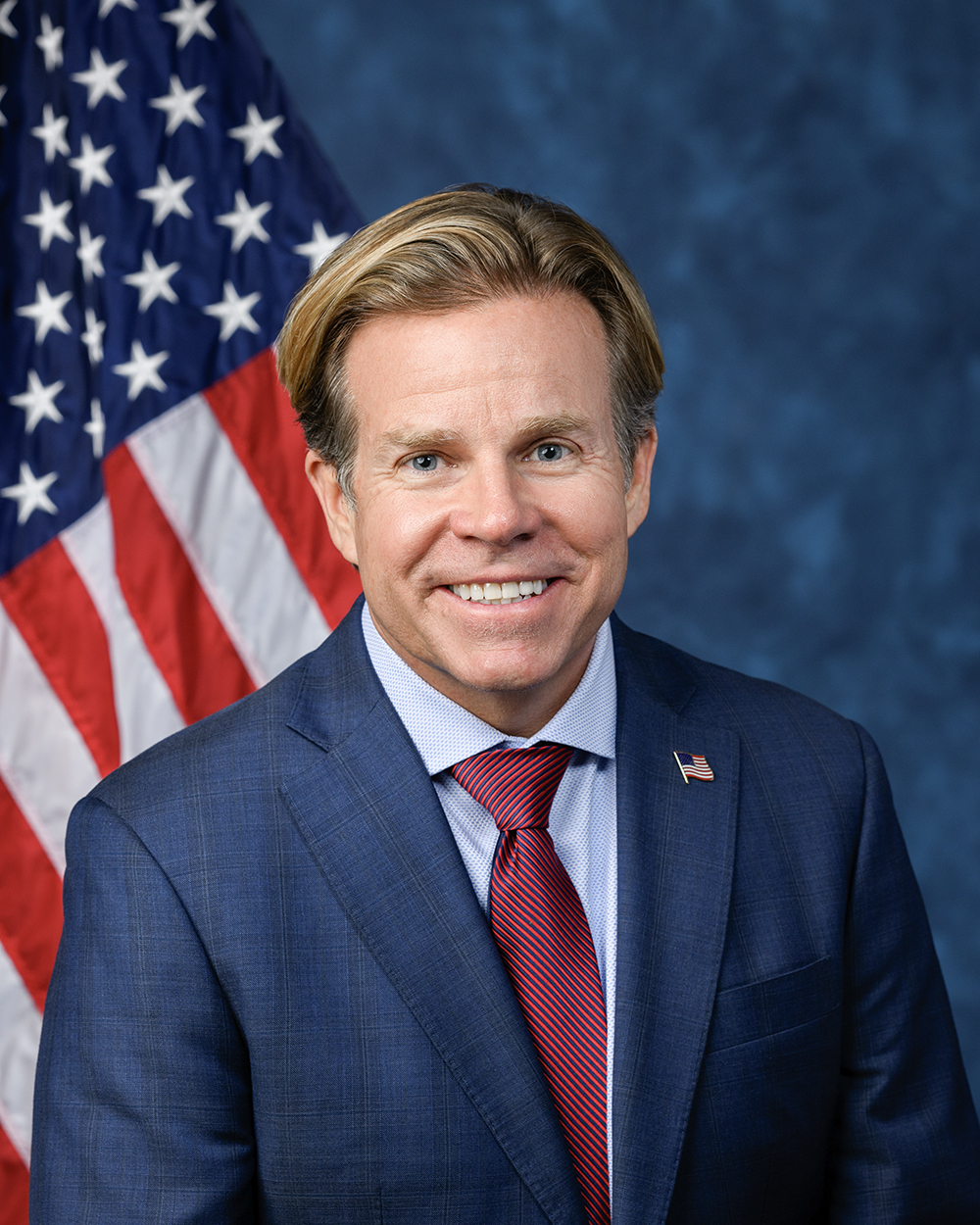
Rep. Mike Haridopolos
Sponsored bills
More Opportunities for Moms to Succeed Act or the MOMS Act This bill establishes requirements to enable the collection of certain child support during pregnancy, establishes grants for supportive services for women that promote alternatives to abortions, and requires the Department of Health and Human Services (HHS) to establish a website with pregnancy resources other than those about abortions. Specifically, the bill requires states to apply child support obligations to the time period during pregnancy under the Child Support Enforcement program. (The program enables states to receive federal matching funds for expenses related to child support enforcement activities and related services.) Such child support applies at the request of the mother and may be applied retroactively. Also, HHS must award grants to nonprofits to provide pregnant and postpartum women, and women parenting young children, with services or information on topics including health care (excluding abortions), child care, and employment assistance. It also requires HHS to provide grants to health care providers in rural or medically underserved areas, as well as tribal areas, to purchase equipment enabling telehealth visits for prenatal and postnatal care (e.g., monitoring devices). Additionally, the bill requires HHS to establish a public website to inform pregnant and postpartum women, and women parenting young children, of nearby services and resources on topics including health care, material or legal support, and alternatives to abortion. States must, as a condition of receiving certain federal funds, provide lists of nonprofit child placement agencies for potential inclusion on the site.
Maddy summaryThis bill increases mandatory prison sentences for non-citizens convicted of certain crimes after entering the U.S. without authorization or being deported. It raises the minimum sentence from 2 to 5 years for those who improperly enter the U.S. and later commit a crime punishable by over one year in prison. For non-citizens previously deported who commit crimes, it increases the minimum sentence from 2 to 10 years and mandates at least 10 years for offenses including aggravated felonies, state/federal felonies, or crimes punishable by over one year. These changes apply to all non-citizens convicted under these circumstances, regardless of jurisdiction.
Maddy summaryThe STABLE Act of 2025 establishes a regulatory framework for stablecoins, which are digital assets designed to maintain a stable value relative to a national currency. It restricts stablecoin issuance to "permitted payment stablecoin issuers," including bank subsidiaries, federally-approved nonbank entities, and state-qualified issuers. These issuers must maintain 1:1 reserves backed by specific assets (like U.S. currency, Treasury securities, or demand deposits), publish monthly reserve reports, and cannot pay interest to stablecoin holders. The Act also includes transparency requirements, restrictions on leadership (prohibiting those with certain felony convictions), and preempts conflicting state laws for federally-approved issuers.
Maddy summaryHR 976, the "1071 Repeal to Protect Small Business Lending Act," would repeal data collection and reporting requirements for small business loans under Section 704B of the Equal Credit Opportunity Act. This specifically removes the mandate for financial institutions - especially community banks and credit unions - to track and submit loan data by business characteristics like race or gender. The bill aims to reduce compliance costs for lenders, which its findings argue limit small business access to credit. The repeal would eliminate these reporting obligations and remove references to the requirement from related federal laws.
Maddy summaryThe ACES Act (HR 530) mandates a study by the National Academies to examine cancer rates and deaths among veterans who served as aircrew members (e.g., pilots, navigators) in fixed-wing military aircraft. The study will identify potential exposure risks (like chemicals) linked to 12 specific cancers (including brain, lung, prostate, and melanoma) and use VA, DoD, and CDC data to analyze prevalence and mortality. It does not change benefits or laws but requires a final report to the VA and congressional committees. The study directly affects veterans with the defined aircrew service history.
Maddy summaryThe MEGOBARI Act (HR 36) is a U.S. legislative proposal that aims to strengthen Georgia's democratic development and Euro-Atlantic integration. It directs the U.S. Secretary of State to suspend the U.S.-Georgia Strategic Partnership Commission until Georgia meets specific democratic standards, including respecting citizens' democratic wishes and advancing EU/NATO membership. The bill establishes potential sanctions against Georgian officials who block Euro-Atlantic integration or undermine Georgia's sovereignty, requiring the President to determine if officials have engaged in significant corruption or actions against Georgia's territorial integrity. Additionally, it mandates reports on Russian intelligence assets in Georgia and a 5-year U.S. strategy for bilateral relations, with the Act set to sunset after 5 years from enactment.
Maddy summaryThis bill creates an Advisory Committee under the Financial Stability Oversight Council to study how Chinese military actions toward Taiwan could impact U.S. financial markets. The committee, composed of market experts and participants, will annually assess vulnerabilities like banking risks, market volatility, and potential losses from such scenarios, then recommend resilience strategies. It requires an annual public report detailing these findings and actionable steps for regulators - such as improving circuit breakers or coordinating responses - to strengthen market preparedness. The bill does not enact new regulations but mandates ongoing analysis and reporting on this specific geopolitical risk.
Maddy summaryHR 3142, the Secure U.S. Leadership in Space Act of 2025, amends the federal tax code to provide spaceports with financial treatment similar to airports. It specifically allows spaceports to qualify for tax-exempt bonds used for infrastructure development and creates special rules for government leases of spaceport land. The bill defines "spaceport" broadly to include facilities for spacecraft manufacturing, launch services, reentry operations, and cargo transport. These changes directly benefit spaceport developers and operators seeking tax advantages for building and operating commercial space infrastructure. The policy change modifies existing tax code sections (142, 146, 149) to exclude spaceport bonds from certain state tax limits and federal guarantee restrictions.
Maddy summary# Summary of the SHIPS for America Act This comprehensive legislation focuses on strengthening the U.S. maritime industry, shipbuilding capacity, and maritime workforce to enhance national security and economic competitiveness. ## Key Areas of Focus 1. **Shipbuilding & Maritime Infrastructure** - Establishes a United States Center for Maritime Innovation to accelerate adoption of commercial technologies - Creates a National Shipbuilding Research Program - Requires an annual survey of anticipated commercial vessel construction - Includes provisions for streamlined environmental reviews of maritime infrastructure 2. **Workforce Development** - Establishes the United States Merchant Marine Career Retention Program to maintain mariner qualifications - Creates Centers of Excellence for Domestic Maritime Workforce Training and Education - Implements military-to-maritime transition programs - Establishes a Maritime Career and Technical Education Advisory Committee 3. **Education & Training** - Expands educational assistance for merchant mariners - Creates eligibility for Naval Postgraduate School for merchant mariners - Establishes maritime education programs from K-12 through higher education - Provides for international exchanges for mariners and naval architects 4. **National Security & Strategic Readiness** - Requires reports on National Defense Reserve Fleet utilization - Includes measures to de-risk the maritime sector from Chinese influence - Enhances shipbuilding capacity for national security needs - Establishes programs to ensure sufficient mariner workforce for national defense 5. **Funding Mechanisms** - Authorizes appropriations from the Maritime Security Trust Fund - Includes funding for workforce programs, education, and shipbuilding initiatives - Establishes specific funding levels for various programs over multiple fiscal years The legislation aims to create a sustainable domestic maritime industrial base that supports both commercial shipping and national defense requirements, with a particular emphasis on developing and retaining a skilled U.S. maritime workforce.