

CARA 3.0 Act of 2021 This bill addresses substance use disorders by expanding access to treatment and recovery services, providing for housing protections, and requiring other activities. Specifically, the bill reauthorizes, establishes, and expands support for treatment and recovery services. This includes increasing access to treatment in the criminal justice system and other settings and for particular populations, such as pregnant and postpartum individuals and youth and young adults. Additionally, the bill expands Medicare and Medicaid coverage for treatment, including by expanding telehealth access to medication to treat substance use disorders. The bill also temporarily requires that non-opioid pain treatment options be reimbursed separately, instead of on a packaged basis, under Medicare. As a condition of receiving certain federal funding, states must mandate the use of prescription drug monitoring programs (PDMPs) by prescribers and dispensers and impose additional PDMP requirements. Moreover, prescribers of potentially addictive drugs must complete continuing education requirements. The bill also revises the registration process for providers who prescribe certain medications to treat substance use disorders, including by eliminating the provider's patient limit for such medications. In addition, the Substance Abuse and Mental Health Services Administration must carry out activities to promote access to high-quality recovery housing. The bill also sets out protections for individuals with substance use disorders who live in, or apply to live in, federally assisted housing. Furthermore, the bill requires other activities to address substance use, such as support for workforce education and training; public awareness campaigns and similar outreach; and research on prevention strategies, insurance coverage, and treatment modalities.
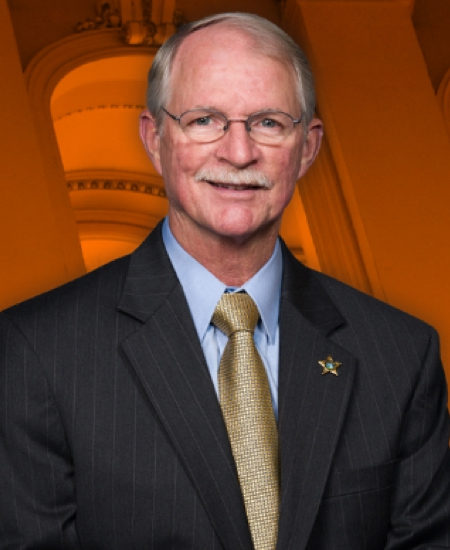
Rep. John H. Rutherford
Sponsored bills
Residential Substance Use Disorder Treatment Act of 2021 This bill revises and reauthorizes through FY2026 grants for residential substance use disorder treatment programs at state and local correctional and detention facilities. Among the revisions, the bill replaces statutory references to substance abuse with substance use disorder , specifies that the term residential substance use disorder treatment program includes a medication-assisted treatment program, requires the chief medical officer or other staff overseeing a program to complete training on the science of addiction and the latest research and clinical guidance on treating substance use disorders in criminal justice settings, and allows people who are awaiting trial or in pretrial detention to participate in the programs.
Responsible Ownership of Firearms Act of 2021 This bill directs the Bureau of Justice Assistance to award competitive grants to nonprofit organizations to purchase and distribute firearm locking devices to firearm owners and distribute educational materials on firearm safety.
Transparency of Migration Act This bill requires the Department of Homeland Security and the Department of Health and Human Services (HHS) to make publicly available online certain information about individuals unlawfully present in the United States who are (1) apprehended by U.S. Customs and Border Protection and sent to a federal detention center or released into the United States, or (2) processed through an HHS facility. This information must be updated weekly and must include daily numbers, the country of origin of such individuals, and other details.
H-2B Returning Worker Exception Act of 2021 This bill modifies the H-2B (temporary nonagricultural workers) nonimmigrant visa program, including by exempting certain workers from an annual numerical limit on such visas and requiring civil penalties for program violations. Under this bill, if a worker seeking a H-2B visa has been counted toward the 66,000 annual cap on such visas in one of the three preceding fiscal years, that worker shall not be counted against the cap again. Furthermore, the Department of Homeland Security (DHS) must impose a civil monetary penalty on an employer for (1) failing to meet requirements related to an H-2B visa petition, or (2) making a willful misrepresentation of material fact in such a petition. DHS must also ensure the establishment of an electronic platform (1) for employers to submit and request approval of an H-2B petition, and (2) to act as a single point of access for applicants and the relevant government agencies. The Department of Labor must maintain a publicly available online database of all job orders by H-2B employers. Furthermore, Labor may take certain actions to enforce program requirements, such as imposing penalties and seeking injunctions. The bill provides statutory authority for the current practice of limiting the program to workers who are nationals of countries approved by DHS. DHS may make exceptions to this limitation in individual cases if it is in the U.S. interest to do so. DHS shall select approved countries based on various factors, such as the rate of overstay by H-2B visa holders from each country.
No Vaccine Passports for Americans Act This bill restricts collection and disclosure of an individual's vaccination status, including for COVID-19 vaccinations. It also makes it unlawful to discriminate based on COVID-19 vaccination status and to mandate vaccination in certain circumstances. Specifically, the bill prohibits the use of federal funds to establish or collaborate with federal, state, private, or international systems that track or monitor an individual's COVID-19 vaccination status. Additionally, federal agencies must destroy existing records that contain information about an individual's COVID-19 vaccination status within 30 days. Furthermore, agencies may not issue vaccine passports or similar standardized documentation of COVID-19 vaccination status. The bill also prohibits discrimination based on COVID-19 vaccination status or willingness to provide documentation of vaccination status in employment, public accommodations, and certain public programs and services. Remedies and enforcement mechanisms available under federal civil rights laws apply to violations under this bill. In addition, federal privacy standards for health information must prohibit the disclosure of non-anonymized information about the status of any vaccination without a patient's express consent. Moreover, the bill makes anyone who requests an individual's vaccination status subject to these standards. The bill temporarily bans (1) mandates for vaccines authorized for use under emergency procedures, and (2) administration of those vaccines to minors or individuals who lack capacity to consent to vaccinations without the consent of their parent or guardian. It also prohibits public disclosure of an individual's COVID-19 vaccination status without express, written consent. Violations of these prohibitions are subject to criminal and civil penalties.
Protecting Individual Sovereignty Through Our Laws Act or the PISTOL Act This bill modifies the definition of rifle for purposes of the National Firearms Act to exclude from such definition a pistol equipped with a rear brace or rear attachment designed to assist the shooter in controlling the pistol. The bill also directs the Department of Justice to amend applicable regulations governing pistols to provide that the presence or absence of rear mounted braces or attachments that can assist a user in controlling the pistol shall not cause a firearm to be considered a pistol.
National ACERT Grant Program Authorization Act This bill requires the Department of Justice, in coordination with the Department of Health and Human Services, to award grants for states, tribal nations, localities, and community-based organizations to establish response teams to address adverse childhood experiences associated with exposure to trauma.
Second Chance Opportunity for Re-Entry Education Act of 2021 or the SCORE Act of 2021 This bill directs the Bureau of Justice Assistance within the Department of Justice to establish a grant program—the Second Chance Opportunity for Re-Entry Education Grant Program—to promote reentry training programs and reduce recidivism to county jails for qualified nonviolent inmates.
Conrad State 30 and Physician Access Reauthorization Act This bill modifies the Conrad 30 Waiver program, which incentivizes qualified foreign physicians to serve in underserved communities. It also extends statutory authority for the program for three years from this bill's enactment. Aliens coming to the United States under a J-1 nonimmigrant visa to receive medical training typically must leave the country and reside for two years abroad before being eligible to apply for an immigrant visa or permanent residence. The Conrad program waives this requirement for individuals who meet certain qualifications, including serving for a number of years at a health care facility in an underserved area. The bill increases the number of waivers that a state may obtain each fiscal year from 30 to 35 if a certain number of waivers were used the previous year, and provides for further adjustments depending on demand. An alien physician may be employed at an academic medical center to meet the Conrad program's employment requirements if the alien's work is in the public interest, even if the medical center is not in an underserved area. Employment contracts for alien physicians under the Conrad program shall contain certain information, such as the maximum number of on-call hours per week the physician shall have to work. Certain alien physicians (along with the physician's spouse and children) shall be exempt from the direct annual numerical limits on immigration, including those physicians that have met certain requirements related to visas for physicians to serve in underserved areas.