

Maddy summaryThis resolution expresses congressional support for designating March 21, 2023, as "National Agriculture Day." It symbolically recognizes agriculture's economic importance as a major U.S. industry, celebrating its impact on jobs and communities. The bill does not create new laws, funding, or regulations - it is a non-binding statement of support. It directly affects the agricultural sector by highlighting its contributions through a formal congressional acknowledgment.
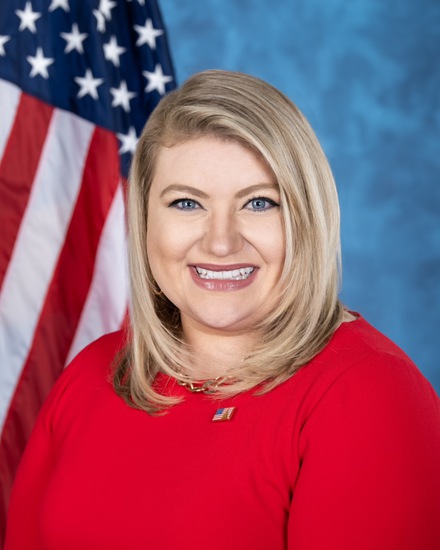
Rep. Kat Cammack
Sponsored bills
Maddy summaryThe DAIRY PRIDE Act would require food products using dairy-related terms (like "milk," "yogurt," or "cheese") to meet the FDA's definition of dairy - derived from animal milk - to prevent misleading labeling of plant-based alternatives. It directly affects producers of plant-based products currently marketed with dairy terms, such as almond or oat milk, which often lack comparable nutrition. The bill mandates the FDA issue enforcement guidance within 180 days and report to Congress on actions taken after two years. This policy change aims to align product names with the FDA's existing definition of dairy products under federal law.
Maddy summaryThis bill authorizes a Congressional Gold Medal to honor the "Hello Girls" - female telephone operators who served in the Army Signal Corps during World War I. They provided critical battlefield communications in France (connecting 26 million calls), wore military uniforms, and faced combat risks, but were denied veteran benefits for 60 years due to being classified as civilian contractors. The medal recognizes their pioneering service, devotion, and the decades-long struggle to gain military recognition. The award follows similar recognition for other WWII women veterans and aims to correct the historical injustice they faced.
Maddy summaryHR 1492, the CBO Show Your Work Act, requires the Congressional Budget Office (CBO) to publicly publish its fiscal models, data, and detailed methodologies used when estimating the costs and effects of legislation. Specifically, the bill mandates that the CBO make available all models, data preparation routines, and the specific assumptions and computations behind its cost estimates - enabling independent verification by non-CBO staff. This applies to all estimates prepared under the law, with limited exceptions for data protected by other statutes (requiring only descriptive statistics and access details for such data). The changes take effect six months after the bill becomes law. The bill directly affects the CBO’s internal processes and transparency practices, not the legislative content itself.
Maddy summaryThis bill expands the use of 529 college savings accounts to cover career training and credentialing costs. It allows funds to pay for tuition, fees, books, and testing expenses related to recognized postsecondary credential programs (like vocational certifications) that meet specific standards under the Workforce Innovation and Opportunity Act. The change directly affects workers seeking industry-recognized credentials - such as nursing certifications or IT certifications - instead of traditional degrees. It treats these expenses the same as traditional college costs for 529 account withdrawals, making it easier to save for career-focused training. The provision applies to expenses paid after the bill's enactment date.
Maddy summaryHR 1123, the Understanding Cybersecurity of Mobile Networks Act, requires the Assistant Secretary of Commerce to produce a report within one year of enactment examining vulnerabilities in mobile service networks and devices. The report must assess how mobile providers address security gaps identified by agencies like NIST and DHS, evaluate customer awareness of cybersecurity when purchasing devices, analyze encryption practices, and discuss barriers to adopting stronger security measures. It specifically excludes 5G networks and only covers real-world security vulnerabilities that have been exploited or are feasibly exploitable, not theoretical risks. The report will inform Congress and the public on mobile network security risks, directly affecting mobile service providers, device manufacturers, and consumers who rely on mobile networks.
This resolution supports the designation of National FFA Week. It also (1) recognizes the important role of the National FFA Organization (Future Farmers of America) in developing the next generation of leaders who will change the world, and (2) celebrates the 90th anniversary of the iconic FFA jacket.
No Retaining Every Gun In a System That Restricts Your Rights Act This bill modifies the retention requirements for firearm transaction records of federal firearms licensees (FFLs) that go out of business. Current law generally requires FFLs that go out of business to deliver their firearm transaction records to the Bureau of Alcohol, Tobacco, Firearms and Explosives (ATF). This bill removes the requirement for FFLs that go out of business to deliver their firearm transaction records to the ATF. Further, the bill requires the ATF to destroy all out-of-business records it has collected from FFLs.
Maddy summaryThis bill prohibits the Department of Defense from using funds to pay for or reimburse abortion services, except when the pregnancy endangers the mother's life, results from rape, or results from incest. It directly affects military personnel, civilian DOD employees, and contractors receiving medical care at military facilities by restricting funding for abortion-related expenses. Key provisions include amending federal law to ban reimbursement for travel or licensing costs related to abortion services and repealing a 2022 DOD memo that expanded access to such care. The bill explicitly blocks all funding for abortion services beyond the existing exceptions, with no new exceptions added. It does not change abortion access for civilians outside the military healthcare system.
Maddy summaryThis bill amends the Higher Education Act to exempt certain family-owned assets from being counted when calculating federal student aid eligibility. Specifically, it excludes family farms where the family resides and small businesses with 100 or fewer full-time equivalent employees owned and controlled by the family. These assets will no longer be considered when determining a student's financial need for aid programs. The change directly affects students from qualifying family farms or small businesses when applying for federal financial aid. The exemption applies to assets held by the family, not just the business itself.