

Maddy summaryHR 4361, the STOP China Act, prohibits the use of federal transportation funds to purchase vehicles or related infrastructure (like charging stations for buses) from companies linked to China. Specifically, it bans federal funding for "covered vehicles" made by entities owned or controlled by China (as defined by the bill), including those using Chinese-made electric powertrains. The U.S. Trade Representative must publish and update a public list of these banned entities within 30 days of the bill’s enactment, with updates every 90 days initially and annually thereafter. Exceptions apply only for vehicle safety testing, inspections, or research. The bill directly affects federal transportation projects and contractors receiving federal funds, requiring them to avoid procurement from listed Chinese-connected companies.
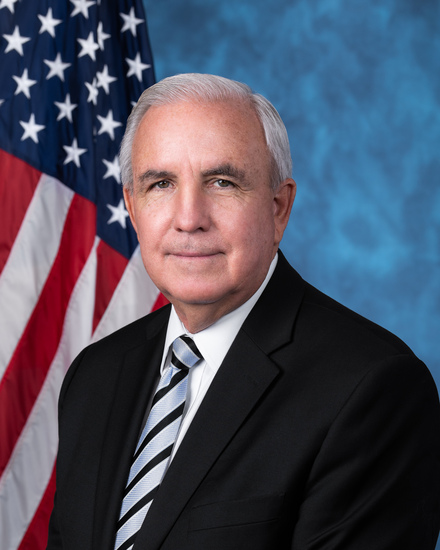
Rep. Carlos A. Gimenez
Sponsored bills
Maddy summaryThis bill (HR 4372) requires the Department of Defense to shorten reporting timelines for cost overruns on major defense acquisition programs, cutting the deadline from "when a report is submitted" to 30 days after the report is issued. It adds new rules for designating "end items" costing over $500 million each as separate subprograms for reporting, mandates including full life-cycle operations/support costs in reports, and creates stricter termination rules for programs with repeated cost breaches. Specifically, programs exceeding cost thresholds twice must be terminated within 90 days of reassessment, and all breach reports must be posted publicly on a DoD website. The bill directly affects DoD acquisition programs over $500 million, aiming to improve transparency and congressional oversight of defense spending.
Maddy summaryHR 4382 authorizes the U.S. Mint to produce commemorative coins for the 2028 Los Angeles Olympics/Paralympics and 2034 Salt Lake City Winter Olympics/Paralympics. It specifies gold, silver, and half-dollar coin designs with defined mintage limits (e.g., up to 100,000 $5 gold coins for each event), all bearing inscriptions like "2028" or "2034" and standard coin features. A surcharge ($5-$50 per coin) is added to sales, with all funds directed to the respective Olympic committees to support event hosting and legacy programs like youth sports. The bill ensures no net cost to the government by requiring surcharge revenues to cover all design, production, and marketing expenses before funds are disbursed.
Maddy summaryHR 4333, the Qualified to Serve Act, changes medical standards for joining the U.S. military. It prohibits disqualifying applicants solely based on a medical condition diagnosed before age 13 that required no treatment in the past five years, provided a current medical evaluation confirms fitness for service and the military determines it won't impact readiness. The bill establishes a uniform review process for medical disqualifications and allows waivers for national security reasons. It also requires the Secretary of Defense to annually report to Congress on disqualifications, approved waivers, and updates to medical standards. This directly affects potential recruits with qualifying childhood medical histories who previously faced disqualification.
Maddy summaryHRES 564 is a non-binding House resolution calling on the U.S. government to prioritize the return of Ukrainian children abducted by Russia before any peace agreement is finalized. It cites 19,546 confirmed reports of unlawful child deportations to Russia or occupied territories as of April 2025, noting only 1,274 have been returned. The resolution condemns Russia's actions as violations of the Geneva Convention and Genocide Convention, including forced adoptions and Russification policies. It urges that all abducted children be returned prior to concluding peace talks, emphasizing this as a necessary condition for a just resolution to the war. The resolution does not create new law but expresses congressional position on a key issue in U.S. diplomatic efforts.
Maddy summaryThis bill clarifies the Holocaust Expropriated Art Recovery Act of 2016 by preventing courts from dismissing claims based on time-related defenses (like laches or adverse possession) or other non-merits arguments (such as the act of state doctrine or forum non-conveniens). It specifically bars these defenses for claims seeking recovery of art looted by Nazis during World War II, ensuring cases are resolved on their merits. The bill applies to all pending cases and new claims filed after enactment, regardless of the victim's nationality. It strengthens the original law's purpose of enabling victims' heirs to pursue rightful recovery without procedural barriers.
Maddy summaryThe CONNECT for Health Act of 2025 expands Medicare telehealth coverage by removing geographic restrictions that limited where patients could receive care, expanding the types of health care providers who can offer telehealth services, and eliminating the requirement for an in-person visit before receiving telemental health services. The bill includes specific provisions to support telehealth use for Native American health facilities, rural health clinics, and Federally Qualified Health Centers. It requires the Centers for Medicare & Medicaid Services to collect and publish data on telehealth usage and impacts, and to develop resources to improve accessibility for people with disabilities and limited English proficiency. Program integrity measures are added to monitor telehealth billing practices and prevent fraud while maintaining coverage for telehealth services during public health emergencies.
Maddy summaryThe GOLDEN DOME Act of 2025 establishes a comprehensive homeland missile defense system designed to protect U.S. citizens and critical infrastructure from ballistic, hypersonic, cruise, and unmanned system threats. The bill creates a new Golden Dome Direct Report Program Manager with significant authority to accelerate development, testing, and deployment of integrated missile defense capabilities across all domains (land, sea, air, space, and cyberspace). It requires a holistic strategy with all-domain awareness, mandates accelerated testing schedules including live-fire exercises, and allocates specific funding for components like space-based sensors, interceptors, and command and control systems. The legislation also includes provisions to protect the space industrial base and secure critical supply chains for missile defense systems.
Maddy summaryHR 3538, the Wildlife Confiscations Network Act of 2025, establishes a national network to handle the care of live wildlife seized at U.S. borders due to illegal trafficking. It creates a coordinated system where Federal wildlife law enforcement (like the U.S. Fish and Wildlife Service) can partner with qualified facilities - including zoos, sanctuaries, and rehabilitation centers - to provide immediate care, maintain evidence integrity, and manage long-term placement for confiscated animals. The bill expands a successful Southern California pilot that already placed over 4,100 animals by creating a centralized database and single point of contact for law enforcement. It authorizes $5 million annually (2026-2030) to support this network, directly affecting border agencies and participating care facilities while addressing capacity gaps at ports of entry.
Maddy summaryThis bill requires the United States Postal Service (USPS) to notify postal customers and specific government officials when a post office temporarily suspends operations. It mandates detailed advance notice (60 days for planned closures) including reasons, expected dates, and plans for replacement services, with shorter notices (14 days) for unplanned closures. USPS must provide replacement retail services - such as selling packaging, handling mail for post office boxes, and processing address changes - within 10 days and maintain them until operations resume. The law applies only to closures starting after enactment and targets USPS operations affecting local communities and their federal/state representatives.