

Countering Human Trafficking Act of 2022 This bill provides statutory authority for the Center for Countering Human Trafficking (CCHT) within the Department of Homeland Security (DHS). The CCHT coordinates DHS efforts to combat human trafficking and the importation of goods produced with forced labor. The bill requires the CCHT to develop a strategy to improve the systems and processes used throughout DHS to combat human trafficking and the importation of goods produced with forced labor. The bill transfers the functions and resources of the Blue Campaign (i.e., the national public awareness effort to combat human trafficking) to the CCHT. DHS may also transfer to the CCHT any other component, directorate, or office of the department related to combating human trafficking.
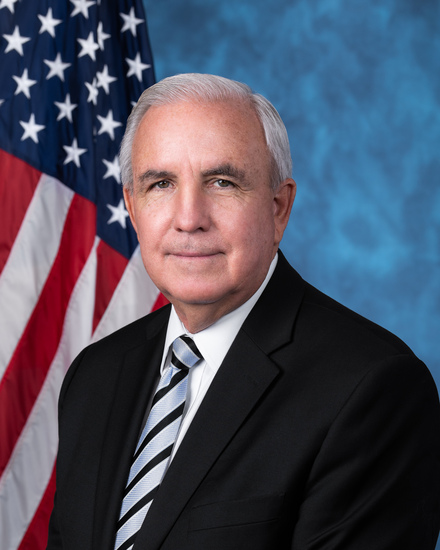
Rep. Carlos A. Gimenez
Sponsored bills
Midland Over Moscow Act This bill imposes sanctions related to the Nord Stream 2 pipeline and revises the expedited approval process for natural gas imports and exports in or out of the United States. (Nord Stream 2 is a pipeline constructed to increase the export of natural gas from Russia to Europe.) Within 10 days of this bill's enactment, the President must impose sanctions on any entity responsible for the planning, construction, maintenance, financing, or operation of Nord Stream 2, as well as any corporate officer or principal shareholder with a controlling interest in such an entity. The bill also revokes the President's authority to waive certain sanctions related to Nord Stream 2 and TurkStream, another Russian natural gas pipeline project. The bill also allows any nation, with specified exclusions, to use an expedited process to receive approval to import or export natural gas in or out of the United States (currently only a nation with a free trade agreement with the United States may use the expedited process). Specifically, the bill excludes any nation (1) subject to U.S.-imposed sanctions or trade restrictions, or (2) excluded by the President or Congress for national security reasons.
Sanctioning Tyrannical and Oppressive People within the Chinese Communist Party Act or the STOP CCP Act This bill imposes visa- and property-blocking sanctions on any person who is or was a member of any National Communist Party Congress of China, as well as any adult family member of such a person. The President may waive the sanctions for renewable periods of 30 days by certifying to Congress that China's government and the Chinese Communist Party have ceased (1) any acts of genocide against the Uyghur Muslim population; (2) all threats, military exercises, and aggression toward Taiwan; (3) undermining the autonomy of Hong Kong; and (4) any efforts to steal the intellectual property of U.S. persons. The certification must also be publicly available on a federal government website.
Human Trafficking Awareness Training Act This bill authorizes the Federal Law Enforcement Training Centers to establish a human trafficking awareness training program for state, local, tribal, territorial, and educational institution law enforcement personnel.
Protect Our Law enforcement with Immigration Control and Enforcement Act of 2021 or the POLICE Act of 2021 This bill makes assaulting a law enforcement officer a deportable offense.
No Foreign Adversaries Residing in our Communities Act or the No FARC Act This bill bars any alien who is a present or former member of the Revolutionary Armed Forces of Colombia (also known as FARC) from being admitted into the United States or receiving a visa. The President may waive this prohibition on a case-by-case basis only by certifying to Congress that the waiver is in the U.S. national interest.
Protect American Taxpayer Dollars from Illegal Immigration Act This bill prohibits expending federal funds for legal settlements to individuals who violated certain laws relating to the proper time and place to enter the United States, if the settlement pertains to claims based solely on the lawful detention of such an individual as part of a family unit after the individual's entry into the United States at the southern border after January 20, 2017.
Public Safety Enhancement Act of 2021 This bill reauthorizes through FY2026 the Community Oriented Policing Services (COPS) grant program. Additionally, the bill requires a certain amount of funds made available under the COPS grant program to be used for the hiring and retention of law enforcement officers.
Better Enforcement of Grievous Offenses by unNaturalized Emigrants Act or the BE GONE Act This bill expands, for immigration purposes, the definition of aggravated felony to include sexual abuse, sexual assault, and aggravated sexual violence. (Under current law, a conviction for an aggravated felony is grounds for deportation and may bar an individual from other immigration-related benefits.)
Denying Earnings to the Military Oligarchy in Cuba and Restricting Activities of the Cuban Intelligence Apparatus Act or the DEMOCRACIA Act This bill provides for asset- and visa-blocking sanctions for conduct relating to Cuba. It also establishes an interagency task force to facilitate access to uncensored internet in Cuba. The President must sanction foreign persons that provide financial support to Cuban government sectors involved in human rights abuses or terrorism (e.g., the defense sector). This includes foreign persons that (1) are military contractors or mercenaries operating on behalf of the Cuban government, or (2) violate laws restricting trade with Cuba. Specified transactions, including remittances to immediate family members (subject to some limitations) and payments related to U.S. military and diplomatic sites, are not subject to these sanctions. The President must also sanction (1) foreign persons complicit or engaged in human rights abuses or corruption, (2) foreign persons supporting such conduct, and (3) specified Cuban government officials and their affiliates. The bill provides humanitarian exceptions to these sanctions, for example, donating food or agricultural commodities to organizations or individuals unaffiliated with the Cuban government. The President may not license sanctionable conduct, and U.S. persons seeking to engage in a permitted transaction must submit a written request to the Office of Foreign Asset Control of the Department of the Treasury. The President may waive the sanctions in the interest of U.S. national security. To terminate the sanctions, the President must certify that the Cuban government has legalized all political activities and taken other steps to promote political rights and freedoms. Congress must then enact a joint resolution approving the termination.