

Maddy summaryHR 4305, the Shelter Act, creates a 25% nonrefundable tax credit for individuals and businesses to offset costs of qualifying disaster mitigation improvements. Individuals can claim up to $2,500 annually for home upgrades like reinforced roofs, flood barriers, fire-resistant materials, or storm shelters, provided the property is in a federally designated disaster area and meets specific safety standards. Businesses may claim up to $5,000 for similar safety upgrades at their locations in disaster-prone zones. The credit phases out for higher-income taxpayers (individuals over $100,000 AGI, businesses over $5 million average gross receipts) and requires documentation proving compliance with building codes. The provisions apply to taxable years beginning after December 31, 2023.
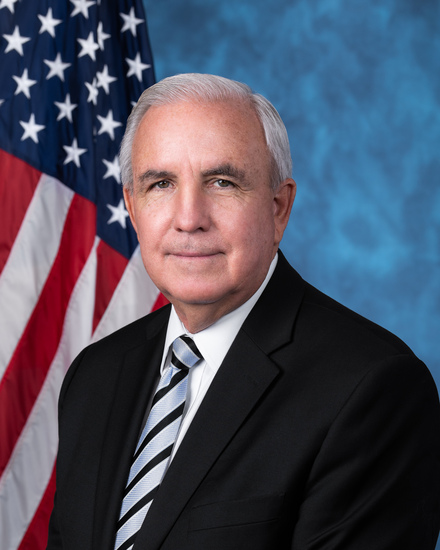
Rep. Carlos A. Gimenez
Sponsored bills
Maddy summaryHJRES 45 is a congressional disapproval resolution targeting a specific Department of Education rule about federal student loans. It seeks to block the rule implementing "One-Time Federal Student Loan Debt Relief" (including modifications to Perkins, FFEL, and Direct Loan programs) by invoking the Congressional Review Act. If passed, this resolution would nullify the rule, preventing the Department of Education from using it to modify or waive student loan obligations. The bill directly affects borrowers who might have qualified for debt relief under the targeted rule.
Maddy summaryHR 4237, the Ensuring Sound Guidance Act, requires investment advisors and retirement plan fiduciaries to prioritize financial factors (like investment returns and costs) when making decisions for clients or plan participants. It mandates that non-financial factors (such as environmental or social goals) can only be considered if the client provides written consent, and advisors must then disclose the expected and actual financial impact over a three-year period. The bill amends the Investment Advisers Act and ERISA to enforce this standard, with changes taking effect 12 months after enactment. Additional provisions direct studies on state pension plans, climate disclosures in municipal bonds, and rules preventing payments to officials for government business.
Maddy summaryHR 4229 (the BLIPS Act) requires a study on the aviation safety risks posed by domestically launched, untracked balloons that lack electronic tracking. The study will examine how these balloons affect flight safety, potentially cause misidentified threats to aircraft, and impact military readiness and air traffic control. It mandates a report within 12 months to Congress with recommendations on whether to require such balloons to have real-time tracking devices and how to integrate that data into FAA and Defense systems. This bill does not change current law but sets up a review process for potential future regulations.
Maddy summaryHR 277 would require Congress to approve major federal regulations before they take effect. Major rules are defined as those with significant economic impact ($100 million+ annually), major cost increases for consumers or industries, or significant adverse effects on competition, employment, or innovation. Agencies must submit detailed information about these rules to Congress, including cost-benefit analyses, before they can take effect. Congress would have 70 session days to approve the rule with a joint resolution; if they don't act within that timeframe, the rule would not take effect. This would increase congressional oversight of federal regulations and require more detailed information about proposed rules before they become law.
Maddy summaryHR 4076 establishes a joint U.S.-Israel program to fund health technology development, authorizing $4 million annually (2024-2026) through the U.S. Health and Human Services Department. It requires Israel to match U.S. funding and focuses on collaborative projects in artificial intelligence, vaccines, telemedicine, diagnostic tests, and data-driven personalized medicine for emerging infectious diseases. The program can either build on an existing U.S.-Israel agreement or create a new one under a 2008 science cooperation framework. This bill directly affects U.S. federal health agencies and the Israeli government, with funds restricted to joint projects meeting specific technological and health priorities.
Maddy summaryHR 1640, the Save Our Gas Stoves Act, prevents the Department of Energy from implementing energy efficiency standards for gas stoves that would make them unavailable in the U.S. market. It amends federal law to require that any new standard for gas stoves must not result in the unavailability of gas stove types, directly affecting gas stove manufacturers and consumers who rely on these appliances. The bill specifically blocks the implementation of the 2023 proposed rule (Energy Conservation Program: Energy Conservation Standards for Consumer Conventional Cooking Products) and any similar rule. This is a policy change focused on maintaining the availability of gas stoves by altering the criteria for energy standard approval.
Maddy summaryHR 4086 directs the U.S. government to use its influence at the United Nations to extend the mandate of the UN Human Rights Council's independent fact-finding mission on Venezuela. The bill requires the Secretary of State to support efforts to continue this mission until Venezuela holds free elections, ends authoritarian rule, restores democracy, frees political prisoners, and allows humanitarian aid. It also directs the U.S. to urge the UN to condemn Venezuela's use of political prisoners, support humanitarian aid for vulnerable Venezuelans, and assist in releasing detained individuals. The bill mandates annual reports to Congress on these diplomatic actions. This legislation directly affects the UN mission's work and U.S. diplomatic engagement regarding Venezuela's human rights situation.
Maddy summaryHRES 499 is a symbolic House resolution expressing support for designating June 12, 2023, as "Women Veterans Appreciation Day." It honors women veterans' service throughout U.S. military history, highlighting their current representation in the armed forces (17% active duty as of 2021) and their growing numbers in the veteran population. The resolution does not create new policies or funding but formally recognizes women veterans' contributions through a commemorative designation. This is a procedural resolution with no binding legal effect, solely serving to acknowledge their service.
This resolution expresses support for keeping AM radios in cars. (Several car manufacturers announced plans to remove AM radio options from some or all of their models.)