

Maddy summaryHR 5130, the "Finish It Act," requires the Department of Defense to use stored border wall construction materials (valued at approximately $300 million) for building permanent barriers along the U.S.-Mexico border within 30 days of the bill's enactment. It mandates that states receiving materials certify they will use them exclusively for border barriers, with penalties for unused materials (requiring repayment of the original cost) and imposes a 1% budget cut for every two days of delay in implementation. The bill also demands a detailed report from the Department of Defense within 90 days, including internal communications about storage costs and contracts with private landowners. This legislation directly affects the Department of Defense and border states, focusing on redirecting existing resources rather than creating new funding or construction.
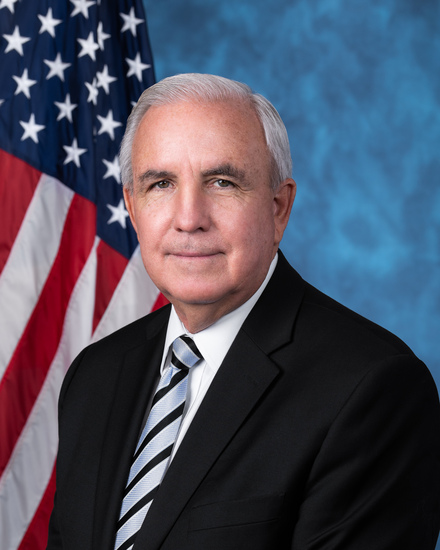
Rep. Carlos A. Gimenez
Sponsored bills
Maddy summaryThis bill prohibits federal involvement in commercial greyhound racing, live lure training, and open field coursing by banning interstate activities related to these practices. It makes it unlawful to conduct betting on greyhound races (including remote gambling), use live animals as bait, or transport animals for these purposes. The law specifically targets the declining greyhound racing industry (now operating at only two tracks in West Virginia), banning federal facilitation of betting, live bait use, and interstate transport of animals for racing or training. It does not affect horse racing or state laws already prohibiting these activities in most states.
This resolution condemns Iran for the 1988 massacre of political prisoners. It also urges the Biden Administration and U.S. allies to publicly condemn the massacre and to pressure Iran to provide information to the families of the victims.
Maddy summaryThe SOS Act of 2023 increases annual funding for school resource officers from $1,047,119,000 (for 2006-2009) to $1,097,119,000 for fiscal years 2024-2033. It also requires that at least $50 million of this funding be allocated through grants to local governments or law enforcement agencies specifically for school safety programs. This bill directly affects schools and local law enforcement by changing federal funding levels and mandating a dedicated portion for school-based safety initiatives. The key change is the increased funding amount and the new requirement for $50 million in targeted grants for school safety applications.
Maddy summaryHR 4999, the ALYSSA Act, requires school districts receiving federal education funds to install silent panic alarms in every elementary and secondary school. These alarms, defined as manual devices for signaling life-threatening emergencies (like active shooters or lockdowns), must be used to alert law enforcement during security crises. The bill amends the Elementary and Secondary Education Act to make this requirement a condition for receiving federal funds, directly affecting all local educational agencies that receive such funding. It mandates that schools be prepared for security emergencies through these silent alarm systems, with no mention of funding specifics or implementation details beyond the basic requirement.
Maddy summaryThis bill requires stricter background checks and monitoring for sponsors caring for unaccompanied migrant children. It mandates fingerprint checks, sex offender registry reviews, criminal history checks, and child abuse screenings for all adult household members before a child can be placed with them. The bill also prohibits placing children with undocumented sponsors (except biological parents or legal guardians), requires pre-release home visits, and mandates multiple unannounced post-release visits over two years. Additionally, it requires monthly reports to Congress tracking child placements, vetting status, and missing children cases since January 2021. These changes directly affect unaccompanied migrant children and their sponsors, aiming to prevent trafficking through enhanced safety protocols.
Maddy summaryThis bill clarifies legal pathways for victims of terrorism to collect judgments against foreign states that sponsor attacks. It removes barriers by updating references in federal law to ensure victims can pursue claims under Section 2333(d)(1) without being blocked by prior legal interpretations. The bill also expands the definition of "national of the United States" to include U.S.-organized entities for these cases, making it easier for more victims to qualify. These changes apply to all pending or future lawsuits filed after the bill's enactment.
Maddy summaryThis bill authorizes the U.S. President to sell up to two nuclear-powered attack submarines (Virginia-class) from the U.S. Navy inventory to Australia over a 15-year period to support the AUKUS security partnership. It requires Australia to cover all costs, including repairs performed at U.S. shipyards, and mandates detailed certifications to Congress on national security impacts, U.S. industrial capacity, and Australia's ability to operate the submarines. The bill also requires annual reports for 15 years on submarine transfers, defense service exports, and production schedules. This directly affects Australia's naval capabilities and U.S.-Australia defense cooperation under the AUKUS framework.
Maddy summaryHR 3933, the TAP Promotion Act, requires standardized presentations about Veterans Affairs (VA) benefits during military transition counseling for service members separating from the armed forces. These presentations must be approved by the VA, delivered by authorized veterans service organizations (VSOs), and include information on how VSOs assist with VA claims - without encouraging membership in specific organizations. The bill mandates a one-hour limit per presentation and requires the VA to submit annual reports to Congress detailing which VSOs presented, attendance numbers, and recommendations for improvement. This policy directly affects service members preparing for civilian life and the VSOs providing these transition resources.
Maddy summaryThis bill directs the U.S. Treasury to mint commemorative coins marking the Marine Corps' 250th anniversary in 2025. It authorizes three coin types: $5 gold coins (max 50,000), $1 silver coins (max 400,000), and half-dollar coins (max 750,000), with surcharges of $35, $10, and $5 respectively. The surcharge proceeds will fund the Marine Corps Heritage Center's educational programs, with no net cost to taxpayers as the Treasury must recover all minting costs through the surcharges. The coins can only be issued during 2025, and the Treasury must ensure all costs are covered before distributing funds to the Heritage Foundation.