

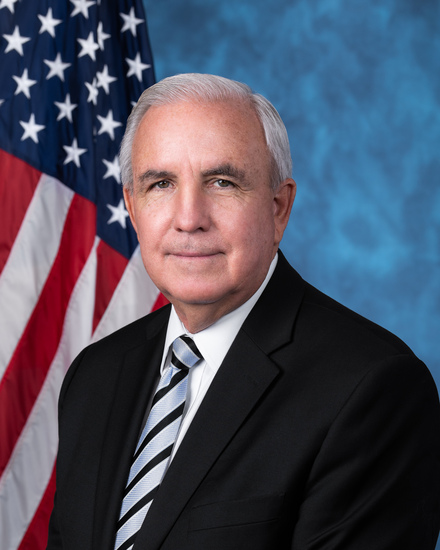
Photo of Carlos A. Gimenez
R United States House · District 28 · Florida On the 2026 ballot

Rep. Carlos A. Gimenez

Compare
Total votes
2,837
all sessions
Attendance
97%
94 missed
Lower than 88% of chamber peers
With party
93%
of cast votes
Near the chamber average
Bipartisan score
4%
crosses aisle rarely
Near the chamber average
Sponsored
836
bills & resolutions
Lower than 83% of chamber peers
Committees
6
assignments
836 bills and resolutions

Sponsored bills

Total
836
Primary
57
Co-sponsor
779
This page
836
matching current filters
Co-sponsor HR 3033
Passed · Indiana House · Co-sponsor
Solidify Iran Sanctions Act of 2023

Maddy summaryHR 3033, the Solidify Iran Sanctions Act of 2023, repeals the expiration date (sunset) from the 1996 Iran Sanctions Act. This permanently maintains existing U.S. sanctions targeting Iran's weapons programs, ballistic missile development, and support for terrorism. The bill directly affects Iran's government and entities involved in these activities by ensuring sanctions remain in effect without needing periodic renewal. It does not impose new sanctions but preserves current policy by removing the automatic expiration provision.

Passed Dec 17, 2024 1 co-sponsor
Co-sponsor HR 2794
In committee · Indiana House · Co-sponsor
Border Reinforcement Act of 2023

Maddy summaryThe Border Reinforcement Act of 2023 requires the immediate resumption of border wall construction along the US-Mexico border using previously allocated funds, with annual goals to complete 200 miles of wall until operational control is achieved. It mandates a comprehensive 5-year technology investment plan for border security systems, including surveillance and detection technology, and sets staffing requirements for U.S. Border Patrol, including a target of 22,000 full-time equivalent agents by 2025. The bill also requires U.S. Customs and Border Protection to publish monthly operational statistics on border encounters, drug seizures, and other border security metrics. Additionally, it includes provisions for DNA collection at land borders, eradication of certain vegetation impeding border security, and a report on Mexican cartels as potential foreign terrorist organizations.

In committee Dec 17, 2024 1 co-sponsor
Co-sponsor HR 1401
In committee · Indiana House · Co-sponsor
END FENTANYL Act

Maddy summaryHR 1401, the END FENTANYL Act, requires U.S. Customs and Border Protection (CBP) to review and update its field inspection manuals at least every three years. This ensures CBP's border inspection practices consistently address new smuggling methods used to hide drugs like fentanyl and human trafficking. The bill mandates that CBP submit reports to specific congressional committees after each update, detailing the changes made to inspection policies. This directly affects CBP officers and border security operations by standardizing how they detect and respond to evolving smuggling tactics.

In committee Dec 17, 2024 1 co-sponsor
Co-sponsor HR 722
In committee · Indiana House · Co-sponsor
Western Hemisphere Nearshoring Act

Maddy summaryThe Western Hemisphere Nearshoring Act encourages U.S. companies to relocate manufacturing operations from China to Latin America or the Caribbean by providing financial incentives. It would use U.S. International Development Finance Corporation (DFC) funds to cover moving costs and workforce development for qualifying companies, while offering duty-free treatment for goods made in the region. Companies must create jobs in the new location, avoid foreign government control, and move operations within a specified timeframe to qualify for assistance. The bill also establishes a trust fund using tariffs from China to offset revenue losses from tax incentives for relocated manufacturing. This legislation aims to reduce U.S. dependence on China, create jobs for American workers, and foster economic development in the Western Hemisphere.

In committee Dec 17, 2024 1 co-sponsor
Co-sponsor HR 713
In committee · Indiana House · Co-sponsor
Declaring War on the Cartels Act of 2023

Maddy summaryThis bill targets specific Mexican cartels (Sinaloa, Jalisco New Generation, Beltran-Levya, Gulf, Los Zetas, Tijuana, and La Familia Michoacana/Knights Templar) by increasing penalties for related crimes, prohibiting cartel members from using U.S. financial institutions, and creating a CARTEL Fund to distribute seized assets (75% to Homeland Security, 25% to Justice Department). It establishes new immigration barriers for cartel members and their family members, and imposes penalties on U.S. citizens who facilitate cartel activities. The bill also authorizes sanctions against foreign governments and individuals that support these cartels, including blocking transactions and denying visas. This legislation would directly affect cartel members, their associates, U.S. citizens facilitating cartel activities, and foreign entities supporting these organizations.

In committee Dec 17, 2024 1 co-sponsor
Co-sponsor HR 589
Passed · Indiana House · Co-sponsor
MAHSA Act

Maddy summaryHR 589, the MAHSA Act, imposes U.S. sanctions on Iran's Supreme Leader, President, and affiliated entities responsible for human rights abuses and terrorism. It targets the Supreme Leader's Office, the President's cabinet, security forces involved in the crackdown following Mahsa Amini's death, and entities financing abuses. The bill requires the President to annually determine and apply existing sanctions - like property blocking and visa bans - against these individuals and entities. This directly affects Iran's top leadership and security apparatus, aiming to hold them accountable for abuses including the Morality Police's role in Amini's detention and the subsequent violent suppression of protests.

Passed Dec 17, 2024 1 co-sponsor
Co-sponsor HR 7
In committee · Indiana House · Co-sponsor
No Taxpayer Funding for Abortion and Abortion Insurance Full Disclosure Act of 2023

Maddy summaryThis bill bans federal funding for abortions in most cases, prohibiting the use of taxpayer money for abortion services or health insurance plans covering abortion. Exceptions allow funding for abortions resulting from rape, incest, or when a pregnancy endangers a woman's life. It requires health insurance plans sold through the Affordable Care Act (ACA) marketplaces to clearly disclose any separate costs for abortion coverage and prohibits ACA subsidies from being used for plans that cover abortion (except in the specified exceptions). The law directly affects federal programs like Medicaid, ACA marketplace plans, and insurers offering health coverage to individuals using federal subsidies.

In committee Dec 17, 2024 1 co-sponsor
Co-sponsor HR 10378
In committee · Indiana House · Co-sponsor
SECURE Minerals Act of 2024

Maddy summaryThe SECURE Minerals Act of 2024 establishes a Critical Mineral Reserve to reduce U.S. reliance on imported critical minerals, particularly those dominated by China. The Reserve will provide loans to private companies (authorized market makers) to support domestic and allied production of minerals essential for technology, defense, and renewable energy. It sets specific targets requiring domestic and allied production to supply at least 40% of U.S. demand for critical minerals while reducing dependence on foreign sources to 60% or less. The Reserve will be managed by a Board of Governors with expertise in minerals and finance, and will maintain a list of critical minerals to guide its operations.

In committee Dec 11, 2024 1 co-sponsor
Co-sponsor HR 10376
In committee · Indiana House · Co-sponsor
To amend the Export Control Reform Act of 2018 to prevent the People's Republic of China from exploiting items such as black mass and certain other products produced in the United States.

Maddy summaryThis bill adds export controls for specific battery recycling materials ("black mass" and "swarf") to prevent their export to China and other designated foreign adversaries. It requires U.S. exporters to obtain licenses for these materials when the end-user is a foreign adversary (including China, Russia, Iran, North Korea, and Cuba), with automatic license denial for China. "Black mass" is defined as processed material from spent lithium-ion batteries containing lithium, cobalt, nickel, manganese, and graphite, excluding intact batteries. The law directly affects U.S. companies exporting these materials and Chinese entities seeking to import them.

In committee Dec 11, 2024 1 co-sponsor
Co-sponsor HR 10375
In committee · Indiana House · Co-sponsor
Critical Minerals Workforce Enhancement Act

Maddy summaryThis bill creates two main pathways to build expertise in critical minerals. First, it allows immigration waivers for foreign engineers working full-time in U.S. businesses or government agencies focused on critical minerals extraction, processing, or recycling (defined by the 2020 Energy Act). Second, it establishes new educational exchange programs, including funding for U.S. students studying abroad in this field, foreign students studying in the U.S., and international partnerships for research and training. The bill directly affects engineers in the critical minerals supply chain and educational institutions developing specialized curricula. It aims to strengthen domestic workforce capacity through targeted immigration and international education initiatives.

In committee Dec 11, 2024 1 co-sponsor
Showing 191 to 200 of 836 bills
Previous 1 … 19 20 21 … 84 Next