

Maddy summaryThis bill extends a temporary tax provision for distilled spirits in Puerto Rico and the U.S. Virgin Islands. It amends the tax code to change the end date for a reduced tax coverage limit from January 2022 to January 2032. The change applies to distilled spirits imported into these territories after December 31, 2021. This directly affects businesses and consumers involved in the distilled spirits market in Puerto Rico and the Virgin Islands by maintaining the lower tax rate for a longer period.
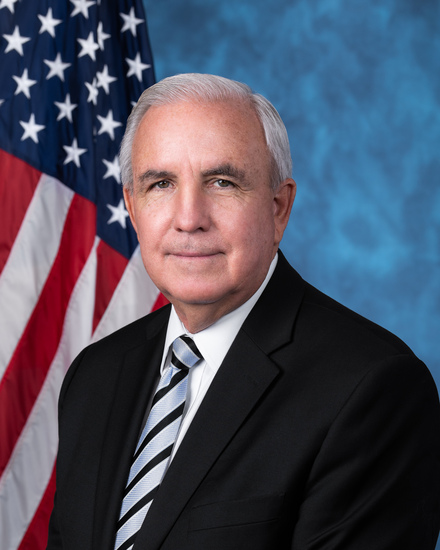
Rep. Carlos A. Gimenez
Sponsored bills
Goldie's Act This bill expands enforcement provisions under the Animal Welfare Act (AWA). Specifically, the bill directs the Department of Agriculture (USDA) to document and record detailed descriptions of violations of the act observed during inspections and investigations. USDA must provide a copy of all records documenting violations to state, local, and municipal animal control or law enforcement officials within 24 hours of such inspections or investigations. Inspections must be held at least once a year of each research facility, the premises of each animal dealer, and each exhibitor of animals. If violations are found during inspections, then USDA must conduct any necessary follow-up inspections until all the violations are corrected. Inspectors must confiscate or destroy in a humane manner animals found to be suffering physical or psychological harm as a result of failure to comply with the AWA. Violators are subject to civil penalties as outlined in the bill.
This concurrent resolution declares that Congress should not impose any new performance fee, tax, royalty, or other charge relating to the public performance of sound recordings on a local radio station for broadcasting sound recordings over the air, or on any business for such public performance of sound recordings.
Maddy summaryHR 1330 establishes the Smithsonian National Museum of the American Latino, authorizing its location within the National Mall's "Reserve" area. The bill requires the Smithsonian Board to coordinate with federal agencies managing potential museum sites, including notifying relevant congressional committees before land transfers. It mandates that the museum's exhibits and programs accurately represent the diverse cultures, histories, and viewpoints of Hispanic and Latino communities in the U.S., seeking input from a broad range of community experts. The Smithsonian must also submit regular reports to Congress detailing compliance with these representation requirements.
Maddy summaryThe EAGLES Act of 2025 reauthorizes and expands the Secret Service's National Threat Assessment Center (NTAC), directing it to lead national efforts in preventing targeted violence, particularly in schools. It mandates the NTAC to provide training, research, and consultation on evidence-based threat assessment programs for schools, law enforcement, and mental health professionals, with a focus on early intervention for students showing concerning behavior. The bill allocates $10 million annually (2026-2030) for these programs, requires hiring specialists in child psychology and school threat assessment, and mandates annual reports to Congress on training reach and effectiveness. This directly affects K-12 schools, local educational agencies, and public safety officials by establishing standardized protocols to prevent violence before it occurs.
Maddy summaryHR 35, the Agent Raul Gonzalez Officer Safety Act, creates a new federal crime for operating a motor vehicle while intentionally fleeing U.S. Border Patrol agents or assisting law enforcement officers within 100 miles of the U.S. border. It imposes penalties of up to 2 years in prison for the basic offense, 5-20 years if serious injury occurs, and 10 years to life if death results. The bill also makes individuals convicted of this crime inadmissible to the U.S., deportable, and ineligible for immigration relief like asylum. Additionally, it requires annual reports from the Attorney General and Homeland Security Secretary detailing arrests, charges, and penalties related to this offense.
Maddy summaryHR 1269, the Honoring Our Fallen Heroes Act of 2025, expands benefits for public safety officers (like police and firefighters) who develop certain cancers linked to their work. It adds 22 specific cancers - including lung, mesothelioma, and breast cancer - to the list of conditions presumed to be "exposure-related" and sustained in the line of duty. This presumption applies if the officer served at least 5 years, was diagnosed with the cancer within 15 years after last active duty, and the cancer directly caused death or permanent disability. The bill also establishes a process for adding new cancers every 3 years based on medical evidence from agencies like NIOSH, and allows claims to be filed within 3 years of the law's enactment.
Maddy summaryHR 1268 updates the legal definition of U.S. customs waters in two key laws (the Tariff Act of 1930 and the Anti-Smuggling Act) to align with current international maritime standards. It replaces the outdated "four leagues from the coast" language with specific references to the U.S. territorial sea (per Presidential Proclamation 5928, 1988) and contiguous zone (per Presidential Proclamation 7219, 1999). This change directly affects U.S. Customs and Border Protection enforcement activities in coastal waters. The bill makes no new policy or tax changes - it only clarifies existing legal boundaries for customs jurisdiction. The update takes effect upon the bill's enactment.
This bill prohibits the Big Cypress National Preserve in Florida from being designated as wilderness or as a component of the National Wilderness Preservation System. The National Park Service currently manages Big Cypress National Preserve, which is a freshwater swamp ecosystem of 729,000 acres. In general, development activities, commercial activities, permanent structures, and roads are prohibited in wilderness areas. In contrast, natural preserves typically allow some development activities, such as hunting or oil and gas exploration.
Maddy summaryHR 1165, the Port Crane Security and Inspection Act of 2025, requires the Department of Homeland Security to inspect high-risk foreign cranes connected to port cyber infrastructure before they are used at U.S. ports. It mandates a 180-day assessment of security risks from existing and new cranes and orders the removal of any crane posing a threat until certified safe. The bill prohibits operating new foreign cranes (from countries identified as security threats) after enactment and bans foreign software on port cranes after a 5-year phaseout period. This directly affects U.S. ports using cranes with technology from designated "covered foreign countries," such as those identified in national threat assessments.