

Frederick Douglass Trafficking Victims Prevention and Protection Reauthorization Act of 2021 This bill reauthorizes through FY2026 and revises programs and activities to support survivors of human trafficking and prevent such trafficking domestically and abroad. The bill expands and authorizes programs for survivors, including a program to prevent re-exploitation. It also extends through FY2026 a special assessment on certain persons convicted of a human trafficking offense, which funds programs for human-trafficking survivors. Additionally, the bill provides privacy and other protections for survivors, including specified financial protections and protections against retaliation for survivors who pursue civil claims against a perpetrator. The bill also allows courts to reduce sentences for certain individuals who commit human trafficking crimes as minors. To prevent trafficking domestically, federal departments must incorporate anti-trafficking efforts into contracting activities and personnel policies, and the bill supports private sector efforts to address human trafficking in its policies and services. Furthermore, the bill supports the identification, investigation, and prosecution of human trafficking crimes, with an expanded focus on forced labor. To prevent trafficking globally, the bill prohibits access to a trade program for developing countries and otherwise restricts development assistance for countries that fail to meet minimum standards for eliminating trafficking. It also changes the criteria for determining whether a country has met applicable standards. In addition, the bill authorizes sanctions on persons convicted of severe forms of trafficking and requires integration of counter-trafficking activities into foreign assistance programs. The bill also requires reporting by the Government Accountability Office, federal agencies, and states concerning human trafficking.
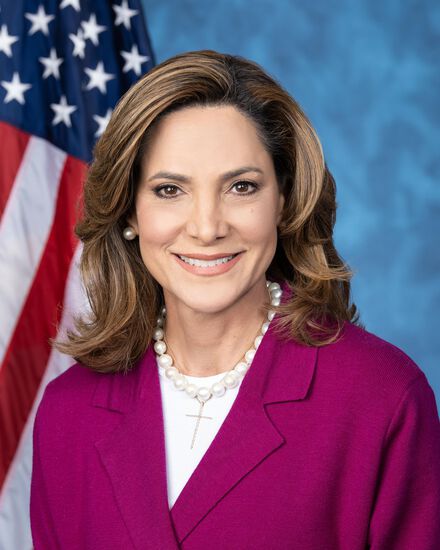
Rep. Maria Elvira Salazar
Sponsored bills
Care for Her Act This bill allows an eligible taxpayer to claim the Child Tax Credit for the tax year preceding the year the child is born. It also sets out other activities to support parents and pregnant women. Specifically, the bill establishes the Pregnancy Support Collaborative, which consists of representatives from the Department of Health and Human Services (HHS) and states that elect to participate. The collaborative must maintain a clearinghouse of information on providers of pregnancy and parenting supports and services. States must identify providers in their jurisdictions who meet applicable criteria for inclusion. In addition, the collaborative must share information about education and training opportunities for parents and pregnant women and identify successful programs (including workplace policies) to support them. Furthermore, the collaborative must award grants to states for local programs to improve maternal and infant health outcomes. If a community demonstrates that its program reduces Medicaid costs, it retains a portion of those savings. If approved by the collaborative, HHS must award grants to providers in the clearinghouse for mentoring and training pregnant women and new mothers and addressing gaps in the availability of maternity housing. Additionally, HHS may award grants for pregnancy and parenting supports and services. The Centers for Disease Control and Prevention and the Centers for Medicare & Medicaid Services must jointly maintain a database of de-identified epidemiological and Medicaid claims data to evaluate the effect of maternity homes on maternal and infant health outcomes.
Havana Syndrome Attacks Response Act This bill requires the President to sanction foreign persons and governments for carrying out clandestine attacks on U.S. personnel that have caused brain injury. Specifically, the President must impose visa- and asset-blocking sanctions on any foreign person that has directed or carried out such an attack. If the President determines a foreign government carried out such an attack, the President must notify Congress and sanction that country by terminating any foreign assistance (except for humanitarian aid or food or agricultural commodities or products) and arms transactions, restricting commercial exports, and denying access to U.S. credit or other financial assistance. The President must remove these sanctions after 12 months, provided that (1) the country's government gives reliable assurances that it will not conduct future attacks, and (2) the executive branch does not have persuasive information indicating an attack occurred in the preceding six months. The bill also requires a congressional briefing and report about suspected clandestine attacks on U.S. personnel that have caused brain injury, including hypotheses concerning the identity of the perpetrators and the technical methods used to carry out the attacks.
Foreign Extortion Prevention Act This bill establishes a federal criminal offense involving bribery by foreign officials. Specifically, the bill makes it a crime for foreign officials to demand or accept anything of value personally or for another person or a nongovernmental entity to influence the performance of an official act or otherwise confer an improper advantage. The bill explicitly grants extraterritorial jurisdiction over the offense. A violation is subject to criminal penalties—a fine, a prison term of up to 15 years, or both. Finally, the bill establishes a Victims of Kleptocracy Fund in the Treasury and directs fines and penalties for violations to be deposited into the fund for anti-corruption initiatives.
Daniel Anderl Judicial Security and Privacy Act of 2021 This bill generally prohibits federal agencies and private businesses from publicly posting the personally identifiable information (e.g., home addresses) of federal judges and their immediate family members. It also (1) requires information to be removed upon written request from the federal judge concerned, (2) prohibits data brokers from purchasing or selling such information, and (3) establishes programs to protect such information at the state and local level and to enhance security for judges.
Combating Global Corruption Act of 2021 This bill requires the Department of State to address corruption, including related to the Nord Stream 2 pipeline (a national gas pipeline expected to increase Russia's natural gas export capacity). The State Department must annually publish a ranking of foreign countries based on their government's efforts to eliminate corruption. The bill outlines the minimum standards that the State Department must consider when creating the ranking. These considerations include, for example, whether a country has criminalized corruption, adopted measures to prevent corruption, and complied with the United Nations Convention Against Corruption and other relevant international agreements. Tier one countries meet the standards; tier two countries make some efforts to meet the standards; tier three countries make de minimis or no efforts to meet the standards. If a country is ranked in the second or third tier, the State Department must designate an anti-corruption contact at the U.S. diplomatic post in that country to promote good governance and combat corruption. The bill also requires the State Department, in coordination with the Department of the Treasury, to evaluate whether to impose asset- and visa-blocking sanctions against foreign persons engaged in significant corruption (1) in tier three countries, or (2) related to the Nord Stream 2 pipeline. The State Department must report to Congress about any sanctions imposed under this bill. The evaluation and reporting requirements concerning the Nord Stream 2 pipeline terminate after five years.
America's Cultivation of Hope and Inclusion for Long-term Dependents Raised and Educated Natively Act of 2021 or the America's CHILDREN Act of 2021 This bill provides lawful permanent resident status to certain college graduates who entered the United States as children and addresses other immigration-related issues. Specifically, this bill allows an alien to apply for lawful permanent resident status if the alien (1) was lawfully admitted into the United States as a dependent child of an alien on a temporary worker visa, (2) was in the United States with such status for at least four years, (3) has graduated from an institution of higher education in the United States, and (4) is not deportable or otherwise inadmissible. In addition, the alien must have been lawfully present in the United States for at least 10 years at the time of the application. The bill also modifies various provisions related to the calculation of an alien's age for immigration purposes and the priority date of certain immigration-related applications.
Golden Visa Accountability Act This bill requires the Department of State to establish and maintain a database containing information about investor visa denials due to the applicant's involvement in corruption or serious human rights abuses. (Generally, the United States offers immigrant visas to qualified individuals who invest in the United States and create a certain number of full-time jobs.) Initially, the database must include records related to such denials of U.S. investor visas. The bill also requires the State Department to eventually expand the database to include records of such denials of investor visas in other countries. The State Department shall prioritize including records from European Union countries and from Australia, Canada, New Zealand, and the United Kingdom. The State Department may admit a foreign country to be part of the database if the State Department determines (1) that country will be honest and forthcoming with its records, and (2) that country's investor visa program is at risk of abuse by corrupt foreign officials.
This bill establishes the National Commission on Domestic Terrorist Attacks on the United States by Antifa. The commission must investigate and report on the involvement of antifa in the riots some cities experienced in 2020 and make recommendations to prevent further attacks and violent riots by antifa.
Cutting Unnecessary Regulatory Burdens Act This bill generally requires agencies to repeal at least two rules before promulgating a major rule (i.e., a rule with a significant economic impact, cost to consumers, or adverse effects on competition). Further, unless required by law, an agency may not issue a rule that exceeds the total cost of the rules to be repealed without approval by the Office of Management and Budget. These requirements do not apply to major rules related to agency procedures, the Armed Forces, national security, or foreign affairs.