Travel and Tourism Act This bill implements measures to support the U.S. travel and tourism industry. Specifically, the bill requires the Department of Commerce to develop a 10-year travel and tourism strategy with annual goals for the number of international visitors to the United States and for travel and tourism commerce. Further, Commerce must develop and implement a COVID-19 pandemic recovery strategy to assist the recovery of the U.S. travel and tourism industry. The bill also provides statutory authority for the United States Travel and Tourism Advisory Board, which shall advise Commerce on matters relating to the travel and tourism industry.
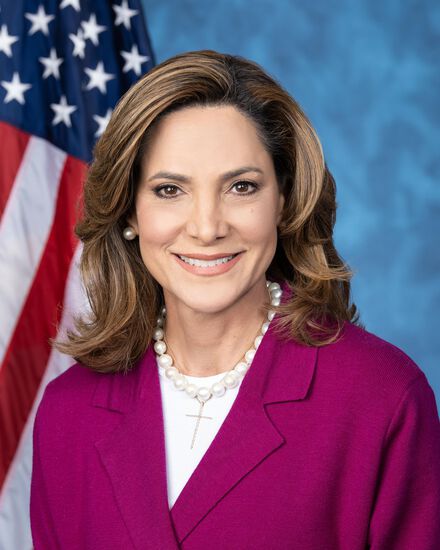
Rep. Maria Elvira Salazar
Sponsored bills
Babies Need More Formula Now Act of 2022 This bill addresses the regulation of infant formula, including by authorizing the Food and Drug Administration (FDA) to waive certain requirements related to importation. The FDA may waive labeling requirements related to the importation (or distribution or sale) of infant formula from a country with requirements that provide a similar assurance of safety as U.S. requirements. The FDA must, when appropriate, enter into arrangements to harmonize U.S. regulatory requirements pertaining to infant formula with the requirements of other nations. The bill imposes time lines for the FDA to respond to submissions for market approval for new infant formula. The FDA must also issue guidance as to what types of changes in the ingredients of infant formula, if any, may not require a new growth study to meet FDA requirements. The bill also authorizes a person to import, without prior notice to the FDA, up to a three-month supply of infant formula for personal use from a country with formula safety standards similar to U.S. standards, such as Canada. Before recommending or requiring a recall of infant formula due exclusively to a labeling deficiency, the FDA must ensure that the recall will not negatively affect the supply of formula in the United States. The bill also requires the FDA to (1) notify Congress no later than 24 hours after initiating a formula recall, and (2) provide certain information to formula manufacturers about restarting production after an inspection of a manufacturing facility impacted by a recall.

Military Spouse Tax Act This bill provides that a spouse of a service member may retain their personal residence or domicile for purposes of taxation. The bill authorizes a service member and the spouse of the member to elect to use the following locations for purposes of taxation: the residence or domicile of the member, the residence or domicile of the spouse, or the permanent duty station of the member.
This concurrent resolution expresses the sense of Congress that the President use existing authorities under the Defense Production Act of 1950 to ensure the supply and equitable distribution of infant formula. That act confers upon the President a broad set of authorities to influence domestic industry in order to provide essential materials and goods needed for the national defense.
Helping Employees Navigate Rabies Regulations from over Yonder or the HENRY Act This bill directs certain actions to allow federal officers and employees to bring dogs into the United States from countries that are considered high-risk for rabies. Among other provisions, the bill directs the Centers for Disease Control and Prevention (CDC) to allow federal officers and employees who are stationed abroad, including members of the military, to bring up to three dogs into the United States per entry; the CDC may allow for more dogs through specialized waivers.
This resolution expresses that the House of Representatives condemns the unjust detention and indicting of Russian opposition leader Vladimir Vladimirovich Kara-Murza; urges the U.S. government and other allied governments to work to secure the immediate release of Vladimir Vladimirovich Kara-Murza, Alexei Navalny, and other Russian citizens imprisoned for opposing the regime of Vladimir Putin and the war against Ukraine; and calls on the President to increase support provided by the U.S. government for those advocating for democracy and independent media in Russia.
Urgently Feeding America's Babies Act of 2022 This bill addresses a shortage in the domestic supply of infant formula. Specifically, the bill directs the President to immediately use existing authorities under the Defense Production Act of 1950 to ensure the supply of infant formula. That act confers upon the President a broad set of authorities to influence domestic industry in order to provide essential materials and goods needed for the national defense. In addition, the Food and Drug Administration must (1) establish, within 15 days, a process to allow importation of infant formula from the European Union; and (2) publish safety guidelines for imported infant formula.
Alzheimer's Accountability and Investment Act This bill requires the National Institutes of Health to annually submit, beginning in FY2024, an estimate of its budget and personnel needs for carrying out initiatives pursuant to the National Alzheimer's Project. This project supports coordination of federal planning, research, and other efforts to address Alzheimer's disease and related dementias.
NAPA Reauthorization Act This bill extends through 2035 and makes other changes to the National Alzheimer's Project. This project supports coordination of federal planning, programs, and other efforts to address Alzheimer's disease and related dementias. In particular, the bill incorporates a focus on promoting healthy aging and reducing risk factors associated with cognitive decline. The bill also expands the membership of the Advisory Council on Alzheimer's Research, Care, and Services to include (1) a researcher with experience recruiting and retaining diverse clinical trial participants, (2) an individual diagnosed with Alzheimer's disease, and (3) representatives from additional federal agencies (e.g., the Department of Justice and the Office of Management and Budget).
Geospatial Support for Atrocity Accountability Act This bill requires the Department of State to ensure that information and intelligence related to war crimes and atrocities are shared within the State Department and with certain other entities. For example, the State Department's Atrocity Warning Task Force must provide unclassified commercial geospatial imagery to domestic and international courts prosecuting persons responsible for crimes against humanity, if such imagery may provide evidence of such crimes.