NICS Denial Notification Act of 2021 This bill requires the Department of Justice to notify state and local law enforcement authorities following a firearms-related background check that results in a denial.
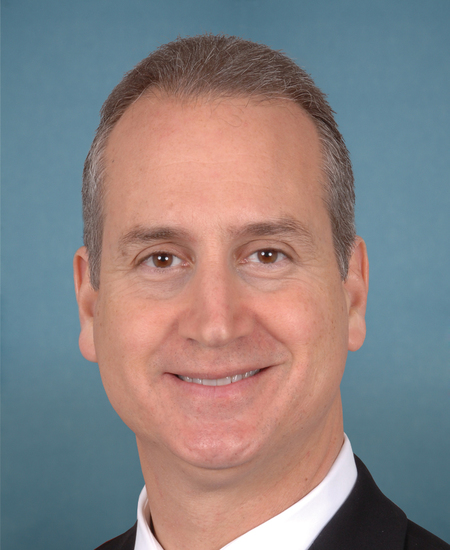
Rep. Mario Diaz-Balart
Sponsored bills
STOP Straw Purchases Act This bill establishes new criminal offenses and penalties to deter straw purchases of firearms (i.e., firearm purchases from a licensed gun dealer by one person on behalf of another person). Current law prohibits and imposes penalties—a fine, a prison term of up to 10 years, or both—for making false statements in connection with the acquisition of a firearm from a federally licensed dealer. This bill increases the statutory maximum prison sentence—from 10 years to 25 years—for a violation by a person who is acting as a straw purchaser. Under this bill, a straw purchaser is a person who makes false statements involving deception about the identity of the actual buyer and knows or has reasonable cause to believe the actual buyer intends the firearm to be (1) used in a crime of violence or drug trafficking crime, or (2) transferred to a prohibited person. Additionally, the bill establishes new related criminal offenses. Specifically, it prohibits and imposes penalties for inducing another person, as a leader of a straw purchasing ring, to act as a straw purchaser in a continuing series of transactions from which the person obtains income or resources; or obtaining a firearm by inducing another person to act as a straw purchaser. Finally, the bill directs the Bureau of Alcohol, Tobacco, Firearms and Explosives to include in the Firearms Transaction Record form a statement outlining penalties for acting as a straw purchaser.
Uyghur Human Rights Protection Act This bill designates certain residents of the Xinjiang region in China as prioritized refugees of special humanitarian concern and addresses other related issues. This priority designation shall apply to individuals (and the spouses, children, and parents of such individuals) who (1) reside in or fled Xinjiang and who suffered persecution on account of their peaceful political, religious, or cultural activities or associations, or have a well-founded fear of such persecution; or (2) have been formally charged, detained, or convicted for certain peaceful actions related to Xinjiang. Such an individual may not be denied admission into the United States based primarily on an arrest or other adverse government action due to that individual's participation in protests. The bill also waives certain immigration-related requirements for such individuals. Furthermore, a Chinese national seeking refugee status shall be considered to have been persecuted on account of political opinion if the Chinese government revoked that individual's residency in any region of China because the individual submitted a nonfrivolous application for a U.S. immigration benefit. Similarly, if the Chinese government revoked a Chinese national's citizenship, nationality, or residency because that individual filed for a U.S. immigration benefit, that revocation shall constitute a changed circumstance. (Among other things, a changed circumstance may allow an individual who has been rejected for asylum to apply again.)
Prosecuting Gun Crimes Saves Lives Act This bill establishes requirements and authorities for the Department of Justice to take certain actions to address the illegal purchase and possession of firearms, including by authorizing grants and establishing task forces to increase investigations and prosecutions of relevant offenses.
Police Officers Protecting Children Act This bill specifies that certain active and retired law enforcement officers who are authorized to carry concealed firearms are not subject to the federal prohibition on possessing (or discharging) a firearm in a school zone.
Foreign Influence Transparency Act This bill addresses foreign influence in higher education and in certain other academic, religious, and artistic pursuits. Current law exempts from foreign agent registration requirements a person engaging in activities in furtherance of religious, scholastic, academic, or scientific pursuits or of the fine arts. The bill specifies that this exemption applies only to those activities that do not promote the political agenda of a foreign government. Under current law, an institution of higher education (IHE) must disclose to the Department of Education (ED) a gift or contract that is from a foreign source and is valued at $250,000 or more, considered alone or in combination with all other gifts from or contracts with the foreign source. The bill instead requires an IHE to disclose such a gift or contract that is valued at $50,000 or more, considered alone or in combination with all other gifts or contracts. An IHE must include in its disclosure report the contents of any such contract and make the contents available for public disclosure. Additionally, an IHE that enters into an agreement with a Confucius Institute (i.e., a cultural institute directly or indirectly funded by the Chinese government) must immediately make available the full text of the agreement to the public, ED, and Congress. Finally, the bill prohibits an IHE that does not comply with these disclosure requirements from enrolling foreign students under the Student and Exchange Visitor Program.

21st Century NICS Act This bill modifies procedures for conducting firearms-related background checks through the national instant criminal background check system (NICS). Specifically, it permits the NICS to query an additional database—the National Data Exchange—as part of a firearm-related background check.
Pregnant Workers Fairness Act This bill prohibits employment practices that discriminate against making reasonable accommodations for qualified employees affected by pregnancy, childbirth, or related medical conditions. A qualified employee is an employee or applicant who, with or without reasonable accommodation, can perform the essential functions of the position, with specified exceptions. Specifically, the bill declares that it is an unlawful employment practice to fail to make reasonable accommodations to known limitations of such employees unless the accommodation would impose an undue hardship on an entity's business operation; require a qualified employee affected by such condition to accept an accommodation other than any reasonable accommodation arrived at through an interactive process; deny employment opportunities based on the need of the entity to make such reasonable accommodations to a qualified employee; require such employees to take paid or unpaid leave if another reasonable accommodation can be provided; or take adverse action in terms, conditions, or privileges of employment against a qualified employee requesting or using such reasonable accommodations. The bill sets forth enforcement procedures and remedies that cover different types of employees in relation to such unlawful employment practices. The Equal Employment Opportunity Commission must provide examples of reasonable accommodations that shall be provided to affected employees unless the employer can demonstrate that doing so would impose an undue hardship. The bill prohibits state immunity under the Eleventh Amendment to the Constitution from an action for a violation of this bill.
This resolution calls on the Office for Civil Rights within the Department of Education and state attorneys general to assist elementary and secondary schools in complying with existing civil rights laws and investigate and enforce such laws. In addition, the resolution condemns the practice of requiring teachers to receive education in critical race theory as a condition of certification.
Florida Coastal Protection Act This bill prohibits the Bureau of Ocean Energy Management from offering any tract for oil and gas leasing or preleasing in the following areas: the Eastern Gulf of Mexico Planning Area that is within 125 miles of the coastline of Florida, the South Atlantic Planning Area that is south of 30 degrees 43 minutes North Latitude, or the Straits of Florida Planning Area.