This resolution recognizes and expresses support for the efforts of democracy and human rights activists in Cuba.
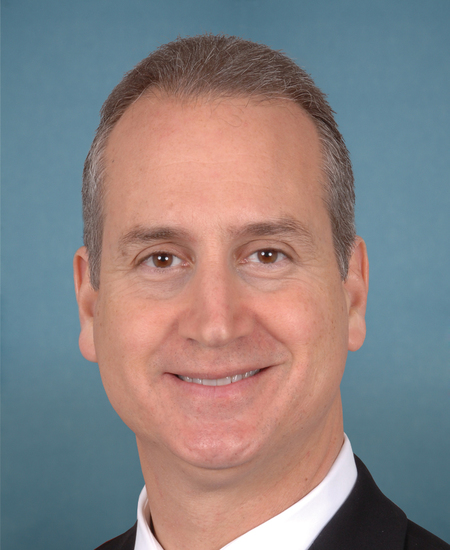
Rep. Mario Diaz-Balart
Sponsored bills
This resolution honors the suppliers of the National Aeronautics and Space Administration (NASA) for the work they are doing on the Artemis missions.
Traditional Cigar Manufacturing and Small Business Jobs Preservation Act of 2021 This bill exempts traditional large and premium cigars from Food and Drug Administration (FDA) regulation and FDA-assessed user fees.
Nicaragua Free Trade Review Act of 2021 This bill requires the U.S. Trade Representative to submit a report on the manner and extent to which Nicaragua is in compliance with the Dominican Republic-Central America-United States Free Trade Agreement.
Defending Domestic Produce Protection Act This bill establishes a process by which a core seasonal industry may petition for countervailing and antidumping duties. A core seasonal industry means the producers (1) of a domestic like product that is a raw agricultural product, (2) whose collective output constitutes a majority of the total production in any state or group of states that accounts for a major portion of the total production during a discrete season or cyclical period of time, and (3) that make substantially all of their sales during that season or time period. The bill also provides that this process shall apply with respect to goods from Canada and Mexico.
This bill designates the community-based outpatient clinic of the Department of Veterans Affairs in Middleburg, Florida, as the A.K. Baker VA Clinic.
Puerto Rico Statehood Admission Act This bill establishes a process for the admission of Puerto Rico into the union as a state, on an equal footing with all other states, based on a majority vote of the people of Puerto Rico.
Flexible Financing for Rural America Act This bill allows rural utility service providers to submit to the Department of Agriculture (USDA) a request to adjust the interest rate or modify the terms of certain loans. The request shall include a report summarizing how the adjustment or modification will assist the borrower in providing critical utility services to a rural community. Specifically, on receipt of a request, USDA or the Department of the Treasury (in the case of a loan owned by the Federal Financing Bank) must adjust the interest rate on the loan to match certain interest rates for obligations of comparable maturity to the term remaining on the loan (or a higher rate requested by the borrower), and make modifications to the loan terms as necessary to address changes in the financial position of the borrower due to the COVID-19 public health emergency and to promote the financial sustainability of the borrower. In carrying out the adjustments or modifications, USDA or Treasury shall not impose or collect any fee from, or impose any penalty on, a borrower. The bill also provides funding to implement the adjustments and modifications and for the liquidation of residual intragovernmental amounts owed by the Federal Financing Bank in connection with certain loans.

Military Education and Values Act This bill requires the Department of Defense (DOD) to issue guidance prohibiting the use of any education or training methodology within DOD and the Armed Forces that promotes or causes a racial divide or lack of equality. Such guidance must also reiterate that members of the Armed Forces of all races will be treated equally and update service members on the core tenets of the U.S. military. DOD must report on the status of critical race-theory and other race-based training education methodologies in the Armed Forces.
This concurrent resolution establishes the Joint Select Committee on the Events and Activities Surrounding China's Handling of the 2019 Novel Coronavirus to investigate and report to Congress and the executive branch specified information related to the coronavirus (i.e., the virus that causes COVID-19) pandemic. This report must include the origins and causes of the coronavirus; certain coronavirus-related policies, decisions, and activities by the government of China; accountability for policies, decisions, and activities related to influencing the World Health Organization's response to the coronavirus outbreak; vulnerabilities of the U.S. domestic and global supply chain to a global pandemic due to reliance on Chinese manufacturing; information related to lessons learned from China's handling of the coronavirus; and recommended actions the federal government should take in response to China's handling of the coronavirus.