

Maddy summaryHR 3433, the "Give Kids a Chance Act of 2024," requires pharmaceutical companies developing certain cancer drugs to conduct pediatric studies if the drugs target molecular pathways relevant to childhood cancers. It directly affects drug manufacturers submitting new applications for cancer treatments, particularly those combining previously approved adult cancer drugs or containing a single new active ingredient. The bill amends FDA regulations to mandate these pediatric investigations only when specific conditions are met, such as when a drug's molecular target is relevant to pediatric cancer growth. The FDA must issue implementing guidance within 12 months, and reports to Congress will track implementation and effectiveness starting 2 years after enactment.
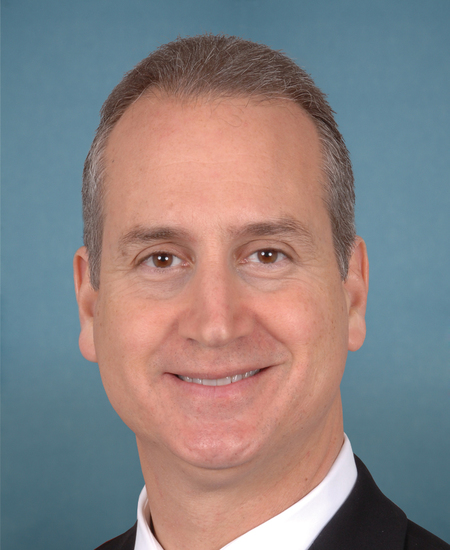
Rep. Mario Diaz-Balart
Sponsored bills
Maddy summaryHR 9692, the STOP MADURO Act, authorizes a $100 million reward for information leading to the arrest and conviction of Venezuela's President Nicolás Maduro Moros. The reward would be funded exclusively by assets already frozen from Maduro and his regime under existing U.S. sanctions, including those from the Foreign Narcotics Kingpin Designation Act. The bill specifically targets Maduro based on U.S. criminal charges related to drug trafficking and narco-terrorism conspiracy. It modifies the State Department's rewards program without creating new sanctions or funding sources.
Maddy summary# Summary of Department of State, Foreign Operations, and Related Programs Appropriations Act, 2025 This legislation allocates funding for U.S. foreign assistance programs for fiscal year 2025 with numerous specific funding allocations, restrictions, and oversight requirements. ## Key Funding Allocations: - $94 million for Global Internet Freedom programs - $200 million for Women's Economic Empowerment - $150 million for Women, Peace, and Security initiatives - $135 million for the Prevention and Stabilization Fund - $252 million for micro, small, and medium-sized enterprises - $250 million for programs to prevent violence against women and girls - $123.4 million for activities to combat trafficking in persons ## Major Restrictions and Prohibitions: - **United Nations Restrictions**: No funds for UNRWA, UN Human Rights Council (unless specific conditions met), World Health Organization, International Court of Justice, or International Criminal Court - **No Funding for**: Drag queen workshops, transgender-related programs, diversity, equity and inclusion initiatives, and certain training on concepts related to systemic racism - **No Funding for**: The Green Climate Fund, Clean Technology Fund, or Loss and Damage Fund - **No Funding for**: The Wuhan Institute of Virology, EcoHealth Alliance, or gain-of-function research - **No Funding for**: Certain countries that have refused to extradite individuals (as defined in the bill) ## Gaza Oversight Requirements: - Mandatory certification and reporting on oversight policies to prevent diversion of aid to Hamas - Third-party monitoring of assistance for Gaza - Quarterly reports on assistance provided for Gaza - Assessment of whether funds have been diverted to terrorist entities ## Rescissions: - $640.161 million from Economic Support Fund - $65 million from International Narcotics Control - $111 million from Debt Restructuring ## Other Notable Provisions: - Prohibition on using funds for certain types of training or concepts related to race, sex, or gender - Requirements for oversight of funds to prevent diversion to terrorist entities - Specific restrictions on the use of funds for certain international organizations and programs - Prohibition on using funds for certain executive orders related to diversity and inclusion The bill contains numerous detailed provisions governing how funds may be allocated, spent, and monitored across various foreign assistance programs while imposing significant restrictions on certain types of programs and organizations.
Maddy summaryHRES 1437 is a ceremonial resolution designating the week beginning September 9, 2024, as "National Hispanic-Serving Institutions Week." It recognizes Hispanic-serving institutions (HSIs) - colleges and universities with at least 25% Hispanic enrollment - and their role in educating low-income students, advancing economic mobility, and serving 31.7% of all undergraduate students. The resolution calls for the public and organizations to observe this week with ceremonies and activities during Hispanic Heritage Month. It does not create new laws, allocate funding, or change existing policies - it is purely a symbolic gesture of recognition.
Maddy summaryThe context provided for HR 9146 does not include the full text of the amendment or the specific language added to Section 1703(d)(2) of title 38, U.S. Code. Without the actual provisions of the new subparagraph (F) titled "Continuity of care," it is impossible to describe the bill's key mechanisms, who it affects, or its concrete policy changes. The bill's title suggests it relates to veterans' health care continuity under the Veterans Community Care Program, but the details are omitted in the provided excerpt. Therefore, a complete and accurate summary cannot be generated from the available information.
Maddy summaryHR 9401 requires funeral honors details to recite the "13 Folds of Honor" explanation during flag presentations for deceased members of the Armed Forces or veterans. This applies to military funeral ceremonies covered under existing laws (e.g., 10 U.S.C. § 1491 or 38 U.S.C. § 2301), with the recitation detailing the symbolic meaning of each fold. Families may opt out of the recitation if they choose. The bill is procedural, focusing on standardizing the ceremonial presentation of flags at military funerals.
Maddy summaryHR 9374, the Stand with Israel Act, prohibits U.S. federal funds from being used to support the United Nations or its entities if they restrict Israel's full participation as a member state. The bill specifically blocks funding for any UN body that expels, downgrades, or suspends Israel's membership or limits its ability to participate equally with other nations. This affects U.S. government contributions to the UN, requiring the Department of State and other agencies to halt funding for such UN actions. The key mechanism is a new provision in the UN Participation Act that mandates this funding restriction whenever Israel's UN participation is impaired.
Maddy summaryHRES 1409 is a symbolic House resolution condemning Nicolás Maduro's regime for alleged election fraud in Venezuela's July 28, 2024 presidential election. It recognizes opposition candidate Edmundo González Urrutia as the president-elect based on observed vote tallies showing his decisive victory, and condemns the regime's refusal to release transparent results. The resolution calls for new sanctions against Maduro and his allies, demands respect for the election outcome, and urges diplomatic pressure to support Venezuela's democratic transition. This resolution directly addresses the Maduro regime's actions and expresses U.S. solidarity with Venezuelan voters and the opposition.
Maddy summaryHRES 1358 is a resolution passed by the U.S. House of Representatives calling for accountability for Cuba's violations of internationally recognized human rights and its support for activities harming U.S. interests and democratic nations. It urges the U.S. government to maintain sanctions on Cuba until a democratic transition begins, seek Cuba's expulsion from the UN Human Rights Council, and retain Cuba on the State Sponsors of Terrorism list. The resolution also requires the State Department to submit biannual reports to Congress on efforts to promote democracy in Cuba and calls for action against the trafficking of Cuban medical personnel abroad. This resolution expresses congressional policy but does not create binding law.
Maddy summaryHRES 1351 is a symbolic resolution commending Cuban citizens who protested against the Communist regime on July 11, 2021. It honors their courage in demanding fundamental rights, while condemning the regime's crackdown - including detaining over 1,400 protesters, cutting internet access, and subjecting activists like José Daniel Ferrer García to torture. The resolution calls for the immediate release of imprisoned protesters and urges the U.S. government to prioritize democracy and human rights in Cuba policy over "unilateral concessions." As a non-binding resolution, it does not create new laws or policies but expresses congressional support for Cuban pro-democracy activists.