

National Origin-Based Antidiscrimination for Nonimmigrants Act or the NO BAN Act This bill imposes limitations on the President's authority to suspend or restrict aliens from entering the United States. It also prohibits religious discrimination in various immigration-related decisions, such as whether to issue an immigrant or nonimmigrant visa, unless there is a statutory basis for such discrimination. The President may temporarily restrict the entry of any aliens or class of aliens after the Department of State determines that the restriction would address specific and credible facts that threaten U.S. interests such as public safety. The bill also imposes limitations on such restrictions, such as requiring the President, State Department, and the Department of Homeland Security (DHS) to (1) only issue a restriction when required to address a compelling government interest, and (2) narrowly tailor the suspension to use the least restrictive means to achieve such an interest. Before imposing a restriction, the State Department and DHS shall consult with Congress. The State Department and DHS shall report to Congress about the restriction within 48 hours of the restriction's imposition. If such a report is not made, the restriction shall immediately terminate. Individuals or entities present in the United States and unlawfully harmed by such a restriction may sue in federal court. The bill transfers the authority to suspend the entry of aliens traveling to the United States on a commercial airline that failed to comply with regulations related to detecting fraudulent travel documents from the Department of Justice to DHS.
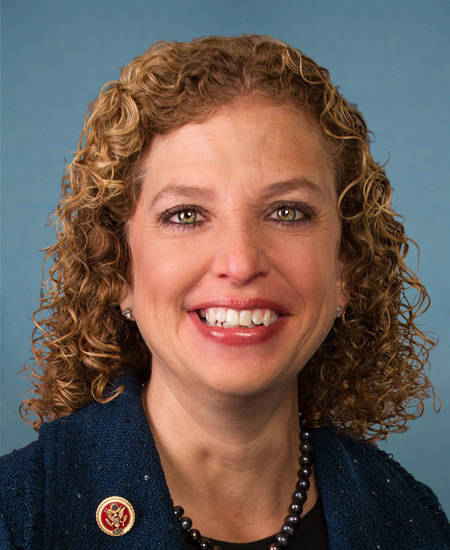
Rep. Debbie Wasserman Schultz
Sponsored bills
Maddy summaryHR 922, the Period PROUD Act of 2025, allocates $1.9 billion annually (2025-2028) through the Social Services Block Grant Program, with $200 million specifically dedicated each year (2026-2029) to provide free menstrual products to low-income menstruating individuals. It requires states to distribute these funds to eligible nonprofits with experience in community distribution of basic needs, integrating the program with existing services like SNAP, Medicaid, and WIC. The bill mandates that funds supplement, not replace, other existing programs, prohibits limiting where products can be distributed, and caps administrative costs at 9% of allocated funds. States must report annually and an evaluation of the program’s effectiveness will be completed by 2031.
Maddy summaryHR 944, the Access to Counsel Act, requires U.S. immigration officials to provide certain immigrants a meaningful opportunity to consult with legal counsel during key immigration processes. It directly affects U.S. nationals, lawful permanent residents returning from travel, visa holders, refugees, asylees, and parolees subject to secondary or deferred inspection at ports of entry. The bill mandates that officials ensure access to counsel (including via phone) within one hour of inspection starting, allow counsel to present evidence, and accommodate in-person meetings when possible. It also requires officials to provide counsel access before accepting Form I-407 abandonment forms from lawful permanent residents, unless waived in writing. The law takes effect 180 days after enactment and preserves existing rights to counsel under other immigration laws.
Maddy summaryHR 921, the Master Sergeant Roddie Edmonds Congressional Gold Medal Act, authorizes the posthumous award of a Congressional Gold Medal to Master Sergeant Roddie Edmonds for his heroic actions during World War II. The bill recognizes Edmonds' defiance of Nazi orders to separate Jewish-American soldiers at Stalag IX-A prisoner camp, where he declared "We are all Jews here" to protect approximately 200 Jewish soldiers, saving their lives. The medal, to be struck by the U.S. Treasury and presented to his son or next of kin, commemorates his actions and his posthumous recognition as "Righteous Among the Nations" by Yad Vashem. This commemorative act does not create new policy or affect any group beyond honoring Edmonds' legacy.
Maddy summaryThis bill updates disaster assistance rules to clarify eligibility for specific housing types affected by disasters. It defines "residential common interest communities" (including condos, housing co-ops, and manufactured home communities) and requires the President to issue rules allowing debris removal from these properties when a state determines it threatens safety or recovery. It also expands repair funding eligibility for essential shared areas (like roofs, elevators, and utilities) in these communities, provided residents document their share of costs. The changes apply to disasters declared after the bill's enactment, directly affecting residents of these housing types who seek federal disaster aid.
Maddy summaryHR 891, the Pro-Housing Act of 2025, provides federal grants and low-cost loans to states, cities, and tribes to develop and implement local housing plans. It requires recipients to address housing supply, affordability, and accessibility for all income levels while avoiding displacement of current residents, with priority given to plans that improve transit-accessible housing near job centers. The bill allocates $200 million annually for 2026-2031, mandates 20% of funds for rural or exurban areas, and includes a pilot program to transfer unused federal property for affordable housing development. It also requires annual reports on progress and a 5-year study to evaluate the program's impact on housing supply and affordability.
Stop Antiabortion Disinformation Act or the SAD Act This bill prohibits deceptive advertising for reproductive health services. Specifically, the bill makes it unlawful for a person (i.e., individual, partnership, corporation, association, or organization) to deceptively advertise the reproductive health services they offer, including by misrepresenting that the person (1) offers or provides contraception or abortion services (or referrals for such contraception or abortion services), or (2) employs or offers access to licensed medical personnel. The bill provides for enforcement by the Federal Trade Commission. In addition to any other penalty, violations are subject to a civil penalty that may not exceed the greater of $100,000 (adjusted annually for inflation) or 50% of the revenue earned during the preceding 12-month period by the ultimate parent entity of the person who violated the bill.
Maddy summaryHR 844, the "Black History is American History Act," amends the Elementary and Secondary Education Act to require that Black history be included in all American history and civics education programs for K-12 students. The bill specifically adds "which shall include Black history" to multiple provisions, ensuring it becomes a standard part of curriculum standards, teacher training, and national assessments like the National Assessment of Educational Progress. This policy change directly affects public school curricula, educators, and students across the U.S. by mandating historically accurate instruction on African American contributions as integral to American history. The bill references the National Museum of African American History and Culture as a resource provider for educators implementing these changes.
Maddy summaryThis resolution expresses the House of Representatives' position that Congress should take steps to prevent the privatization of the United States Postal Service (USPS), ensuring it remains a federal independent agency. It highlights USPS’s constitutional role, self-sustaining nature (relying on service revenue, not taxpayer funds), and critical functions - serving 168 million addresses daily, supporting rural communities, and underpinning e-commerce. The resolution opposes privatization, noting it would raise prices, reduce services, and harm the $1.9 trillion mailing industry. As a non-binding resolution, it reflects the House’s stance but does not create new law or policy.
Maddy summaryHR 768, the Holocaust Education and Antisemitism Lessons Act, requires the U.S. Holocaust Memorial Museum Director to study how states and school districts currently teach about the Holocaust and antisemitism in K-12 schools. The study will examine curriculum requirements, teacher training, educational materials used, and assessment methods across all states and a representative sample of school districts and schools. It specifically aims to identify gaps, resources needed, and how schools address antisemitism and genocide prevention in their teaching. The Museum must submit a report to Congress within three years of the bill's enactment, detailing findings on current practices and challenges. This bill does not mandate new teaching requirements but seeks to understand existing approaches to Holocaust education.