

Maddy summaryThis bill strengthens the Voting Rights Act of 1965 by clarifying how to prove voting discrimination and expanding requirements for preclearance of voting changes. It establishes new standards for determining when voting practices dilute minority voting strength or deny/abridge voting rights, requiring plaintiffs to show specific conditions for vote dilution claims and including factors like historical discrimination and racial polarization in court analyses. The bill modifies the criteria for determining which states and political subdivisions must seek preclearance for voting changes, and adds new transparency requirements for jurisdictions to publicly disclose changes to voting qualifications, polling locations, and election districts. It directly affects states and local governments that implement voting policies, particularly those with a history of voting rights violations or that make changes to voting qualifications, procedures, or district boundaries. The bill aims to prevent discriminatory voting practices by providing clearer standards for courts and requiring greater transparency in voting rule changes.
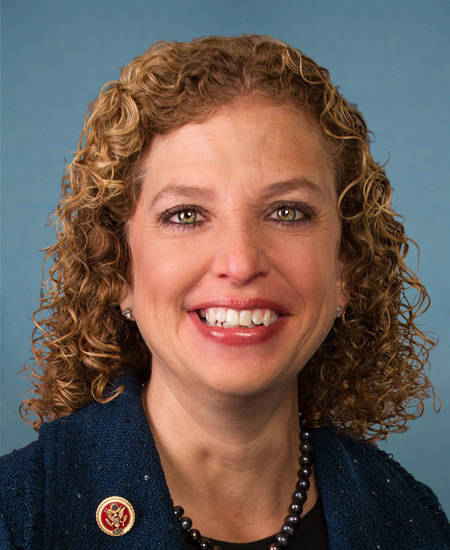
Rep. Debbie Wasserman Schultz
Sponsored bills
Maddy summaryThe Richard L. Trumka Protecting the Right to Organize Act of 2025 strengthens workers' organizing rights by making it an unfair labor practice for employers to threaten permanent replacement of striking workers, discriminate against workers who support unions, or require employees to attend employer campaigns unrelated to their job duties. It expands the definition of "employee" to make it harder for companies to classify workers as independent contractors and requires employers to post notices about workers' rights in conspicuous locations. The bill establishes a new electronic voting system for union elections, creates a 90-day bargaining period before mediation can be requested, and increases penalties for violations of labor laws. These changes are intended to make it easier for workers to form unions and negotiate better wages and working conditions.
Maddy summaryHR 1788, the Fair Grocery Pricing Act, prohibits food producers from using data analytics services (coordinators) to facilitate tacit price coordination among competitors. It directly affects food manufacturers and the data companies that provide pricing coordination services, making it unlawful for producers to contract with such services or for coordinators to enable price-fixing agreements. The bill empowers the Federal Trade Commission and Department of Justice to enforce these rules under existing antitrust laws and allows consumers to sue for triple damages plus legal fees if harmed by violations. It also invalidates pre-dispute arbitration agreements for these cases, ensuring affected consumers can pursue legal action.
Maddy summaryHR 1787 authorizes the U.S. Mint to produce commemorative coins honoring baseball legend Roberto Clemente, including $5 gold, $1 silver, and half-dollar coins, with specific specifications for weight, size, and metal content. The bill requires the coins to feature Clemente's image and commemorative inscriptions, and mandates a surcharge ($35 for gold, $10 for silver, $5 for half-dollar) paid to the Roberto Clemente Foundation for its educational, youth sports, and disaster relief programs. All coins must be minted in 2027, sold at face value plus surcharge and production costs, and will be legal tender. The bill focuses solely on the coin program, not broader policy changes.
Maddy summaryHR 1786 amends the Robert T. Stafford Disaster Relief Act to explicitly include "algal blooms" as a qualifying event for federal disaster declarations. This change expands eligibility for federal disaster assistance to communities affected by harmful algal blooms, which can contaminate water and harm ecosystems. The bill modifies Section 102(2) of the Stafford Act (42 U.S.C. 5122) by adding "algal blooms" to the list of recognized disasters alongside drought. It is a procedural adjustment to the law's definition, not a new funding or program.
Maddy summaryThe End Tobacco Loopholes Act standardizes excise taxes across all tobacco products to close previous rate disparities. It nearly doubles cigarette taxes (to $100.66 per pack), increases smokeless tobacco taxes significantly (e.g., from $1.51 to $26.84 per pound), and establishes a new tax on nicotine for vaping products ($100.66 per 1,810 milligrams). The bill also creates specific tax rates for "discrete single-use units" like nicotine pouches and adds inflation adjustments to future tax rates. This directly affects tobacco manufacturers, importers, and retailers who sell these products, requiring them to pay standardized tax rates on all tobacco and nicotine products.
Safe Schools Improvement Act This bill requires states to direct their local educational agencies (LEAs) to establish policies that prevent and prohibit bullying and harassment of elementary and secondary school students. In particular, these policies must prohibit bullying and harassment based on race, color, national origin, disability, religion, or sex. Sex includes sexual orientation, gender identity, and sex characteristics (including intersex traits). Further, LEAs must provide (1) students, parents, and educational professionals with annual notice of the conduct prohibited in their disciplinary policies; (2) students and parents with grievance procedures that target such conduct; and (3) the public with annual data on the incidence and frequency of that conduct at the school and LEA level. The Department of Education must conduct and report on an independent biennial evaluation of programs and policies to combat bullying and harassment in elementary and secondary schools. The National Center for Education Statistics must collect state data to determine the incidence and frequency of the conduct prohibited by LEA disciplinary policies.
Maddy summaryThis bill (HJRES 63) would rename the Robert E. Lee Memorial, a National Park Service site in Arlington, Virginia, to "Arlington House National Historic Site." It directly affects the National Park Service, which manages the site, and all federal government documents, maps, and records referencing the location. The key provision updates all official references to the site to the new name and repeals two prior resolutions that established the memorial. As a procedural renaming bill, it does not create new policies or funding but changes the site's official designation.
Maddy summaryThis resolution symbolically recognizes polycystic ovary syndrome (PCOS) as a serious health condition affecting millions of women and girls in the U.S., highlighting its impacts on reproductive, metabolic, and mental health. It designates September as "PCOS Awareness Month" to promote public education, improve diagnosis rates, and support better management of related health issues like diabetes and cardiovascular disease. The resolution urges increased awareness and research but does not create new laws, funding, or programs. It directly affects individuals with PCOS, healthcare providers, and public health efforts focused on the condition.
Maddy summaryHR 1715, the Public Health Funding Restoration Act, restores annual funding for the Prevention and Public Health Fund to $2 billion starting in fiscal year 2026. This bill directly affects federal public health programs, including the CDC’s immunization initiatives and state/local health departments, by reversing prior funding cuts. It amends the Affordable Care Act to set the annual funding level at $2 billion, enabling continued support for evidence-based prevention programs like childhood lead poisoning prevention, tobacco cessation, and immunizations. The restored funding aims to maintain existing programs proven to reduce healthcare costs and improve community health outcomes. This change specifically targets the Prevention and Public Health Fund (Section 4002 of the ACA) without creating new programs.