

Law Enforcement Protection Act of 2021 This bill includes armor-piercing, concealable weapons in the definition of firearm under the National Firearms Act.
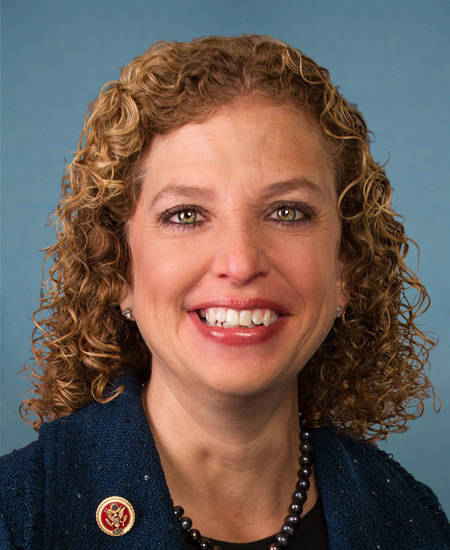
Rep. Debbie Wasserman Schultz
Sponsored bills
Holocaust Insurance Accountability Act of 2021 This bill allows a beneficiary (or an heir of a beneficiary) of certain insurance policies in effect during the Holocaust to sue in U.S. district court to enforce rights under such policies. An insurance policy covered under this bill must have been (1) in effect at any time between January 31, 1933, and December 31, 1945, and (2) issued to a policyholder domiciled in Nazi-controlled territory or Switzerland. A court shall award to a prevailing beneficiary (1) the amount due under a policy, (2) prejudgment interest of 6% a year, (3) attorney's fees and costs, and (4) treble damages if the insurer acted in bad faith. An action under this bill or state law related to a covered insurance policy shall be considered timely if filed within 10 years of this bill's enactment. Judgments and agreements entered before this bill's enactment shall not preclude a claim brought under the bill, with certain exceptions. Neither executive agreements between the United States and a foreign government nor U.S. executive foreign policies shall (1) affect or preclude claims brought under this bill, or (2) supersede or preempt any state laws relating to insurance policies covered by this bill.
Khalid Jabara and Heather Heyer National Opposition to Hate, Assault, and Threats to Equality Act of 2021 or the Jabara-Heyer NO HATE Act of 2021 This bill creates grants for state and local governments to combat hate crimes. It also authorizes additional penalties for hate crime offenses. Specifically, it establishes grants for states to create state-run hate crimes reporting hotlines. It also authorizes grants for states and local governments to implement the National Incident-Based Reporting System and to conduct law enforcement activities or crime reduction programs to prevent, address, or respond to hate crimes. Finally, in the case of an individual convicted of a hate crime offense and placed on supervised release, the bill allows a court to order that the individual participate in educational classes or community service as a condition of supervised release.
Camp Lejeune Justice Act of 2021 This bill allows certain individuals to sue and recover damages for harm from exposure to contaminated water at Camp Lejeune in North Carolina between August 1, 1953, and December 31, 1987. This action is available only to individuals who were exposed to contaminated water for at least 30 days. The bill prohibits the U.S. government from asserting specified immunity from litigation in response to such a lawsuit. The bill also prohibits an individual who brings such an action from bringing a separate tort action against the United States based on the same harm.
Equal Access to Abortion Coverage in Health Insurance Act of 2021 or the EACH Act of 2021 This bill requires federal health care programs to provide coverage for abortion services and requires federal facilities to provide access to those services. The bill also permits qualified health plans to use funds attributable to premium tax credits and reduced cost sharing assistance to pay for abortion services.
Stop shielding Assets from Corporate Known Liability by Eliminating non-debtor Releases Act or the SACKLER Act This bill prohibits a bankruptcy court from releasing claims against non-debtors brought by states, tribes, municipalities, or the federal government. However, the bankruptcy court may issue a stay not exceeding 90 days regarding such a claim. Complex bankruptcies may involve creditor claims against non-debtors associated with the debtor, such as the debtor's officers, directors, or employees. Currently, in carrying out a bankruptcy plan, certain courts may release non-debtors from liability (there is a circuit split regarding this practice).
Preventing Opportunities for Teen E-Cigarette and Tobacco Addiction Act or the PROTECT Act This bill requires the Centers for Disease Control and Prevention (CDC) to develop a strategy and carry out a specific initiative to prevent and reduce the use of electronic cigarettes and emerging tobacco products among youth and young adults. As part of the initiative, the CDC must conduct research and surveillance on types of products, patterns of use, health impacts, and other aspects of the use of such products by youth and young adults; evaluate prevention and intervention strategies and develop guidance for intervening and treating youth and young adults who use such products; identify effective messaging and communication efforts and implement a national public education campaign concerning the use of such products; and continue to fund grants for tobacco control programs in health departments, including efforts to prevent and reduce the use of such products by youth and young adults.
Animal Freedom from Testing, Experiments, and Research Act of 2021 or the AFTER Act of 2021 This bill requires federal research facilities to facilitate the adoption or nonlaboratory placement of certain warm-blooded animals (e.g., dogs, cats, monkeys, guinea pigs, hamsters, and rabbits) with animal rescue organizations, animal sanctuaries, animal shelters, or individuals. In order to be adopted or placed, the animals must (1) no longer be needed for research; (2) be suitable for release; (3) not be birds, rats, or mice.
This bill requires the Department of Defense (DOD) to conduct outreach to build awareness among former members of the Armed Forces of the process established for the review of discharge characterizations related to sexual orientation (i.e., on the basis of Don't Ask, Don't Tell or a similar policy). DOD must also provide for specified relief for former members of the Armed Forces who were impacted by the discharge characterizations and ensure that DOD oral historians review related facts and receive testimony from affected individuals.
Israel Relations Normalization Act of 2021 This bill requires the Department of State to take certain actions promoting the normalization of relations between Israel, Arab states, and other relevant countries and regions. Specifically, the State Department must develop a strategy on expanding and strengthening the Abraham Accords (the term used to refer collectively to agreements between Israel and the United Arab Emirates and between Israel and Bahrain marking the public normalization of relations between the two Arab countries and Israel). The strategy must include a description of how the U.S. government will encourage further normalization of relations with Israel. In addition, the State Department must report on options for U.S. international efforts to promote the strengthening of ties between Israel, Arab states, and other relevant countries and regions. The State Department must also report on the status of the normalization of relations with Israel, including information on (1) laws that punish individuals for people-to-people relations with Israelis (i.e., anti-normalization laws), and (2) evidence of steps taken by Arab governments toward permitting or encouraging normalized relations between their citizens or residents and Israeli citizens.