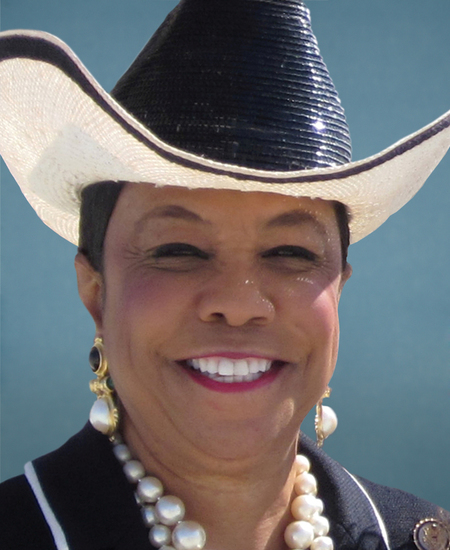
Photo of Frederica S. Wilson
D United States House · District 24 · Florida

Rep. Frederica S. Wilson

Compare
Total votes
2,837
all sessions
Attendance
87%
363 missed
Lower than 98% of chamber peers
With party
98%
of cast votes
Higher than 94% of chamber peers
Bipartisan score
1%
crosses aisle rarely
Lower than 98% of chamber peers
Sponsored
1,506
bills & resolutions
Higher than 85% of chamber peers
Committees
7
assignments
1,506 bills and resolutions

Sponsored bills

Total
1,506
Primary
69
Co-sponsor
1,437
This page
1,506
matching current filters
Co-sponsor HRES 398
Passed · Indiana House · Co-sponsor
Recognizing the forthcoming centennial of the 1921 Tulsa Race Massacre.

This resolution expresses the sense of the House of Representatives that the United States can achieve a more perfect union by condemning the violence and destruction perpetrated against the African American community of Greenwood in Tulsa, Oklahoma. The resolution states that a more perfect union may be achieved through other means as well, including by promoting tolerance and unity, and it recognizes Congress's commitment to acknowledge and learn from the history of racism and racial violence in the United States in order to reverse the legacy of white supremacy and fight for racial justice.

Passed May 18, 2021 1 co-sponsor
Co-sponsor HRES 215
In committee · Indiana House · Co-sponsor
Recognizing the forthcoming centennial of the 1921 Tulsa Race Massacre.

This resolution recognizes the forthcoming centennial of the Tulsa Race Massacre of 1921. The resolution acknowledges the historical significance of this event as one of the largest single instances of state-sanctioned violence against Black people in American history; honors the lives and legacies of the estimated 300 Black individuals who were killed during the massacre and the nearly 9,000 who were left homeless and penniless; condemns efforts to cover up the truth and shield the white community, especially government officials, from accountability; condemns the continued legacy of racism and white supremacy against Black people in the United States, particularly in the form of police brutality; encourages education about the massacre, the history of white supremacy that fueled the massacre, and subsequent attempts to deny or cover up the massacre, in all elementary and secondary education settings and in institutions of higher education; and recognizes the commitment of Congress to acknowledge and learn from the history of racism and racial violence to reverse the legacy of white supremacy and fight for racial justice.

In committee May 18, 2021 1 co-sponsor
Co-sponsor HRES 180
In committee May 18, 2021 1 co-sponsor
Co-sponsor HR 3294
In committee · Indiana House · Co-sponsor
IGNITE HBCU Excellence Act

Institutional Grants for New Infrastructure, Technology, and Education for HBCU Excellence Act or the IGNITE HBCU Excellence Act This bill establishes a grant program to support long-term improvements of historically Black colleges and universities (HBCUs) and graduate programs at HBCUs. Specifically, the bill requires the Department of Education (ED) to award grants to HBCUs to improve campus facilities. A recipient must use grant funds for certain activities, such as constructing or renovating facilities, carrying out major repairs, and strengthening the safety and security of a campus. Any new construction, modernization, or renovation projects must meet building code and energy and water conservation requirements. Further, HBCUs must seek to procure contracts from certain small businesses, including those owned and controlled by veterans and service-disabled veterans. The bill prohibits the use of grant funds for specified activities, including for the payment of routine and predictable maintenance costs, minor repairs, and utility bills. The Government Accountability Office must study the implementation of the grant program. The bill also requires ED to repay the outstanding balance of principal, interest, fees, and costs and any related reimbursements for certain capital financing loans.

In committee May 18, 2021 1 co-sponsor
Primary HR 3289
In committee · Indiana House · Lead sponsor
Transportation Equity Act

Transportation Equity Act This bill directs the Department of Transportation (DOT) to reestablish the Transportation Equity Committee. The committee must provide independent advice and recommendations to DOT on transportation equity issues. The committee must also evaluate the work of DOT in connecting people to economic and related forms of opportunity and carrying out its strategic, research, technological, regulatory, community engagement, and economic policy activities related to transportation and opportunity. In addition, DOT must appoint a full-time federal employee to serve as coordinator and act as the designated federal officer for the committee.

In committee May 18, 2021 0 co-sponsors
Co-sponsor HR 1976
In committee · Indiana House · Co-sponsor
Medicare for All Act of 2021

Medicare for All Act of 2021 This bill establishes a national health insurance program that is administered by the Department of Health and Human Services (HHS). Among other requirements, the program must (1) cover all U.S. residents; (2) provide for automatic enrollment of individuals upon birth or residency in the United States; and (3) cover items and services that are medically necessary or appropriate to maintain health or to diagnose, treat, or rehabilitate a health condition, including hospital services, prescription drugs, mental health and substance abuse treatment, dental and vision services, and long-term care. The bill prohibits cost-sharing (e.g., deductibles, coinsurance, and copayments) and other charges for covered services. Additionally, private health insurers and employers may only offer coverage that is supplemental to, and not duplicative of, benefits provided under the program. Health insurance exchanges and specified federal health programs terminate upon program implementation. However, the program does not affect coverage provided through the Department of Veterans Affairs or the Indian Health Service. The bill also establishes a series of implementing provisions relating to (1) health care provider participation; (2) HHS administration; and (3) payments and costs, including the requirement that HHS negotiate prices for prescription drugs. Individuals who are age 18 or younger, age 55 or older, or already enrolled in Medicare may enroll in the program starting one year after enactment of this bill; other individuals may buy into the program at this time. The program must be fully implemented two years after enactment.

In committee May 18, 2021 1 co-sponsor
Co-sponsor HR 1834
In committee · Indiana House · Co-sponsor
Hate Crimes Commission Act of 2021

Hate Crimes Commission Act of 2021 This bill establishes the United States Commission on Hate Crimes. The commission must investigate and report on whether hate crimes have increased; factors that contributed to an increase in hate crimes, if one is determined to exist; policies or actions by law enforcement agencies to reduce the commission of hate crimes; the impact of underreporting on hate crimes statistics and prevention; and successful community bias prevention responses.

In committee May 18, 2021 1 co-sponsor
Co-sponsor HR 1843
In committee · Indiana House · Co-sponsor
COVID–19 Hate Crimes Act

COVID - 19 Hate Crimes Act This bill requires a designated officer or employee of the Department of Justice (DOJ) to facilitate the expedited review of COVID-19 (i.e., coronavirus disease 2019) hate crimes and reports of COVID-19 hate crimes. It defines COVID-19 hate crime as a violent crime that is motivated by two things: (1) the actual or perceived characteristic (e.g., race or ethnicity) of any person, and (2) the actual or perceived relationship to the spread of COVID-19 of any person because of that characteristic. The bill requires DOJ to issue guidance for state and local law enforcement agencies on (1) the establishment of online hate crime reporting processes and the availability of online reporting in multiple languages, and (2) the expansion of culturally competent education campaigns. Additionally, DOJ and the Department of Health and Human Services must issue guidance on best practices for mitigating racially discriminatory language in describing the COVID-19 pandemic.

In committee May 18, 2021 1 co-sponsor
Co-sponsor HR 1752
In committee · Indiana House · Co-sponsor
COOL OFF Act

Choosing Our Own Lives Over Fast Firearms Act or the COOL OFF Act This bill establishes a three-day waiting period for certain handgun transfers. Specifically, the bill makes it unlawful for a licensed importer, manufacturer, or dealer to sell or transfer a handgun to an unlicensed individual unless three business days have elapsed since the licensee initiated a background check. A violator is subject to criminal penalties—a fine, up to one year in prison, or both. Additionally, the bill makes it unlawful for an unlicensed individual to receive a handgun from another unlicensed individual unless at least three business days have elapsed since the recipient most recently offered to take possession of the handgun. A violator is subject to criminal penalties—a fine, up to five years in prison, or both. The three-day waiting period does not apply to certain handgun transfers, such as for a loan between spouses for a lawful purpose.

In committee May 18, 2021 1 co-sponsor
Co-sponsor HR 1477
In committee · Indiana House · Co-sponsor
Undetectable Firearms Modernization Act

Undetectable Firearms Modernization Act This bill revises the federal statutory framework regulating the manufacture, possession, sale, import, shipment, delivery, receipt, or transfer of undetectable firearms. Current law requires firearms to be detectable by walk-through metal detectors after the removal of grips, stocks, and magazines. Specifically, firearms must be as detectable as a security exemplar (i.e., a piece of stainless steel that is 3.7 ounces and in a shape resembling a handgun). There are exceptions, including for firearms manufactured for or sold to U.S. military or intelligence agencies. This bill requires firearms to contain detectable material after the removal of all parts other than major components. It defines detectable material as material that produces a magnetic field equivalent to that produced by 3.7 ounces of stainless steel. The bill also revises and broadens the exceptions to include firearms (1) received by, in the possession of, or under the control of the United States; or (2) produced pursuant to a contract with the United States.

In committee May 18, 2021 1 co-sponsor
Showing 1,351 to 1,360 of 1,506 bills