Quiet Communities Act of 2021 This bill requires the Environmental Protection Agency to reestablish an Office of Noise Abatement and Control to promote the development of local noise control programs, carry out research, and develop and disseminate educational materials, among other duties.
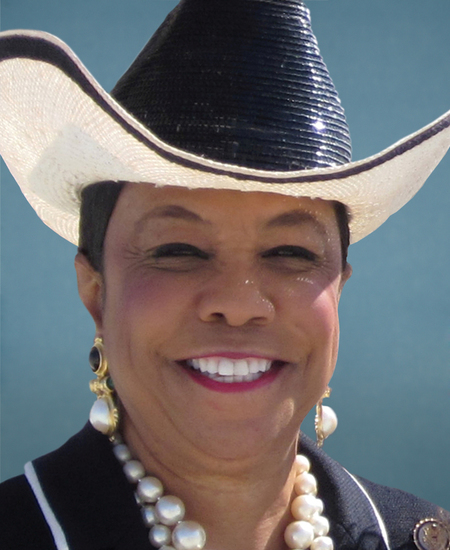
Rep. Frederica S. Wilson
Sponsored bills
Domestic Workers Bill of Rights Act This bill provides rights and protections for domestic workers (e.g., housekeepers, nannies, caretakers, personal assistants, and chauffeurs), including pay and leave rights, and health and safety protections. Specifically, the bill repeals the exemption of domestic live-in employees from certain minimum wage and maximum hour requirements. Employers must provide written notice of termination and provide at least 30 days of lodging and two weeks of severance pay to terminated live-in employees. Live-in employees also must be provided with reasonable access to telephone and internet service during their employment. The bill requires employers to provide domestic workers with a written agreement covering wages, sick leave, benefits, and other matters. Further, domestic workers may request and be granted changes to work schedules due to personal events. The bill also provides domestic workers with certain privacy rights, extends to domestic workers protections against discrimination in employment, and increases the federal medical assistance percentage (FMAP) for certain Medicaid-funded medical services provided by domestic workers. The Department of Labor must (1) award grants for a domestic worker national hotline for reporting emergencies, training on hazards facing domestic workers, and workforce investment activities for domestic workers; and (2) establish a Domestic Worker Wage and Standards Board to investigate standards in the domestic workers industry. Labor must publish online a document that describes the rights and protections for domestic workers under this bill.

Protecting Renters from Evictions Act of 2021 This bill extends through December 31, 2021, the order issued by the Centers for Disease Control and Prevention titled Temporary Halt in Residential Evictions To Prevent the Further Spread of COVID–19 and published on September 4, 2020.
This resolution condemns the assassination of Haitian President Jovenel Moise on July 7, 2021, and extends condolences to his family and the people of Haiti.
This resolution supports the work of the United States African Development Foundation as it creates pathways to prosperity for underserved communities on the African continent through community-led development, and it commits to continue supporting the work of the foundation as an independent agency.
Protecting Our Widows and Widowers in Retirement (POWR) Act This bill increases Social Security benefits for widows or widowers in two-income households by establishing an alternative method to calculate survivors benefits based on combined household benefit amounts.
Securing Universal Communications Connectivity to Ensure Students Succeed Act or the SUCCESS Act This bill provides additional funding for the Emergency Connectivity Fund, which supports remote learning during the COVID-19 emergency period by covering reasonable costs of laptop and tablet computers, Wi-Fi hotspots, modems, routers, and broadband connectivity purchases for off-campus use by students, school staff, and library patrons.
United States Call Center Worker and Consumer Protection Act of 2021 This bill establishes restrictions on businesses that relocate call centers or redirect customer service calls to locations outside the United States. Specifically, a business must notify the Department of Labor that it intends to move its customer service call center overseas and Labor must maintain a publicly available list of such businesses. Subject to narrow exceptions, a business appearing on such list is ineligible to receive federal grants or guaranteed loans for five years after the business is added to the list. Further, agencies must condition the awarding of government contracts on the requirement that any call center activity pursuant to the contract must be performed in the United States. Additionally, the bill requires call center employees to disclose their physical location at the beginning of each call initiated or received, unless all employees of the business participating in the communication are located in the United States, among other exceptions.
Averting Loss of Life and Injury by Expediting SIVs Act of 2021 or the Allies Act of 2021 This bill increases the number of special immigrant visas available to qualified Afghan nationals who worked for the U.S. government or the North Atlantic Treaty Organization (NATO) missions in Afghanistan. The bill also relaxes certain qualifications for such visas. Specifically, this bill makes available an additional 8,000 visas for principal aliens under this special visa program, to be available until all such visas have been issued. (The numerical limitations in this program apply only to the principal alien who applies for the visa, not to any accompanying spouse or child.) Under this bill, an alien may qualify based on a credible basis for concern about the possibility of an ongoing serious threat in Afghanistan due to their work with the U.S. government or a NATO mission, where currently the alien must have experienced such a threat. The bill also eliminates a requirement for each applicant to submit a credible sworn statement describing that threat. Furthermore, for an applicant qualifying for a visa by performing duties for U.S. military personnel stationed with a NATO mission, this bill eliminates a requirement that the duties performed qualify as sensitive and trusted duties. If an alien submits a visa application that included an accompanying spouse or child but the alien passes away before the application is granted, the surviving spouse or child shall remain eligible to receive a visa under that application. Currently, a surviving spouse or child retains eligibility only if the application was approved before the alien passed away.
Universal School Meals Program Act of 2021 This bill revises requirements under the food and nutrition programs of the Department of Agriculture, such as the school lunch and breakfast programs. For example, the bill permanently provides free meals to all school children regardless of income. The bill increases the reimbursement rate for school food authorities participating in the food and nutrition programs. The bill also prohibits school food authorities from (1) physically segregating or otherwise discriminating against any child participating in the free breakfast program, or (2) overtly identifying a child participating in the program with a special token or announcement. Additionally, the bill expands the summer food service program by making all children eligible for participation in the program. Further, the bill revises eligibility determinations for measuring poverty to include runaway or homeless youth, foster children, migratory children, and children participating in specified programs (e.g., Head Start).