Protecting Renters from Evictions Act of 2021 This bill extends through December 31, 2021, the order issued by the Centers for Disease Control and Prevention titled Temporary Halt in Residential Evictions To Prevent the Further Spread of COVID–19 and published on September 4, 2020.
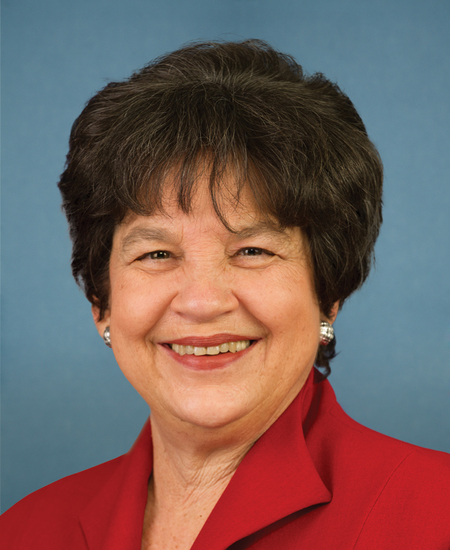
Rep. Lois Frankel
Sponsored bills
This resolution condemns the assassination of Haitian President Jovenel Moise on July 7, 2021, and extends condolences to his family and the people of Haiti.
This resolution condemns acts of violence against Afghan women and girls and any effort to limit the ability of women and girls to participate in the civic affairs of Afghanistan. It also urges the President to ensure that Afghan women, youth, and other marginalized groups are meaningfully participating and engaging in all peace talks.
This bill requires the Joint Committee on the Library to obtain, and the Architect of the Capitol to permanently install in the U.S. Capitol or on the U.S. Capitol Grounds, statues honoring Associate Justices of the Supreme Court Sandra Day O'Connor and Ruth Bader Ginsburg.
Marine Mammal Research and Response Act of 2021 This bill provides support for efforts to protect marine mammals. Specifically, the bill reauthorizes through FY2026 and generally revises the John H. Prescott Marine Mammal Rescue Assistance Grant Program, including by renaming the program as the John H. Prescott Marine Mammal Rescue and Response Grant Program. The bill also establishes the Joseph R. Geraci Marine Mammal Rescue and Rapid Response Fund for providing emergency financial assistance for certain stranded or entangled marine mammals and otherwise provides support for marine mammals.
Closing the Meal Gap Act of 202 1 This bill revises the requirements for calculating Supplemental Nutrition Assistance Program (SNAP) benefits. The bill increases the minimum SNAP benefit and requires benefits to be calculated using the value of a low-cost food plan. The Department of Agriculture (USDA) must determine the requirements for the low-cost food plan, which is the diet required to feed a family of four, consisting of a man and a woman 19-50 years of age, a child 6-8 years of age, and a child 9-11 years of age. USDA must (1) reevaluate and publish the market baskets of the plan by January 1, 2027, and every five years thereafter, based on current food prices, food composition data, consumption patterns, and dietary guidance; and (2) make adjustments to the plan to account for household size, changes in the cost of the diet, and the costs of food in specified areas. The bill modifies the requirements for calculating household income to determine SNAP eligibility by (1) authorizing a standard medical expense deduction for households containing an elderly or disabled member, and (2) eliminating the cap on the excess shelter expense deduction. The bill eliminates certain work requirements for SNAP. The requirements apply to able-bodied adults who are ages 18-49 and have no dependent children. The bill allows Puerto Rico, American Samoa, and the Northern Mariana Islands to participate in SNAP. Currently, the three territories receive block grants instead of participating in SNAP.

This resolution supports the designation of Gold Star Children's Day to honor the sacrifices and hardships of the children of fallen service members.
Medicaid Saves Lives Act This bill requires and provides funds for the Department of Health and Human Services to establish a program that provides health benefits to the Medicaid expansion population in states that have not expanded Medicaid. Specifically, the program must provide coverage for individuals who are newly eligible for Medicaid under the Patient Protection and Affordable Care Act (i.e., the Medicaid expansion population) without premiums and in accordance with Medicaid cost-sharing and other requirements. The bill also extends and increases the temporarily enhanced Federal Medical Assistance Percentage (i.e., federal matching rate) for states that elect to participate in Medicaid expansion if they have not already done so.
Averting Loss of Life and Injury by Expediting SIVs Act of 2021 or the Allies Act of 2021 This bill increases the number of special immigrant visas available to qualified Afghan nationals who worked for the U.S. government or the North Atlantic Treaty Organization (NATO) missions in Afghanistan. The bill also relaxes certain qualifications for such visas. Specifically, this bill makes available an additional 8,000 visas for principal aliens under this special visa program, to be available until all such visas have been issued. (The numerical limitations in this program apply only to the principal alien who applies for the visa, not to any accompanying spouse or child.) Under this bill, an alien may qualify based on a credible basis for concern about the possibility of an ongoing serious threat in Afghanistan due to their work with the U.S. government or a NATO mission, where currently the alien must have experienced such a threat. The bill also eliminates a requirement for each applicant to submit a credible sworn statement describing that threat. Furthermore, for an applicant qualifying for a visa by performing duties for U.S. military personnel stationed with a NATO mission, this bill eliminates a requirement that the duties performed qualify as sensitive and trusted duties. If an alien submits a visa application that included an accompanying spouse or child but the alien passes away before the application is granted, the surviving spouse or child shall remain eligible to receive a visa under that application. Currently, a surviving spouse or child retains eligibility only if the application was approved before the alien passed away.
Refugee Sanitation Facility Safety Act of 2021 This bill directs the Department of State, when providing overseas assistance for refugees, to ensure the provision of safe and secure access to sanitation facilities, with a special emphasis on women, girls, and vulnerable populations.