

Maddy summaryHRES 1522 is a symbolic resolution condemning the November 19, 2022, mass shooting at Club Q, an LGBTQ+ nightclub in Colorado Springs that killed five people and injured 22. It honors the victims, offers condolences to their families, and expresses support for those impacted by the attack. The resolution also highlights the broader context of anti-LGBTQ+ violence and hate, including the Pulse nightclub tragedy, and calls for an end to anti-LGBTQ+ hate and violence. As a ceremonial resolution, it contains no new laws or funding but serves as a formal statement of solidarity with the LGBTQ+ community.
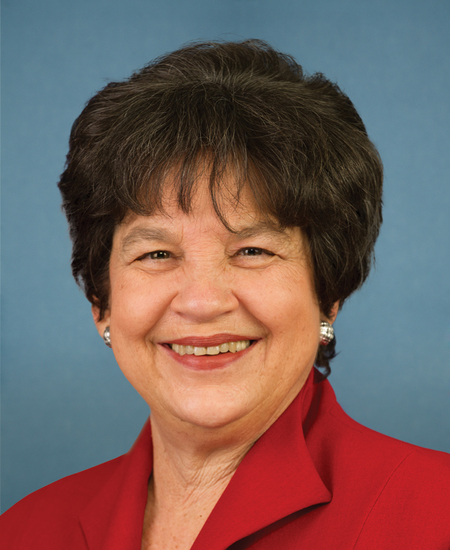
Rep. Lois Frankel
Sponsored bills
Connected Maternal Online Monitoring Act or the Connected MOM Act This bill requires the Centers for Medicare & Medicaid Services to report, and provide resources for states, on coverage of remote physiologic devices and related services (e.g., blood glucose monitors) under Medicaid, so as to improve maternal and child health outcomes for pregnant and postpartum women.
Restoring Resilient Reefs Act of 2021 This bill addresses the conservation and sustainability of coral reef ecosystems. Among other things, the bill reauthorizes through FY2024 and revises the Coral Reef Conservation Program; directs the National Oceanic and Atmospheric Administration (NOAA) to provide block grants to states to support state coral reef management and restoration; requires NOAA to establish standards for the formation of partnerships among government and community members for the stewardship of coral reefs; provides statutory authority for the U.S. Coral Reef Task Force to lead, coordinate, and strengthen federal government actions to preserve, conserve, and restore coral reef ecosystems; requires the Department of the Interior to provide grants upon the declaration of a coral reef emergency to implement emergency plans; authorizes Interior to provide scientific expertise, technical assistance, and financial assistance for the conservation and restoration of coral reefs; and establishes a National Coral Reef Management Fellowship Program.
Respect for Marriage Act This act provides statutory authority for same-sex and interracial marriages. Specifically, the act replaces provisions that define, for purposes of federal law, marriage as between a man and a woman and spouse as a person of the opposite sex with provisions that recognize any marriage between two individuals that is valid under state law. (The Supreme Court held that the current provisions were unconstitutional in United States v. Windsor in 2013.) The act also replaces provisions that do not require states to recognize same-sex marriages from other states with provisions that prohibit the denial of full faith and credit or any right or claim relating to out-of-state marriages on the basis of sex, race, ethnicity, or national origin. (The Supreme Court held that state laws barring same-sex marriages were unconstitutional in Obergefell v. Hodges in 2015; the Court held that state laws barring interracial marriages were unconstitutional in Loving v. Virginia in 1967.) The act allows the Department of Justice to bring a civil action and establishes a private right of action for violations. The act does not (1) affect religious liberties or conscience protections that are available under the Constitution or federal law, (2) require religious organizations to provide goods or services to formally recognize or celebrate a marriage, (3) affect any benefits or rights that do not arise from a marriage, or (4) recognize under federal law any marriage between more than two individuals.
International Violence Against Women Act of 2022 This bill requires a U.S. global strategy to prevent and respond to violence against women and girls. The bill establishes in the Department of State an Office of Global Women's Issues, which shall be headed by an Ambassador-at-Large for Global Women's Issues. The Ambassador-at-Large shall (1) coordinate U.S. government efforts regarding gender equality and the advancement of women and girls in foreign policy, and (2) develop or update periodically a U.S. global strategy to prevent and respond to gender-based violence. The bill establishes in the U.S. Agency for International Development the position of Senior Coordinator for Gender Equality and Women's Empowerment who shall coordinate policies, programs, and funding regarding gender equality and women's empowerment.
This concurrent resolution recognizes the disparity between wages paid to Latina women, and its impact on women, families, and the nation and reaffirms Congress' commitment to supporting equal pay and to narrowing the gender wage gap.
This concurrent resolution commends the bravery, courage, and resolve of the women and men of Iran who are (1) participating in the current protests to defend their fundamental human rights, and (2) risking their safety to speak out against the human rights abuses committed by the Iranian regime. The resolution condemns (1) the brutal beating and death of Mahsa Amini; and (2) the violent suppression by the Iranian regime of women and men participating in the current demonstrations, including children, and calls for transparent accountability for all killings of protesters by Iranian security forces. Finally, the resolution encourages continued efforts by the Biden Administration to respond to the protests, including the recent sanctioning of the Iranian morality police.
End Tuberculosis Now Act of 2022 This bill authorizes actions, including the provision of international assistance, to combat tuberculosis. The President may provide international assistance for the prevention, treatment, control, and elimination of tuberculosis. The President must also establish goals for U.S. efforts to detect, cure, and prevent all forms of tuberculosis globally by updating the U.S. Government Tuberculosis Strategy (2015-2019) and the National Action Plan for Combating Multidrug-Resistant Tuberculosis. The Government Accountability Office must periodically report to Congress on the impact of efforts to combat tuberculosis that are supported by U.S. bilateral assistance.
READ Act Reauthorization Act of 2022 This bill reauthorizes a law that requires the implementation of a strategy to promote quality basic education in partner countries by (1) expanding access to basic education for all children, particularly marginalized children and vulnerable groups; and (2) improving the quality of basic education and learning outcomes.
Safe Connections Act of 2022 This act establishes requirements concerning access to communication services for survivors of domestic violence, human trafficking, and related harms. At a survivor's request, a mobile service provider must separate from a shared mobile service contract the survivor's line (and the line of any individual in the survivor's care) from the abuser's line unless separation is operationally or technologically infeasible. A survivor requesting this must (1) verify through appropriate documentation that an individual under the contract committed or allegedly committed an act of domestic violence, trafficking, or a related criminal act against the survivor; and (2) assume financial responsibility for services after a line separation. A provider may not charge fees or impose other requirements on such requests. Additionally, a provider must separate the line within two business days of receiving a request; allow requests to be made remotely (if feasible); meet conditions related to confidentiality of, disposal of, and other matters concerning communications about requests; and make information about the process for requests available through consumer-facing communications (e.g., websites). The act (1) provides liability protection for providers' acts or omissions undertaken to comply with such requests, and (2) requires the Federal Communications Commission (FCC) to adopt rules for these requests. Additionally, the FCC must (1) expand access to federally subsidized communication services for survivors facing financial hardship, and (2) evaluate this expanded access. The FCC must also consider rules requiring communication service providers to omit from consumer-facing logs calls and texts to hotlines for domestic violence and similar issues while retaining internal records.