

Maddy summaryThe PAST Act of 2023 amends the Horse Protection Act to ban specific devices used to cause pain (soring) in horses at shows, particularly affecting Tennessee Walking Horses, Racking Horses, and Spotted Saddle Horses. It defines prohibited "action devices" (like boots or chains causing friction) and requires licensed, conflict-free inspectors at events to enforce rules. The bill increases penalties for violations to up to $5,000 fines or 3 years in jail, and mandates longer disqualifications for repeat offenses (180 days → 1 year → 3 years). Horse show organizers, exhibitors, and participants must comply with these new inspection and penalty requirements.
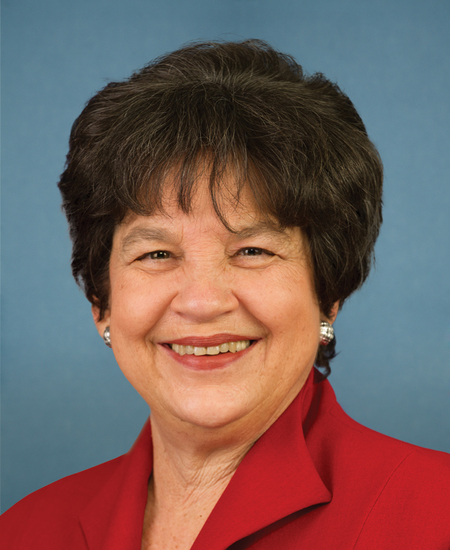
Rep. Lois Frankel
Sponsored bills
Maddy summaryThe RAISE Act of 2023 creates a new refundable tax credit for teachers and early childhood educators working in schools with high student poverty rates. The credit starts at $1,000, with additional amounts up to $14,000 (or $9,000 for early childhood educators without bachelor's degrees) based on the school's poverty ratio. The bill also increases the educator expense deduction from $250 to $500 and establishes mandatory funding for local schools that maintain or increase teacher salaries. These provisions directly affect K-12 teachers, early childhood educators, and their schools, with specific eligibility requirements and protections against employer retaliation regarding the credit.
Maddy summaryThis bill designates a U.S. Postal Service facility at 1900 West Oakland Park Boulevard in Oakland Park, Florida, as the "Alcee Lamar Hastings Post Office Building." It updates all federal references in laws, documents, and records to use the new name for the building. The change applies solely to the facility's official designation and does not alter postal services, funding, or operations.
Maddy summaryHR 1750 sets a new minimum standard for pasteurized orange juice, requiring finished products to contain at least 10.0% orange juice soluble solids (excluding any added sweeteners) by weight. This rule directly affects manufacturers producing and selling pasteurized orange juice in the U.S. market. The bill revises existing federal regulations to enforce this minimum juice content level, ensuring a more consistent product definition. It does not change the Secretary of Health and Human Services' existing authority to further adjust these standards.
Maddy summaryHRES 362 is a symbolic House resolution recognizing elementary and secondary school teachers' contributions to U.S. civic, cultural, and economic well-being. It specifically thanks teachers and encourages students, parents, school leaders, and officials to acknowledge National Teacher Appreciation Week (May 8-12, 2023). The resolution has no binding effect or policy changes - it solely promotes public appreciation for the teaching profession through a formal expression of gratitude. It directly affects teachers by affirming their societal value but does not alter laws, funding, or educational standards.
Maddy summaryHRES 351 is a symbolic resolution designating May as "National Menstrual Health Awareness Month" to address stigma around menstruation. It recognizes that stigma and lack of access to products/facilities impact women, girls, and people who menstruate in education, work, and health. The resolution supports normalizing menstruation, improving menstrual health education, and promoting access to products and private sanitation facilities. As a non-binding resolution, it does not create new laws but aims to raise awareness and advance gender equity through public acknowledgment.
Maddy summaryThe SAFE Banking Act of 2023 would protect banks and financial institutions that provide services to state-legal marijuana businesses and hemp-related businesses by preventing federal regulators from taking adverse actions against them solely for serving these businesses. It clarifies that income from state-legal marijuana businesses can be considered for mortgage applications, and requires regulators to update guidance on suspicious activity reports related to these businesses. The bill does not require financial institutions to serve these businesses, but ensures they won't face penalties for doing so. It extends similar protections to hemp-related businesses, which have faced banking challenges despite being federally legal under the 2018 Farm Bill.
Maddy summaryThis bill prohibits forced arbitration for race discrimination claims under federal, tribal, state, or local law. It makes pre-existing arbitration agreements unenforceable for disputes involving discrimination based on race, color, or national origin, allowing affected individuals to pursue cases in court instead. The law directly impacts employees, job applicants, and others facing alleged race discrimination who would otherwise be barred from court by mandatory arbitration clauses. It requires courts - not arbitrators - to decide if the law applies to a dispute, ensuring legal clarity for affected parties.
Maddy summary# Summary of EDUCATORS for America Act Provisions This comprehensive legislation makes significant changes to educator preparation, certification, and support systems, with a strong focus on loan forgiveness and retention of educators in high-need settings. ## Key Provisions: 1. **Enhanced Loan Forgiveness Programs**: - Creates new "Educator Loan Forgiveness Programs" under sections 428J and 460 of the Higher Education Act - Provides 100% loan forgiveness for educators who complete 5 years of qualifying service in high-need schools or early childhood education programs - Offers monthly loan forgiveness/cancellation during the service period (in addition to annual forgiveness) 2. **Expanded Eligibility**: - Defines "high need school" as schools where: * Over 30% of students meet poverty measures * School is identified for comprehensive support * School is Bureau of Indian Education funded * School is operated by Tribal educational agencies - Includes Tribal early childhood programs, Native Hawaiian education systems, and Bureau of Indian Education programs as eligible settings - Special rule for educators providing instruction in Native American languages 3. **"Qualifying Educator" Definition**: - Includes elementary/secondary teachers (with full certification) - Includes school leaders (with full certification) - Includes early childhood educators and program directors - Includes educators working in Native American language instruction regardless of certification status 4. **New Support Programs**: - Centers of Excellence for teacher preparation at institutions serving underrepresented populations - Recruitment and completion grants for underrepresented students in education - Resiliency grants for technology integration and educator workforce partnerships - Doctoral fellowships to diversify faculty in high-need education areas 5. **Implementation Details**: - Monthly loan credit program for eligible educators in income-driven repayment plans - Allows counting of partial service years under specific conditions - Prevents double benefits with other service programs - Allows for promotions within qualifying schools without losing eligibility This legislation aims to create a more diverse, stable, and well-prepared educator workforce by reducing financial barriers to entering and remaining in the education profession, particularly in high-need schools and early childhood education settings.
Maddy summaryThe Protecting America's Workers Act expands workplace safety protections to public employees, including those working for state and local governments who were previously excluded from some OSHA protections. It strengthens whistleblower protections by prohibiting retaliation against employees who report safety concerns, refuse to perform dangerous tasks, or report work-related injuries. The bill requires employers to promptly report work-related deaths and hospitalizations, prohibits policies that discourage injury reporting, and mandates posting of employee safety rights information. It also increases penalties for safety violations and improves access to information for victims and families during workplace investigations. These changes apply to all employers covered by OSHA, with specific implementation timelines for state and local government workplaces.