

Maddy summaryThis bill removes a barrier for college students seeking food assistance by amending the SNAP program rules. It directly affects students enrolled at least half-time in recognized colleges or training programs, who were previously automatically ineligible unless they met separate requirements. The key change eliminates the prior restriction (in section 6(e)) that barred most higher education students from SNAP, allowing them to qualify under the new provision in section 3(m)(5)(F). The changes take effect January 2, 2024.
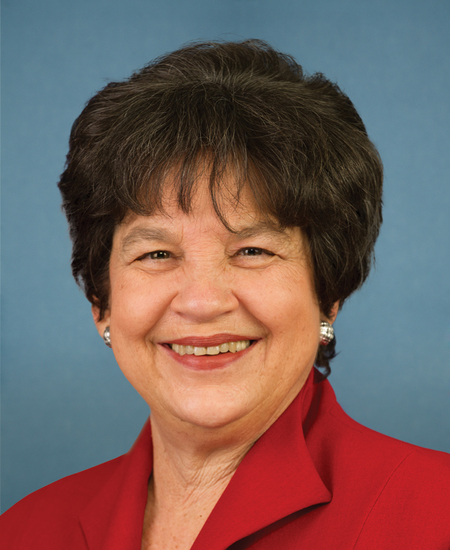
Rep. Lois Frankel
Sponsored bills
Maddy summaryThis bill standardizes voluntary date labels on most packaged foods by requiring uniform phrases: "BEST If Used By" for quality dates (indicating quality may decline) and "USE By" for discard dates (indicating when food should be discarded). It applies to manufacturers of non-infant formula foods who choose to include dates, with no requirement to use them. The law mandates clear, conspicuous placement of these phrases and prohibits states from creating conflicting labeling rules. It excludes infant formula and takes effect two years after enactment, with federal agencies required to educate consumers about the new labels.
Maddy summaryHRES 459 is a resolution expressing the House of Representatives' support for designating June 2, 2023, as "National Gun Violence Awareness Day" and June 2023 as "National Gun Violence Awareness Month." It encourages the public to wear orange, promote gun safety awareness, and discuss community safety measures during this time, particularly highlighting the summer months when gun violence often increases. The resolution references statistics on gun violence deaths and pays tribute to victims like Hadiya Pendleton, but does not create new laws or impose requirements.
Enhancing Questions to Understand Intentions for Pregnancy Act of 2023 or the EQUIP Act of 2023 This bill requires the Centers for Disease Control and Prevention to provide eligible health organizations with demonstration program grants to implement routine screenings about people's pregnancy intentions in order to provide better contraceptive and prepregnancy care.
Maddy summaryHR 3713 creates federal grants to fund comprehensive school-based mental health programs for students in grades K-12, including those in Bureau of Indian Education schools. It requires partnerships between schools and community mental health providers to deliver trauma-informed, culturally appropriate services addressing suicide risk, grief, violence, and trauma exposure. The bill authorizes $300 million annually (2024-2027) for these programs, mandating privacy protections under HIPAA and FERPA, and requires annual reporting on program effectiveness.
Maddy summaryThe Real Education and Access for Healthy Youth Act of 2023 would provide federal grants to support comprehensive sex education and sexual health services for young people ages 10-29, with specific focus on marginalized communities including Black, Indigenous, Latine, Asian American, Native Hawaiian, Pacific Islander, and LGBTQ+ youth. The bill authorizes $100 million annually for 2024-2029 to fund programs through grants for elementary/secondary schools (section 4), colleges (section 5), educator training (section 6), and youth-friendly sexual health services for marginalized young people (section 7). These programs must be evidence-informed, medically accurate, culturally responsive, age-appropriate, and trauma-informed, while addressing racial and gender inequities in current sex education approaches. The bill also repeals the "abstinence-only-until-marriage" program and redirects its funding to support this comprehensive approach, requiring grantees to report on implementation and impact.
Maddy summaryThis bill amends the Older Americans Act to better serve LGBTQI older adults (defined as lesbian, gay, bisexual, transgender, queer, intersex individuals, and those living with HIV) by adding specific definitions and creating new support structures. It establishes an Office of LGBTQI Inclusion within the Administration on Aging, led by a Director and Assistant Director, to coordinate services, advocate for this community, and collect data on their challenges. The bill also creates a National Resource Center on LGBTQI Aging to provide training and resources to organizations serving LGBTQI older adults and requires data collection on discrimination against them in long-term care settings. These changes aim to improve access to culturally competent services and address the unique needs of LGBTQI older adults through concrete policy updates.
Maddy summaryHRES 439 is a non-binding resolution expressing the House of Representatives' support for keeping the U.S. Postal Service (USPS) as an independent federal agency, not subject to privatization. It highlights USPS's constitutional role, self-sustaining nature (relying on service revenue, not taxpayer funds), and its importance to rural communities, e-commerce, and over 600,000 employees. The resolution urges Congress to take action to preserve USPS's independence, emphasizing that privatization could raise prices, reduce services, and harm the nation's mail infrastructure. As a procedural resolution, it does not change law but formally states the House's position.
This resolution encourages the U.S. Holocaust Memorial Museum to continue its work in educating the public about the dangers of antisemitism and the origins of the Holocaust, congratulates those responsible for the creation of the museum, condemns antisemitism, supports educational and community-based programs that counter antisemitism and hate, and supports the designation of a U.S. Holocaust Memorial Museum Day.
Maddy summaryThis bill requires that AM radio receivers be included as standard equipment in all new motor vehicles (such as cars and trucks) sold in the United States, with a rule to be issued by the Department of Transportation within one year. The rule must ensure AM radio is easily accessible on the dashboard and allows manufacturers to use digital AM radio technology instead of traditional AM. During the one-year period between the bill's enactment and the rule's effective date, manufacturers must clearly label vehicles without AM radio. The bill also directs a study to evaluate whether an alternative system could deliver emergency alerts as reliably as AM radio across the country, especially during crises.