

Maddy summaryHR 7438 directs the U.S. Treasury to mint commemorative coins for the 2026 FIFA World Cup, including 100,000 $5 gold coins, 500,000 $1 silver coins, and 750,000 half-dollar coins. The coins will be sold to the public at face value plus surcharges ($35, $10, and $5 per coin, respectively), with all surcharge revenue paid to FWC2026 US, Inc. for U.S. soccer programs. These funds must support soccer initiatives, particularly in underserved communities and youth development, as specified in the bill. The coins are legal tender but will only be issued during 2026, with no net cost to the U.S. government.
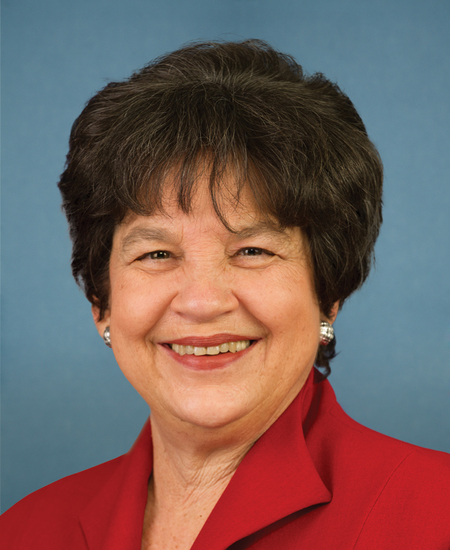
Rep. Lois Frankel
Sponsored bills
Maddy summaryThe Trafficking Survivors Relief Act of 2024 enables victims of human trafficking to seek to vacate certain convictions or expunge arrests related to offenses they committed as a direct result of being trafficked. It establishes a court process where victims can file motions showing their criminal activity was trafficking-related, with courts required to find by preponderance of evidence that the offense was directly tied to trafficking. If granted, the court must expunge all related records, return any fines paid, and treat the individual as if the offense never occurred. The bill also adds a "human trafficking defense" that creates a presumption of duress for trafficking victims in prosecutions. It requires reports on implementation and training for U.S. attorneys on trafficking indicators.
Maddy summaryThe FEMA Loan Interest Payment Relief Act requires FEMA to reimburse local governments and electric cooperatives for interest paid on qualifying disaster recovery loans. A qualifying loan must be used for FEMA-covered activities with at least 90% of proceeds dedicated to those purposes. Reimbursement covers the lesser of actual interest paid or what would have been paid at the prime interest rate, as defined by the Federal Reserve. This relief applies to interest accrued in the seven years preceding the bill's enactment.
Maddy summaryHR 6751 authorizes the U.S. Mint to produce commemorative coins honoring Roberto Clemente, a Hall of Fame baseball player and humanitarian, including 50,000 $5 gold coins, 400,000 $1 silver coins, and 750,000 half-dollar coins. The coins must feature Clemente's image and inscriptions like "Roberto Clemente" and "2027," with all sales including a surcharge ($5-$35 per coin) paid to the Roberto Clemente Foundation. The foundation, which supports youth sports, education, and disaster relief programs, will use these funds for its mission, while the U.S. Treasury must recover all production costs. The coins will be sold exclusively in 2027, with no net cost to the government.
Maddy summaryThis bill designates the Department of Veterans Affairs medical center in West Palm Beach, Florida, as the "Thomas H. Corey VA Medical Center." The change updates all federal references - including laws, regulations, maps, and documents - to reflect the new name. It directly affects the facility's official identity and veteran services documentation. The bill is procedural and does not alter healthcare services or funding.
Maddy summaryThe Working Dog Commemorative Coin Act (HR 807) directs the U.S. Treasury to mint three types of commemorative coins honoring working dogs' service: $5 gold coins, $1 silver coins, and half-dollar coins with specific weight and composition requirements. Each coin will carry a surcharge ($35 for $5 coins, $10 for $1 coins, $5 for half-dollars) that will be paid directly to America's VetDogs to support their programs providing service dogs for veterans, the disabled, and others. The coins will be issued in 2027 with designs reflecting working dogs' roles in military, detection, therapy, and assistance work. The legislation specifies that all surcharge revenue must fund America's VetDogs' operations without creating new government programs. This is a commemorative measure focused on honoring working dogs' contributions through coin sales, with all surcharge funds going to a specific nonprofit organization.
Maddy summaryHRES 1591 is a symbolic resolution recognizing November 2024 as "National Family Caregivers Month." It does not create new laws or provide funding but formally acknowledges the work of over 53 million unpaid family caregivers in the U.S., who support loved ones with health needs. The resolution commends caregivers, encourages federal and state agencies to advance existing support policies (like tax credits and respite care), and urges broader community recognition - without imposing new requirements or changing current programs. As a ceremonial measure, it has no direct effect on legislation or affected individuals.
Maddy summaryThis bill establishes federal grants to expand training and support services for unpaid caregivers of people with Alzheimer's disease or related dementia. It authorizes funding for organizations like senior centers, area agencies on aging, and community health centers to provide direct caregiver support, requiring at least 50% of grant funds to go directly to services (not administration) and limiting administrative costs to 10%. Priority is given to nonprofit organizations serving underserved communities, including minority, low-income, and disability communities. The program, funded for fiscal years 2025-2029, aims to improve access to culturally appropriate caregiver resources nationwide.
Maddy summaryThis bill prohibits Medicaid from covering conversion therapy for any enrollee. It amends federal law to block Medicaid payments for any therapy aimed at changing a person's sexual orientation or gender identity (defined as "conversion therapy" in the bill), starting in the first full quarter after the law takes effect. The prohibition applies to all Medicaid providers who offer such therapy for compensation, but explicitly excludes support for gender transition, acceptance-based care, and interventions focused on safety or unlawful conduct. It directly affects Medicaid recipients seeking therapy and providers who previously billed for conversion therapy services.
Maddy summaryHCONRES 132 is a symbolic resolution designating the week of November 11-17, 2024, as "National Caregiving Youth Week." It directly affects children and adolescents under 18 who serve as primary or secondary caregivers for family members with health conditions, chronic illnesses, disabilities, or aging needs. The resolution supports raising public awareness about this underserved population (estimated at over 5 million nationwide), encourages recognition by educators and policymakers, and calls for updated federal research on their needs. As a non-binding resolution, it does not create new laws but aims to highlight challenges these youth face balancing caregiving with education and well-being.