

Maddy summaryThis bill, HR 5973, requires federal immigration enforcement personnel to follow strict limits on force use, including proportional application, mandatory de-escalation efforts, and prohibitions on equipment like flash bangs or rubber bullets except for specific public safety threats. It mandates body-worn and vehicle cameras for all operations, with footage retained for one year (three years for force incidents or complaints), and grants affected individuals the right to inspect recordings. The law also requires annual training on force policies, First Amendment compliance, and racial bias avoidance, while demanding detailed quarterly reports to Congress on force usage, assaults on agents, and equipment approvals. These provisions directly affect all federal immigration agents conducting enforcement actions, aiming to increase transparency and accountability during operations.
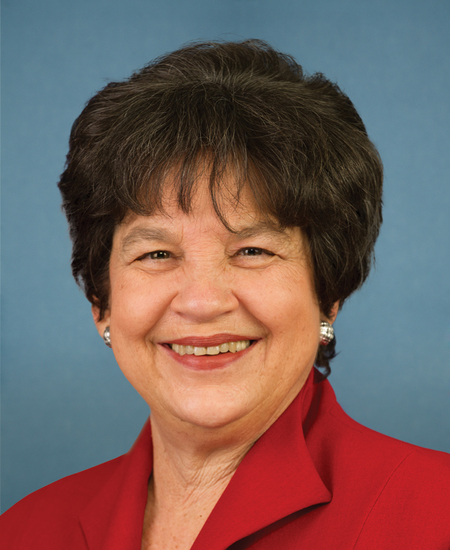
Rep. Lois Frankel
Sponsored bills
Maddy summaryThis bill changes how Social Security cost-of-living adjustments (COLAs) are calculated for seniors. It requires using either the standard CPI-W index or a new CPI-E index (measuring inflation specifically for seniors' spending patterns), whichever results in a higher payment increase. The change applies to COLAs determined for cost-of-living computation quarters ending on or after September 2026. It directly affects Social Security beneficiaries aged 62 and older, potentially increasing their monthly payments based on the more senior-focused CPI-E index.
Maddy summaryThe American Energy Independence and Affordability Act extends multiple clean energy tax credits that were set to expire between 2025 and 2026. It specifically extends residential clean energy credits through 2034, clean electricity investment credits for wind and solar through 2032, and clean vehicle credits for electric vehicles through 2032. The bill also reinstates special rates for sustainable aviation fuel and modifies requirements for energy-efficient home improvements. These provisions directly affect homeowners installing solar panels, businesses investing in clean energy infrastructure, and manufacturers producing clean energy equipment.
Maddy summaryHR 5813, the Women’s Health and Cancer Rights Modernization Act of 2025, requires health insurance plans to cover all medically necessary breast or chest wall reconstruction services following breast cancer treatment, including mastectomy or breast-conserving surgery. It mandates coverage for every reconstruction method (like implants, tissue flaps, or future recognized techniques), symmetrical surgery for the other breast, custom prostheses, and treatment of complications like lymphedema. Health plans must ensure at least one in-network provider for each reconstruction type, provide annual written notices to patients about this coverage, and cannot deny coverage or penalize providers for following these requirements. This applies to group and individual health insurance plans, with no effect on stricter state laws requiring broader coverage.
Maddy summaryThis bill makes federal funding for the WIC program mandatory by requiring Congress to appropriate necessary funds annually for fiscal year 2026 and each subsequent year. It removes discretionary language from WIC funding requirements and clarifies that eligible participants must be served without participation limits. The bill directly affects low-income pregnant women, new mothers, and young children who rely on WIC for nutrition assistance, ensuring continued access to critical food, health, and education services.
Maddy summaryHRES 795 is a non-binding resolution condemning Hamas for the October 7, 2023, attacks that killed over 1,200 people, took 251 hostages (including Americans), and involved sexual violence. It demands Hamas immediately surrender and release all remaining hostages - specifically noting 48 people still held, including two U.S. citizens. The resolution also affirms Israel’s right to self-defense, calls for humanitarian aid to reach Palestinians, and condemns global antisemitism following the attacks. As a symbolic congressional statement, it does not create new laws or alter policies.
Maddy summaryHR 5707, the Voter Purge Protection Act, sets strict standards for states removing voters from registration lists. It requires states to use only objective, reliable evidence (like proof of death or moved residence) to remove voters - not factors like not voting or not responding to notices - and mandates 48-hour written notice to affected voters with reinstatement instructions. States must also issue public notices about removal programs to help voters verify their status. This bill directly affects state election officials and voters whose registration might be challenged, aiming to prevent improper removals under the National Voter Registration Act. It amends existing federal voting laws to enforce these new verification and notice requirements.
Maddy summaryHR 5724, the FAST Justice Act, creates a 120-day deadline for the Merit Systems Protection Board (MSPB) to act on most federal employee appeals. If the MSPB fails to take action within this period, affected federal employees or job applicants can file a civil lawsuit in federal court. The bill specifies where these lawsuits can be filed (based on where the personnel action occurred or where the employee would have worked) and clarifies that courts must use standard review procedures for MSPB decisions. This directly affects federal workers facing delays in employment-related appeals.
Maddy summaryThis bill allows federal employees who are furloughed or working without pay during a government shutdown (defined as a funding lapse of at least two weeks) to withdraw up to $30,000 from their Thrift Savings Plan (TSP) retirement savings without the usual 10% early withdrawal penalty. The $30,000 limit adjusts annually for inflation and applies per shutdown period. It also ensures missed TSP loan payments during a shutdown are not treated as taxable distributions, and employees can later contribute back up to the withdrawn amount without penalty. The bill directly affects federal workers facing financial hardship due to funding lapses, providing immediate relief through modified TSP rules.
Maddy summaryThis bill adds Medicare coverage for multi-cancer early detection screening tests (blood or biological tests analyzing cell-free DNA) starting January 1, 2028. It directly affects Medicare beneficiaries aged 68 and older (starting in 2028, with the age limit increasing by 1 year annually), requiring tests to be FDA-cleared and deemed reasonable/necessary by the Secretary for early cancer detection across multiple organ sites. Payment will initially match current stool DNA test rates before 2031, then shift to a lower rate or new payment system after 2031, with limits preventing more than one test per year. The bill explicitly states it does not alter coverage for existing cancer screenings like breast, colorectal, or prostate cancer tests.