

Maddy summaryHR 583, the American Shores Protection Act of 2023, extends a moratorium on new offshore oil and gas leasing along the coasts of Florida, Georgia, and South Carolina until June 30, 2032. It specifically adds two new coastal planning areas (the South Atlantic and Straits of Florida) to the existing ban. The bill clarifies that existing leases remain unaffected and allows the Secretary to issue leases for environmental conservation purposes, including shore protection, beach restoration, wetlands restoration, and habitat protection. This directly affects energy companies seeking new offshore drilling permits in those coastal regions.
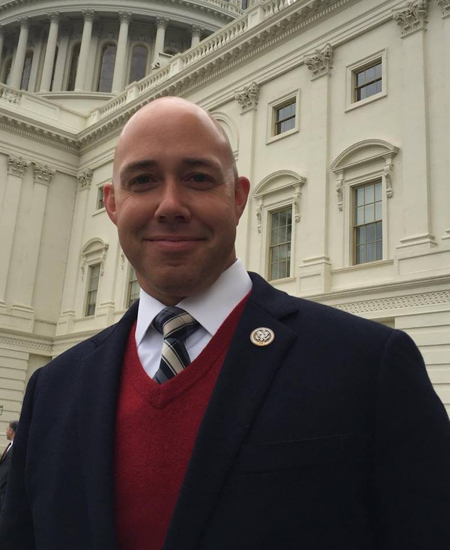
Rep. Brian J. Mast
Sponsored bills
Maddy summaryThis bill would require the U.S. to withhold funding for the UNRWA (United Nations refugee agency for Palestinians) unless the State Department certifies UNRWA staff, materials, and facilities comply with specific conditions. Key conditions include confirming no ties to terrorism or anti-Israel rhetoric (like denying Israel's right to exist or promoting BDS), no misuse of UNRWA resources for terrorist activities, and adherence to international financial audits. It also caps U.S. contributions to UNRWA at levels comparable to Arab League countries and mandates annual reports to Congress on phasing out UNRWA support. These changes directly affect U.S. foreign aid decisions for Palestinian refugees in Jordan, Lebanon, Syria, Gaza, and the West Bank.
Maddy summaryHR 185 ends a Centers for Disease Control and Prevention (CDC) rule requiring foreign travelers entering the U.S. by air to show proof of a COVID-19 vaccination. The bill takes effect immediately upon enactment, terminating the specific requirement outlined in the CDC’s April 2022 order (and any similar future orders). It also prohibits federal funding from being used to enforce this rule. This change directly affects foreign air travelers entering the United States, removing a vaccination proof requirement for their entry. The bill does not impact domestic travel, other entry methods, or vaccination requirements for U.S. citizens.
Maddy summaryHR 976, the TCJA Permanency Act, makes permanent many tax provisions from the 2017 Tax Cuts and Jobs Act (TCJA) that were scheduled to expire after 2025. The bill affects individual taxpayers by keeping lower tax rates, higher standard deductions, increased child tax credits, and other key changes permanently. Key provisions include permanent modifications to income tax brackets, repeal of personal exemptions, limits on state and local tax deductions, and increased estate and gift tax exemptions. These changes would prevent the tax code from reverting to pre-TCJA rates and rules for millions of taxpayers.
Make Russia Pay Act This bill requires the Department of the Treasury to liquidate all Russian assets seized by the United States and deposit the resulting funds into a Ukrainian Humanitarian Aid Fund established by the bill. Treasury may use the funds to provide assistance to Ukraine, including by providing funding to Ukraine's government for humanitarian and security assistance.
Maddy summaryThe Retain Skilled Veterans Act (HR 939) amends federal law to restrict appointments of retired military members to specific high-level positions within the Department of Defense (DoD). It limits such appointments to roles classified at or above GS-14 (a high pay grade) in the DoD’s excepted or competitive service, removing a prior exception that allowed broader "management" appointments. This change directly affects retired veterans seeking senior DoD roles, requiring them to qualify for the highest-level positions under this rule. The bill ensures these appointments apply only to defined senior roles, not routine or lower-level positions.
Felony Murder for Deadly Fentanyl Distribution Act of 2023 This bill makes the distribution of fentanyl resulting in death a first degree murder. An individual who is guilty of first degree murder by distributing fentanyl is subject to death or life in prison.
Finish the Wall Act This bill requires the Department of Homeland Security (DHS) to resume activities related to the construction of a barrier system along the U.S.-Mexico border and addresses other border-related issues. DHS must resume all such construction activities that were planned or underway prior to January 20, 2021. DHS must also expend all funds appropriated or explicitly obligated since October 1, 2016, for construction of this barrier system. DHS may not cancel contracts for activities related to such construction entered into on or before January 20, 2021. Furthermore, within 14 days of this bill's enactment, DHS must certify to Congress that U.S. Customs and Border Protection facilities that process adults taken into custody at the border are fully compliant with certain laws related to the collection of DNA. (Among other things, these laws allow for the collection of DNA samples from non-U.S. persons detained under U.S. authority.)
Security First Act This bill reauthorizes the Operation Stonegarden program from FY2024 through FY2027 and addresses other border security issues. (Operation Stonegarden provides grants to enhance the border security capabilities of state, local, and tribal governments.) From FY2024 through FY2027, the money from unreported monetary instruments seized from individuals crossing the U.S.-Mexico border and transferred into the Department of the Treasury general fund shall be made available without further appropriation to the Department of Homeland Security (DHS) to fund Operation Stonegarden. DHS must report to Congress on (1) DHS hiring practices from 2018 to 2021, and (2) whether certain Mexican drug cartels meet the criteria to be designated as foreign terrorist organizations. DHS must also periodically report to Congress about the technology needed to secure the U.S.-Mexico land border.
Maddy summaryHR 29, the Border Safety and Security Act of 2023, grants the Secretary of Homeland Security authority to restrict entry at U.S. land or maritime borders for certain immigrants deemed "covered aliens" (those inadmissible under immigration law due to lack of proper documentation). The bill requires the Secretary to suspend entry if they cannot detain or process these individuals as required by existing immigration law. It also allows state attorneys general to sue the Secretary in federal court if they believe border policies harm their state's residents. The law defines "operational control" using terms from the Secure Fence Act of 2006. This bill directly affects immigrants seeking entry who fall under the specified inadmissibility category.