

Maddy summaryThis bill (HJRES 163) is a congressional disapproval resolution targeting an Environmental Protection Agency (EPA) rule finalized on May 9, 2024. The EPA rule established new emissions standards for greenhouse gases from fossil fuel power plants (both new and existing) and repealed a previous rule called the Affordable Clean Energy Rule. The resolution would block this EPA rule from taking effect by invoking the Congressional Review Act (Chapter 8 of Title 5, U.S. Code). If passed, it would prevent the EPA rule from being enforced, directly affecting fossil fuel power plant operators and the EPA’s regulatory authority over emissions.
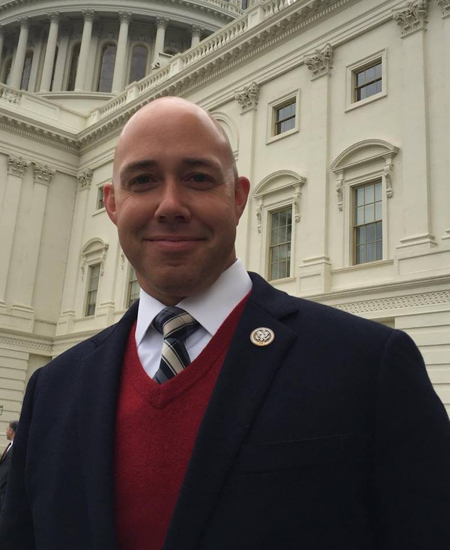
Rep. Brian J. Mast
Sponsored bills
Maddy summaryHR 705, the Veterans 2nd Amendment Protection Act, prohibits the Department of Veterans Affairs (VA) from automatically sending veterans' personal information to the national background check system solely because a fiduciary (like a guardian) manages their benefits. It specifically blocks the VA from sharing this data with the Justice Department without a court order finding the veteran a danger to themselves or others. This directly affects veterans who have a fiduciary appointed due to incapacity but are not deemed dangerous, preventing automatic barriers to firearm purchases based only on their fiduciary status. The bill amends 38 U.S.C. § 5501B to require judicial authorization before such data can be transmitted.
Maddy summaryThe context provided for HR 9146 does not include the full text of the amendment or the specific language added to Section 1703(d)(2) of title 38, U.S. Code. Without the actual provisions of the new subparagraph (F) titled "Continuity of care," it is impossible to describe the bill's key mechanisms, who it affects, or its concrete policy changes. The bill's title suggests it relates to veterans' health care continuity under the Veterans Community Care Program, but the details are omitted in the provided excerpt. Therefore, a complete and accurate summary cannot be generated from the available information.
Maddy summaryHR 8282, the "Illegitimate Court Counteraction Act," imposes U.S. sanctions on foreign individuals or entities supporting the International Criminal Court (ICC) in investigating or prosecuting "protected persons." Protected persons include U.S. military personnel, officials, and allied personnel (from non-ICC member countries) who are not under ICC jurisdiction. The bill requires the President to block assets and deny visas to targeted foreign persons and their immediate family members within 60 days of the ICC attempting such actions. It mandates congressional notification of sanctions and allows termination if the ICC ceases all such efforts against protected persons. The law focuses on restricting U.S. economic and travel access to ICC supporters targeting specific U.S. and allied personnel.
Maddy summaryThis symbolic resolution expresses congressional support for designating September 29, 2024, as "Veterans of Foreign Wars of the United States Day" to honor the organization's 125th anniversary. It requests the President issue a proclamation encouraging government agencies and the public to observe the day with ceremonies, though it creates no new laws or policy changes. The resolution recognizes the VFW's historical service to veterans but does not directly affect any individuals or programs.
Maddy summaryThis bill increases the tax credit for railroad track maintenance from $3,500 to $6,100 per mile of track. It adds an inflation adjustment starting in 2026, linking future credit amounts to the cost-of-living index. The bill also extends the qualifying period for maintenance expenditures from January 1, 2015, to January 1, 2024. These changes apply to tax years beginning after December 31, 2024, directly affecting railroad companies that maintain tracks.
Maddy summaryHR 2864, the Countering CCP Drones Act, adds DJI Technologies (Shenzhen Da-Jiang Innovations Sciences and Technologies Company Limited) and its equipment/services to the list of prohibited communications products under the Secure and Trusted Communications Networks Act. The bill directly affects U.S. federal agencies and entities receiving federal funds by prohibiting them from using DJI's telecommunications or video surveillance equipment or services. Its key mechanism requires federal agencies to remove DJI equipment from their networks and bans future procurement or use of such equipment. This policy change aims to address security concerns related to Chinese-owned drone technology in U.S. communications infrastructure.
Maddy summaryHRES 1423 expresses the U.S. House of Representatives' support for designating the week of September 21-28, 2024, as "National Estuaries Week." The resolution highlights estuaries' economic and ecological importance, noting they support over 3.5 million jobs, contribute $476 billion to the U.S. GDP, and provide critical services like flood control and water filtration. It does not create new laws or funding but aims to raise public awareness about protecting estuaries, which face threats like pollution and habitat loss. The resolution acknowledges ongoing restoration efforts by federal, state, tribal, and community partners.
Maddy summaryHRES 1409 is a symbolic House resolution condemning Nicolás Maduro's regime for alleged election fraud in Venezuela's July 28, 2024 presidential election. It recognizes opposition candidate Edmundo González Urrutia as the president-elect based on observed vote tallies showing his decisive victory, and condemns the regime's refusal to release transparent results. The resolution calls for new sanctions against Maduro and his allies, demands respect for the election outcome, and urges diplomatic pressure to support Venezuela's democratic transition. This resolution directly addresses the Maduro regime's actions and expresses U.S. solidarity with Venezuelan voters and the opposition.
Maddy summaryHR 9274, the SHAWL Act, establishes two new Smithsonian museums: the National Museum of the American Latino and the American Women’s History Museum. It authorizes both museums to be located within the National Mall’s "Reserve" area, overriding prior restrictions, and requires federal agencies managing potential sites to transfer jurisdiction to the Smithsonian after notifying congressional committees. The bill mandates that both museums accurately represent diverse cultures, histories, and viewpoints within Latino and women’s communities through exhibits and programs, requiring input from a broad range of community experts. It also requires the Smithsonian to submit biennial reports to Congress detailing compliance with these representation requirements.