

Maddy summaryThis bill amends federal law to simplify interstate firearm transfers. It replaces "rifle or shotgun" with "firearm" in transfer rules, allowing all firearms to be treated uniformly. The key change permits licensed dealers to sell firearms to other licensed dealers anywhere in the U.S., and lets licensed sellers transfer firearms to unlicensed buyers at temporary locations (like gun shows) in any state. It also updates residency definitions for military members and federal employees stationed across state lines, clarifying which state they're considered residents of for firearm purposes. The bill directly affects licensed firearm dealers, military personnel, and federal employees who travel between states.
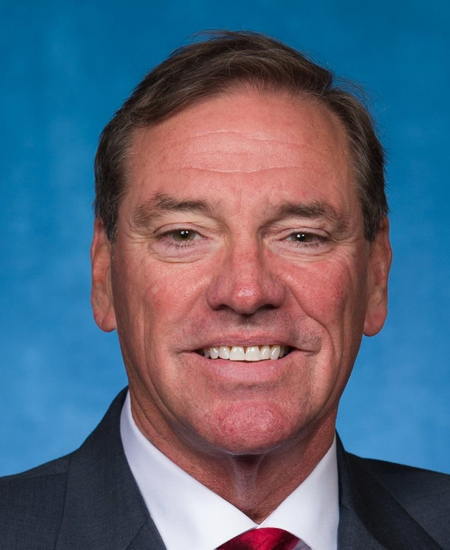
Rep. Neal P. Dunn
Sponsored bills
Maddy summaryHR 8303 requires the U.S. Postal Service (USPS) to notify customers and local officials when a post office temporarily closes. For planned closures, USPS must provide at least 60 days' notice detailing the reason, expected closure/resumption dates, and replacement services (like nearby retail access or mail handling), while unplanned closures require 14 days' notice. The bill mandates USPS to offer replacement retail services (such as box sales and mail access) within 10 days, in the same geographic area if possible, and to allow public comments on the closure. This applies to all temporary closures starting after the bill's enactment, directly affecting USPS operations, customers, and local representatives (e.g., mayors, congressional members).
Maddy summaryThis bill designates the U.S. Postal Service facility at 859 North State Road 21 in Melrose, Florida, as the "Pamela Jane Rock Post Office Building" for commemorative purposes. It updates all official U.S. government references to the location to use this new name. The bill is procedural and does not create new policies or affect any other entities. It was enacted on May 7, 2024, after passing both chambers of Congress.
Maddy summaryThis joint resolution seeks congressional disapproval of a Department of Labor rule designed to improve protections for temporary agricultural workers. It invokes a specific federal process under Title 5 to block the rule from taking effect, preventing the proposed changes from being implemented. The rule, published April 29, 2024, would have affected temporary farmworkers’ rights and working conditions. If passed, the resolution would nullify the rule, meaning the Department of Labor’s proposed protections would not be enforced.
Maddy summaryHR 8147 repeals the Corporate Transparency Act, which required certain businesses (typically those with more than 20 employees) to report beneficial ownership details to the Treasury Department. This bill eliminates the requirement for companies to disclose who ultimately owns or controls them, directly affecting business owners and financial institutions that previously submitted this information. The bill also makes minor technical changes to Title 31 of the U.S. Code to remove references to the repealed provisions. The repeal would end the existing financial transparency reporting obligation for covered entities.
Maddy summaryThis resolution (HRES 1157) is a symbolic gesture recognizing the work of linemen. It does not create new laws or policies; instead, it formally expresses the House's support for designating April 18, 2024, as "National Lineman Appreciation Day." The resolution highlights linemen's critical role in maintaining power infrastructure, their work as first responders during emergencies, and their safety risks. It directly affects no individuals or entities through policy changes - it solely offers ceremonial recognition of linemen's contributions to public safety.
Maddy summaryHR 8114 blocks the U.S. Department of Health and Human Services from finalizing a proposed rule that would have required states to spend at least 80% of Medicaid funds for home and community-based care services (like homemaker, home health aide, and personal care) on direct care worker wages. The bill directly affects Medicaid programs and the states administering them, preventing them from being required to meet this specific spending threshold. It prohibits the finalization, implementation, or enforcement of this rule or any substantially similar rule that would mandate a minimum percentage of payments for these services go toward worker compensation. This is a concrete policy change that maintains current Medicaid funding flexibility for states regarding home care worker wages.
Maddy summaryHR 8101, the Maintaining Cooperative Permitting Act of 2024, prevents the Environmental Protection Agency (EPA) from revoking approval of three specific state environmental programs without explicit congressional authorization. The bill directly affects Michigan, New Jersey, and Florida, which operate state-level permit systems for dredged or fill material under the Clean Water Act. It requires that any EPA withdrawal of approval for these programs must be authorized by a new Act of Congress, rather than through agency action alone. The bill also clarifies that the EPA's approval of these state programs does not count as a federal rule or regulation. This ensures the continued operation of these state programs unless Congress passes a new law to change them.
Maddy summaryHR 7996, the Improving CARE for Youth Act, changes Medicaid rules to ensure states cannot block payment when a person receives both mental health and primary care services on the same day at the same facility. It directly affects Medicaid recipients, particularly youth, by removing a barrier that previously prevented coverage for integrated care during a single visit. The key provision adds a new rule to Medicaid coverage requirements, explicitly stating that states must pay for both services if provided together at the same location. This simplifies access to coordinated care without requiring separate appointments.
Maddy summaryHouse Resolution 1158 recognizes the 82nd anniversary of the establishment of the U.S. Naval Construction Force (Seabees) on March 5, 2024. It honors their dual role in building military infrastructure and fighting in combat since World War II, as well as their global humanitarian efforts including disaster relief and community projects. The resolution expresses gratitude for their service, sacrifices, and contributions to U.S. military operations and international goodwill. As a symbolic measure, it does not create new policies or obligations.