

Maddy summaryHR 1300, the PSA Screening for HIM Act, requires health insurance plans and issuers to cover prostate cancer screenings without cost-sharing (like copays or deductibles) for men aged 40+ who are at high risk of prostate cancer. This directly affects African-American men and men with a family history of prostate cancer, as defined by the bill. The law amends existing insurance coverage rules to mandate this specific screening coverage, effective for plan years starting January 1, 2026. It does not change screening guidelines but removes financial barriers to recommended screenings for these high-risk groups.
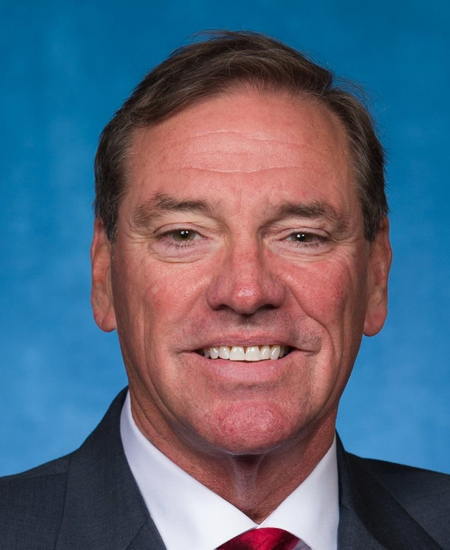
Rep. Neal P. Dunn
Sponsored bills
Alternatives to Prevent Addiction In the Nation Act or the Alternatives to PAIN Act This bill reduces cost-sharing and prohibits the imposition of certain utilization requirements under the Medicare prescription drug benefit for certain non-opioid pain management drugs. Specifically, the bill requires such drugs to be covered without a deductible and to be placed on the lowest cost-sharing tier (if any). The bill also prohibits the imposition of prior authorization requirements (i.e., requiring prior approval from a plan) or step therapy requirements (i.e., requiring the use of alternative drugs before a drug is covered under a plan) with respect to such drugs.
Maddy summaryHR 1232, the National Right-to-Work Act, would make union membership voluntary for workers in most private-sector jobs by removing legal requirements for employees to join a union or pay dues as a condition of employment. It directly affects workers in unionized workplaces covered by the National Labor Relations Act (including most private employers) and railroad workers covered by the Railway Labor Act. The key change eliminates provisions that allowed "union security agreements" (requiring dues or membership), meaning workers could no longer be forced to pay union fees to keep their jobs. This bill does not change other labor rights or create new programs - it only modifies existing laws to allow workers to opt out of union membership and financial obligations.
Maddy summaryHR 1267, the Water Systems PFAS Liability Protection Act, exempts certain water and wastewater treatment facilities from liability under the federal environmental cleanup law (CERCLA) for releases of specific PFAS chemicals. It directly affects public water systems, wastewater treatment plants, municipalities with stormwater permits, and their contractors who handle PFAS while following all applicable laws. The exemption applies only if facilities manage PFAS in compliance with existing federal or state water quality rules, such as through proper biosolids disposal or treated water discharge under permits. However, the bill does not protect facilities that act with gross negligence or willful misconduct in handling PFAS. This law changes liability rules for water systems but does not alter PFAS regulation standards.
Maddy summaryHR 1165, the Port Crane Security and Inspection Act of 2025, requires the Department of Homeland Security to inspect high-risk foreign cranes connected to port cyber infrastructure before they are used at U.S. ports. It mandates a 180-day assessment of security risks from existing and new cranes and orders the removal of any crane posing a threat until certified safe. The bill prohibits operating new foreign cranes (from countries identified as security threats) after enactment and bans foreign software on port cranes after a 5-year phaseout period. This directly affects U.S. ports using cranes with technology from designated "covered foreign countries," such as those identified in national threat assessments.
Maddy summaryHR 1160, the Health Care Provider Shortage Minimization Act of 2025, changes tax treatment for temporary healthcare providers. It clarifies that locum tenens physicians (including doctors of medicine, dentistry, or podiatry) and advanced care practitioners (like nurse practitioners and physician assistants) working temporarily at a site for up to one year are not treated as employees for tax purposes. This means their pay is not considered employment income, and neither the facility, contracting agency, nor payor is treated as their employer. The law applies to services performed under written contracts specifying this tax status, effective after the bill's enactment.
Maddy summaryThe HALT Fentanyl Act (HR 27) creates a new category of Schedule I controlled substances for "fentanyl-related substances" defined by specific chemical modifications to fentanyl. This law directly affects researchers, medical professionals, and law enforcement by expanding the legal definition of fentanyl-related substances to include many structurally similar compounds. Key provisions include streamlined registration processes for research on these substances, allowing researchers to conduct studies with expedited procedures if related to FDA-approved drug development or government-funded research. The bill requires the Attorney General to issue implementing rules within six months and includes penalties for violations involving these substances.
Maddy summaryHJRES 38 is a joint resolution seeking congressional disapproval of an Environmental Protection Agency (EPA) rule implementing the American Innovation and Manufacturing (AIM) Act. The rule manages the phasedown of hydrofluorocarbons (HFCs), potent greenhouse gases used in refrigeration and air conditioning, under the AIM Act of 2020. If approved, this resolution would block the EPA rule from taking effect, preventing its implementation of HFC management requirements. This is a procedural disapproval under the Congressional Review Act, not a new law, and directly affects the EPA’s regulatory authority over HFCs.
Maddy summaryThis bill expands 529 college savings account flexibility by allowing funds to cover costs for industry-recognized postsecondary credentials, not just traditional degrees. It defines "qualified expenses" to include tuition/fees for recognized credential programs (like certifications or apprenticeships), required testing fees, and continuing education needed to maintain credentials. To qualify, programs must meet specific criteria, such as appearing on state lists under the Workforce Innovation and Opportunity Act or being listed in VA or Defense directories. The change applies to 529 distributions made after the law's enactment, giving families more options to use these accounts for job-focused training.
Maddy summaryHR 1121, the "No DeepSeek on Government Devices Act," prohibits U.S. federal executive agencies from using the DeepSeek application (or any successor by High Flyer) on government information technology devices. It requires the Office of Management and Budget to develop removal standards within 60 days, directing agencies to remove the application while complying with existing security rules. Exceptions are permitted for national security, law enforcement, and security research activities, but agencies must document risk mitigation plans for any authorized use under these exceptions. The bill directly affects all executive agencies covered under federal information technology policies.