

Maddy summaryHR 1006, the NRC Survey Act, requires the Nuclear Regulatory Commission (NRC) to conduct surveys of its employees and nuclear industry stakeholders to identify ways to improve the efficiency of reactor licensing. The employee survey asks about internal processes, communication, funding, and barriers to innovation, while the stakeholder survey seeks industry input on regulatory challenges and engagement. The Inspector General must distribute these surveys within 60 days of enactment and submit reports to Congress with aggregated feedback and individual responses. This bill gathers direct input to inform potential future regulatory improvements without changing existing laws or creating new requirements.
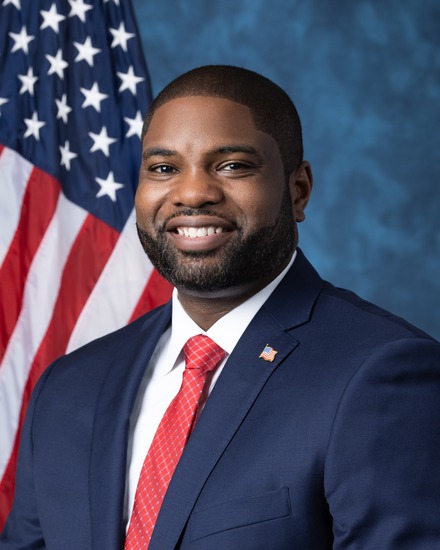
Rep. Byron Donalds
Sponsored bills
Maddy summaryHR 1008 adds harmful algal blooms to the list of qualifying events for federal disaster assistance under the Stafford Act, enabling affected communities to access emergency aid. It also requires the CDC to conduct a study on health effects from airborne toxins during blooms within one year of enactment, to be shared with relevant congressional committees. The bill establishes a framework for federal response but does not provide new funding or directly regulate pollution sources. It primarily affects coastal and lake communities where blooms threaten public health, tourism, and local economies through potential beach closures, fishing restrictions, and property value declines.
Maddy summaryHR 1009 requires the President to develop a national strategy for using microreactors (small nuclear reactors under 20 MW thermal) to replace diesel generators during natural disasters. The strategy must evaluate current diesel generator use, compare environmental impacts, and address deployment logistics like storage, transportation, and maintenance. It mandates collaboration between agencies like FEMA, the Department of Energy, and the Nuclear Regulatory Commission, with annual reports to Congress. The bill aims to improve disaster response by providing reliable, low-emission power to critical facilities like hospitals and water plants, while reducing reliance on diesel.
This resolution states that the House of Representatives opposes South Africa's hosting of military exercises with China and Russia in February 2023. The resolution calls on the government of South Africa to (1) cancel all future military exercises with China and Russia and (2) rejoin U.S.-led exercises. Additionally, the resolution calls on the Biden administration to conduct a review of the status of the United States-South Africa bilateral relationship.
Maddy summaryHRES 150 is a ceremonial House resolution honoring the late civil rights leader John Robert Lewis (1940-2020). It formally recognizes his lifelong commitment to nonviolent activism, including his leadership in the Civil Rights Movement, the 1965 Selma voting rights march ("Bloody Sunday"), and his 30+ years serving as a U.S. Representative from Georgia. The resolution specifically commends his "towering achievements in the nonviolent struggle for civil rights" and his dedication to building the "Beloved Community" through justice and equality. As a commemorative resolution, it has no policy impact but serves as an official tribute to Lewis's legacy for the public and Congress.
CBDC Anti-Surveillance State Act This bill limits the ability of the Federal Reserve to (1) provide direct services to individuals, and (2) use a central bank digital currency. A central bank digital currency is a digital currency (e.g., Bitcoin or Ether) issued by a government-backed central bank. Specifically, the bill prohibits the Federal Reserve and the Federal Open Market Committee from using any central bank digital currency to implement monetary policy. In addition, a Federal Reserve bank is prohibited from offering products or services directly to an individual, maintaining an account on behalf of an individual, or issuing a central bank digital currency directly to an individual. The Federal Reserve must (1) consult with each Federal Reserve bank with respect to any central bank digital currency study or pilot program, and (2) issue quarterly reports on the findings and determinations of any such study or program.
Maddy summaryHR 1116, the "Stop Taxpayer Funding of Traffickers Act," prohibits individuals charged with specific human trafficking or drug trafficking offenses near U.S. borders from receiving federal benefits. It directly affects people indicted for offenses defined as "covered trafficking offenses" (including human trafficking under Title 18 or drug trafficking involving controlled substances near borders). The bill blocks access to federal benefits like grants, loans, licenses, Social Security, or veterans' benefits for those charged. If charges are dismissed or the person is found not guilty, the benefit ban ends, and any unpaid benefits must be restored. This policy change removes federal funding access for individuals facing these specific charges.
Maddy summaryThe DEMOCRACIA Act (HR 1120) imposes sanctions on foreign entities and individuals providing financial, material, or technological support to Cuba's military, security, or intelligence sectors, or who are responsible for human rights abuses in Cuba. It would block property of foreign persons engaging in these activities and deny visas to those determined to support Cuba's repressive sectors. The bill also requires the President to provide unrestricted internet service to Cuban citizens that is not censored by the Cuban government. These provisions target foreign entities supporting Cuba's authoritarian regime rather than directly affecting Cuban citizens. The bill aims to pressure the Cuban government to end human rights abuses and move toward democratic reforms.
Maddy summaryHR 970 imposes a 12-year moratorium (through June 2032) on energy development leases for oil, gas, and wind projects in specific Gulf of Mexico areas critical to military operations. It directly affects energy developers seeking permits in zones east of the Military Mission Line or areas identified in Defense reports as threatening military readiness. The bill prohibits leasing in these zones but allows exceptions for environmental conservation projects like wetlands restoration. It also requires the Department of Defense to submit reports by 2024 and 2031 detailing how energy development impacts military capabilities in designated Gulf planning areas. This policy change aims to protect military testing ranges by restricting commercial energy activities in sensitive waters.
Maddy summaryHR 583, the American Shores Protection Act of 2023, extends a moratorium on new offshore oil and gas leasing along the coasts of Florida, Georgia, and South Carolina until June 30, 2032. It specifically adds two new coastal planning areas (the South Atlantic and Straits of Florida) to the existing ban. The bill clarifies that existing leases remain unaffected and allows the Secretary to issue leases for environmental conservation purposes, including shore protection, beach restoration, wetlands restoration, and habitat protection. This directly affects energy companies seeking new offshore drilling permits in those coastal regions.