

Maddy summaryHR 6504, the Protect American Gun Exporters Act, blocks the Department of Commerce from implementing a pause on new export licenses for specific firearm exports (items under Commerce Control List numbers 0A501, 0A502, 0A504, and 0A505). The bill directly affects U.S. gun exporters by preventing the Commerce Secretary from enforcing the October 2023 pause or similar restrictions on these exports. Key provisions prohibit the Secretary from taking any action to carry out the pause unless it follows standard regulatory processes, including a required impact analysis and compliance with the Administrative Procedure Act and Congressional Review Act. This bill does not create new export rules but stops the existing pause on certain firearm exports.
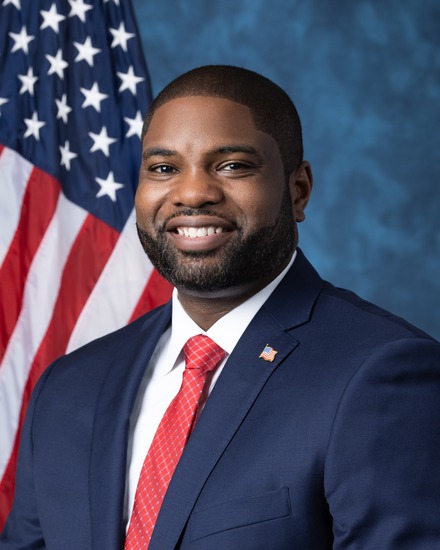
Rep. Byron Donalds
Sponsored bills
Maddy summaryHRES 793 is a resolution passed by the U.S. House of Representatives calling on Hamas to immediately release all 199 hostages taken during Hamas' October 7, 2023 attack on Israel. The resolution condemns Hamas for the attack, the taking of hostages, and threats against hostages, while stating that holding hostages violates international humanitarian law under the Geneva Conventions. It demands the immediate release of all hostages and expresses sympathy for victims and their families. As a symbolic resolution, it does not create legal obligations but formally expresses the House's position.
Maddy summaryHRES 683 is a non-binding resolution expressing the House's support for diplomatic efforts to encourage Mexico to fulfill annual water delivery commitments under the 1944 U.S.-Mexico treaty. The treaty requires Mexico to deliver an average of 350,000 acre-feet of water annually (over a 5-year cycle) to the U.S., but Mexico has historically delayed deliveries until the cycle ends. The resolution specifically acknowledges water shortages faced by South Texas farmers and urges Mexico to meet its annual obligations, while supporting negotiations for more reliable water agreements. It does not create new legal requirements but formally encourages diplomatic action to address the delivery delays.
Improving Housing Outcomes for Veterans Act of 2023 This bill requires the Veterans Health Administration (VHA) to provide medical center staff and homelessness service providers of the Department of Veterans Affairs (VA) with information related to best practices for the collaboration on activities under the Department of Housing and Urban Development's Coordinated Entry program. The VA must also ensure that the information and related resources are accessible to VA medical center staff and homelessness service providers. Additionally, the bill requires the VHA to communicate with VA employees who have responsibilities related to homelessness assistance programs regarding (1) the measurement of performance by the VA's Homeless Program Office, and (2) how to obtain and provide feedback about the performance measures.
Maddy summaryHR 6300, the Veterans Education is Timeless Act of 2023, removes expiration dates for all Department of Veterans Affairs (VA) education benefits. It directly affects veterans and their dependents who use programs like the Post-9/11 GI Bill, Survivors' Benefits, and others, allowing them to access education benefits at any time without a deadline. The bill amends multiple sections of Title 38 to state that benefits "shall be afforded... at any time and are not subject to any delimiting date." It also requires the VA to refund veterans for contributions if they apply for a refund, and applies retroactively to all eligible individuals.
Maddy summaryThis bill establishes a program within the Department of Homeland Security's Geospatial Management Office to sustain and expand existing GIS (mapping) technology used in emergency response, specifically for urban search and rescue operations. It authorizes $3 million annually from 2024 through 2030 to fund coordinated training, technology maintenance, and collaboration with nonprofit organizations specializing in geospatial public safety tools. The program directly affects emergency responders and nonprofit entities working with emergency response platforms, ensuring their technology remains operational before disasters. DHS must report annually to Congress on fund usage and program effectiveness starting in 2025.
Maddy summaryThis bill appropriates $14.3 billion in supplemental security funding to Israel following the October 7, 2023 attacks. The funding includes $4 billion for Iron Dome and David's Sling defense systems, $1.35 billion for the Iron Beam defense system development, and $3.5 billion for foreign military financing. The bill requires regular reporting to Congress on security assistance provided to Israel and designates all funds as "emergency requirements" under federal budget law. It also modifies existing laws to facilitate the transfer of defense articles and services to Israel, aiming to strengthen Israel's defense capabilities against rocket threats.
Maddy summaryThis bill exempts farmed sturgeon and their offspring held in U.S. captivity or controlled environments from certain provisions of the Endangered Species Act (ESA), specifically sections 9(b)(1) and 7(a)(2). It directly affects sturgeon aquaculture businesses and farms operating under existing U.S. regulations. The key provision requires owners to maintain documentation proving their sturgeon qualify for the exemption and to provide requested records to the Secretary of the Interior, without duplicating existing ESA requirements. The exemption remains in effect until the sturgeon or its progeny is intentionally released back into the wild. This change streamlines regulatory compliance for the sturgeon farming industry while maintaining ESA protections for wild populations.
Price Stability Act of 2023 This bill removes maximum employment as a goal of the monetary policy set by the Board of Governors of the Federal Reserve System and the Federal Open Market Committee.
Maddy summaryHJRES 99 would exempt "premium cigars" from federal tobacco regulations under the Federal Food, Drug, and Cosmetic Act. It defines premium cigars by eight specific criteria, including being handmade, containing only tobacco/water/gum, having no filters, and meeting weight requirements. This exemption directly affects manufacturers of cigars meeting this definition, primarily small family-owned businesses. The bill cites a 2022 National Academies report finding premium cigars are used by only 1% of U.S. adults, mainly by non-daily adult users with lower health risks than other tobacco products. If enacted, it would remove federal FDA oversight for these cigars, shifting regulation to states.